 The Indian Express ·
Economy, business and finance
‘First we were pushed to UPI’: Why Delhi traders see no way to pass on new fee
Nehru Place traders are worried that the new UPI Merchant Discount Rate will eat into already thin profit margins, with many saying they cannot pass the cost on to customers in a highly competitive market.
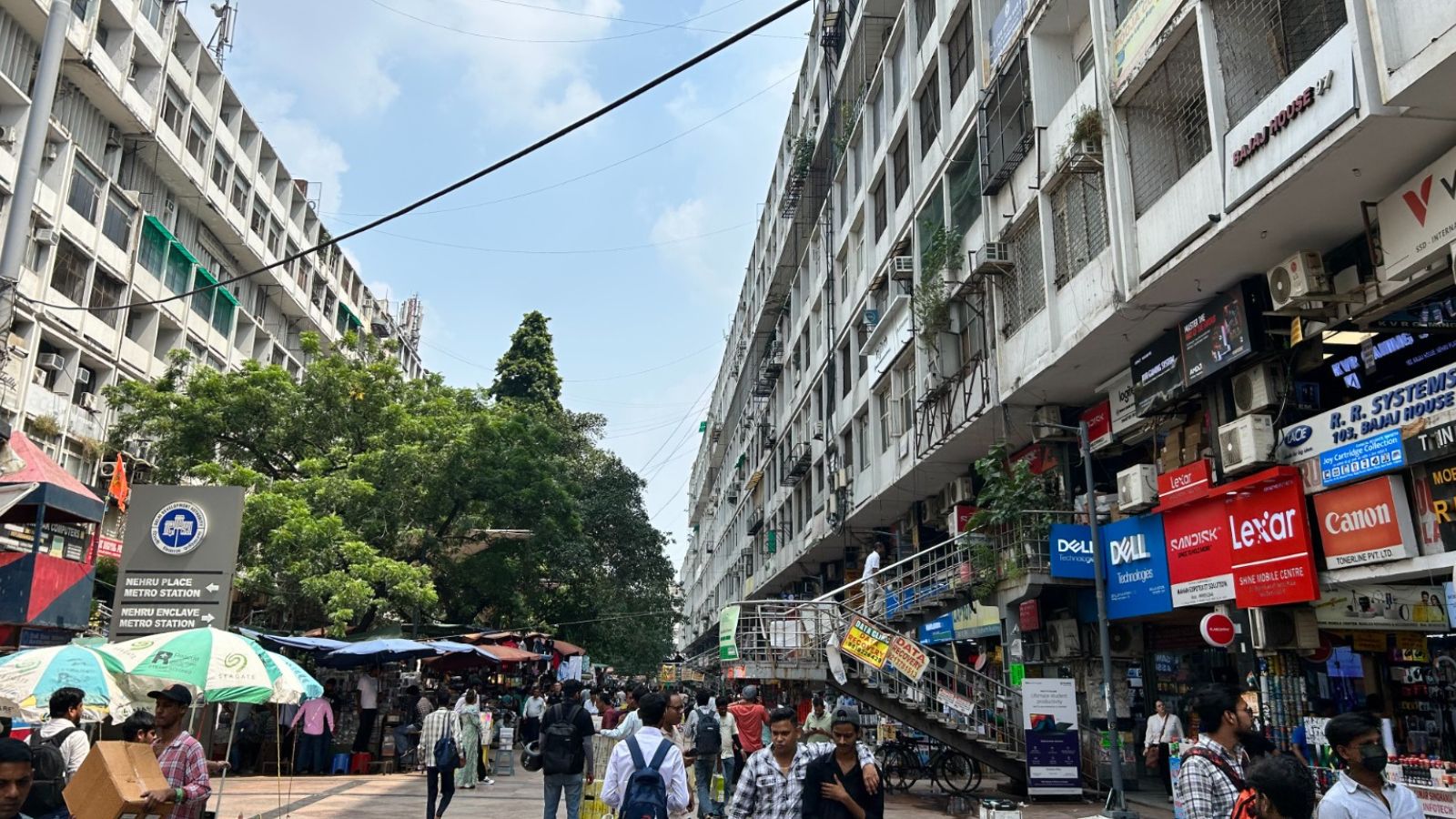
Nehru Place, Delhi’s biggest electronics market, is bracing for a hit. From October 15, eligible merchants will pay an additional fee on UPI payments above Rs 2,000, and on the ground here, almost no one thinks they’ll be able to pass that cost on to customers.
At his laptop repair shop, one trader thinks he already knows who will ultimately pay for the new cost attached to UPI: him.
Almost all of his customers, the trader at the laptop repair shop said, currently pay by UPI. But in a market where buyers haggle over a few hundred rupees and shop around freely, he sees no room to add a surcharge. At least for now. For the record, the Union Finance Ministry said Tuesday banks have been “advised” to ensure that merchants do not pass on the cost to customers.
But there is palpable anxiety running throughout the Nehru Place market over this issue. Businesses, already operating on thin margins, fear they will have to absorb the 0.4% Merchant Discount Rate (MDR) on UPI transactions above Rs 2,000 themselves because passing it on risks driving customers elsewhere, even as UPI has become too deeply embedded in everyday transactions to simply stop accepting it.
Some say the result could be a return to differential pricing for cash and digital payments, or a renewed push by shopkeepers to get customers to pay in cash.
“We don’t see any other option but to silently accept that our margins are going to take a hit,” the laptop repair shop owner said. “Ninety-nine per cent of our customers pay via UPI, and I can’t ask them to pay more to cover for the MDR, as they will simply walk away to another shop”.
At another shop selling computer peripherals, its owner likened UPI to a “hook”. The government, he said, spent years encouraging merchants and customers to get accustomed to a payment mechanism that carried no MDR. Now that it has become embedded in everyday commerce, he feels traders are being left in the lurch.
The fears are larger than those of isolated shopkeepers. According to the Retailers Association of India (RAI), the 0.4% MDR “could undo years of progress” made in getting the country’s smallest shopkeepers to adopt digital payments — especially just ahead of the festive season.
“During the festive season, a large share of transactions cross the Rs 2,000 mark, and the moment a fee attaches itself to digital payment, cash becomes the path of least resistance,” warned Kumar Rajagopalan, CEO of RAI.
Rajagopalan said the matter will be taken up with NPCI and the Ministry of Finance, with a key objective being to pair any charge on merchants with incentives that keep small shopkeepers inside the formal payment system, rather than pushing them out.
The grievance with the revised MDR framework announced on Tuesday is rooted partly in UPI’s own success.
“UPI led to people not carrying much cash, and that made it so ubiquitous. Now, customers just expect to pay via UPI, it’s almost out of habit now. So, it will be unfair to expect that they carry enough cash when they visit the market from here on… The government has really pulled the rug from under us,” the peripherals shop owner said.
Outside another computer repair store, a group of technicians predicted that the old cash-versus-digital divide would resurface, as some traders would look to pass the cost on rather than quietly absorb it.
“Differential pricing for payment in cash and UPI will make a comeback,” said another shopkeeper, predicting customers who pay by UPI will be charged more, while shops quietly steer buyers back toward cash.
The palpable frustration across the market has crystallised into calls to revoke the decision to introduce the MDR fee on UPI. The All Delhi Computer Traders Association (ADCTA), led by its Nehru Place unit, has demanded an immediate rollback of the charge, arguing traders were first coaxed into adopting UPI and shouldn’t now be made to pay for it.
ADCTA general secretary Saran Singh said traders were already grappling with economic headwinds and falling business. Senior Vice-President KS Oswal said the market was already under pressure, and an added charge now would only deepen traders’ troubles. ADCTA president Mahinder Aggarwal called on the government to take traders’ concerns seriously and withdraw the charge at once, warning that the burden could eventually dent government revenue too.
The government on Tuesday (September 15) announced the MDR regime for UPI transactions, exempting person-to-person payments from the levy irrespective of the transaction amount. MDR will be levied on payments to merchants on transaction amounts of over Rs 2,000 at the rate of 0.4%, with a few exceptions like payments for essential services and capital market transactions. For high-value UPI payments to merchants exceeding Rs 75,000, the 0.4% MDR will be capped at Rs 300 per transaction.
The government has said that the MDR is a charge “within the merchant payment ecosystem”, and not on customers making UPI payments. It has advised banks to ensure that merchants do not pass MDR charges to customers. UPI application providers are “expressly prohibited from imposing platform fees or hidden charges”, the finance ministry said.
“Because the proposed UPI MDR is significantly lower than credit card fees and applies only above specific transaction thresholds, shopkeepers have no economic incentive to inflate retail shelf prices. Consumers will continue paying the exact listed price for goods and services,” the National Payments Corporation of India (NPCI) said Tuesday.