 Firstpost ·
Economy, business and finance
MDR on UPI: Which services will attract Rs 5 payment for transactions above Rs 2,000?
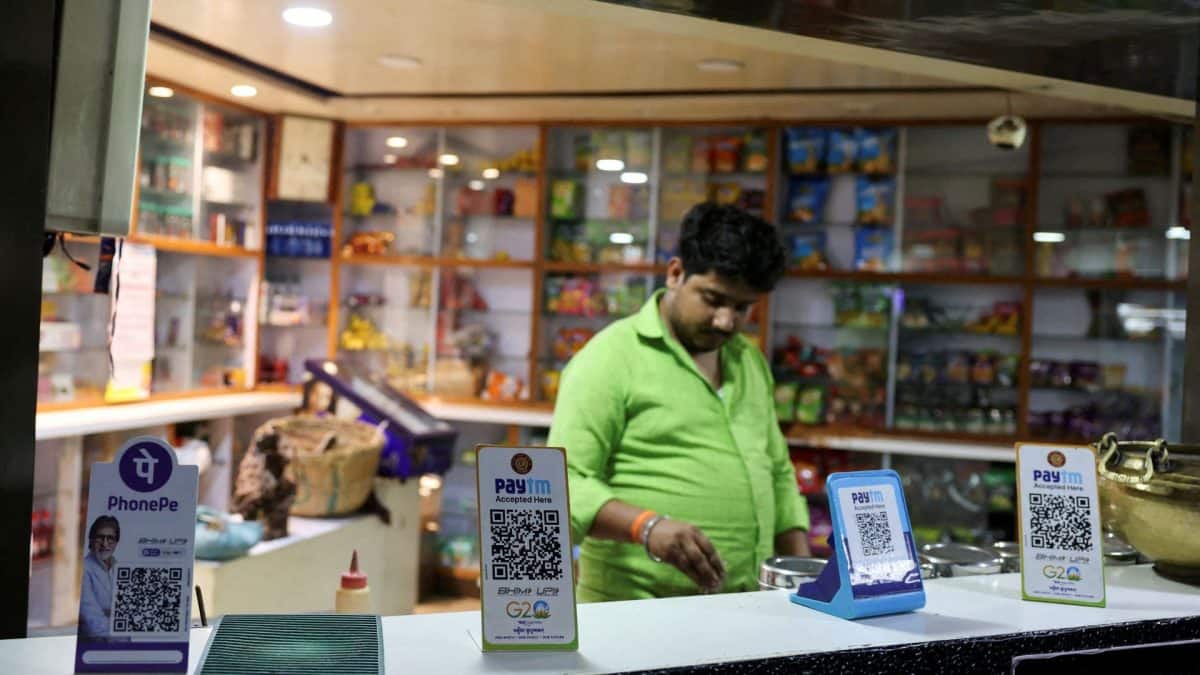
From October 15, a flat Rs 5 Merchant Discount Rate (MDR) will apply to specific merchant categories, including railways, telecom services, insurance, and fuel. Consumers, meanwhile, will continue to use UPI without paying any transaction fee
India's click-and-pay UPI services are no longer free for merchants. Under the new framework, a 0.4 per cent Merchant Discount Rate (MDR) will apply to specified merchant transactions above Rs 2,000.
Effective from October 15, some merchant categories will be charged a discounted fee of Rs 5 per transaction, meaning the charge will remain Rs 5 irrespective of the payment amount.
The changes do not apply to consumers, as they will continue to use UPI without incurring any transaction fee.
We take a look.
These services will attract Rs 5 MDR...
A flat Rs 5 MDR will be levied on specific merchant categories, including railways, telecom services, insurance and fuel.
For the above specific merchant categories, UPI transactions above Rs 2,000 will be exempt from the standard 0.4 per cent MDR. Merchants, instead, will pay a fixed Rs 5 per transaction.
For instance, if a merchant makes a UPI payment of Rs 10,000 would pay Rs 40 under a 0.4 per cent MDR. Under a concessional flat rate structure, an eligible merchant would pay only Rs 5.
What consumers need to know on railway tickets
When it comes to booking a train ticket through UPI, the bigger and most asked question is: will your ticket become more expensive if paid through UPI? The answer is no.
Even though your railway booking transactions of more than Rs 2,000 will attract a Rs 5 MDR, the charge will be levied on the merchant, and it won't be passed on to the passenger.
“Merchants onboarded cannot pass on MDR charges to customers while accepting payments through UPI. The framework ensures consumers pay only the posted price,” National Payments Corporation of India (NPCI) noted in the FAQ, Moneycontrol reported.
So, what happens when you book a train ticket?
Let's break it down with examples.
Hypothetically, your train ticket is Rs 3,000, and you are using UPI as the payment method. Under this new framework, it's the railway merchant who would pay Rs 5 as MDR, and you will only pay Rs 3,000, not Rs 3,005.
Likewise, a Rs 10,000 railway ticket would still attract an MDR of just Rs 5, as railway transactions covered under the special category are subject to a flat fee instead of the standard 0.4 per cent MDR. NPCI has made it clear that merchants cannot shift the MDR charge onto passengers.
In cases where the ticket costs less than Rs 2,000, meaning if a passenger is buying a Rs 1,500 train ticket through UPI will not be subject to any MDR.
What about UPI payments at petrol pumps?
Among the transactions covered under the discounted flat-rate structure are fuel purchases.
If one is making payments of over Rs 2,000 at petrol pumps, the MDR will remain fixed at Rs 5, instead of being charged at 0.4 per cent.
NPCI answered in the FAQ. Take a look.
The objective behind the lower fixed charge is to keep digital payments affordable for fuel retailers, for whom even a small percentage-based fee can add up across a high volume of transactions.
MDR will remain zero for fuel payments less than Rs 2,000, meaning if you are filling fuel worth Rs 1,500 and using UPI for the transaction, then there will be no MDR for the merchant.
Electricity, water bills... will consumers pay a Rs 5 charge?
Government utility bill payments will also attract the flat-rate benefit.
Making payments for services like electricity, municipal water and piped natural gas go beyond Rs 2,000 will face a flat MDR of Rs 5 rather than the standard 0.4 per cent.
No MDR will be effective for transactions below Rs 2,000.
It is asked several times whether the consumer will pay the MDR charge. The answer is no.
The MDR is a charge that is borne by the merchant and not directly by the consumer. The new framework does not levy any UPI transaction fee on consumers.
For paying a fuel bill, an insurance premium, a telecom bill or others, customers can continue to use UPI without paying any additional transaction fee.