 The Indian Express ·
Economy, business and finance
Centre plans daily tracking to see if merchants charge consumers for UPI fee
Government officials dismissed claims the merchant fee has been introduced due to US pressure, adding that subsidising UPI won't ensure innovation.
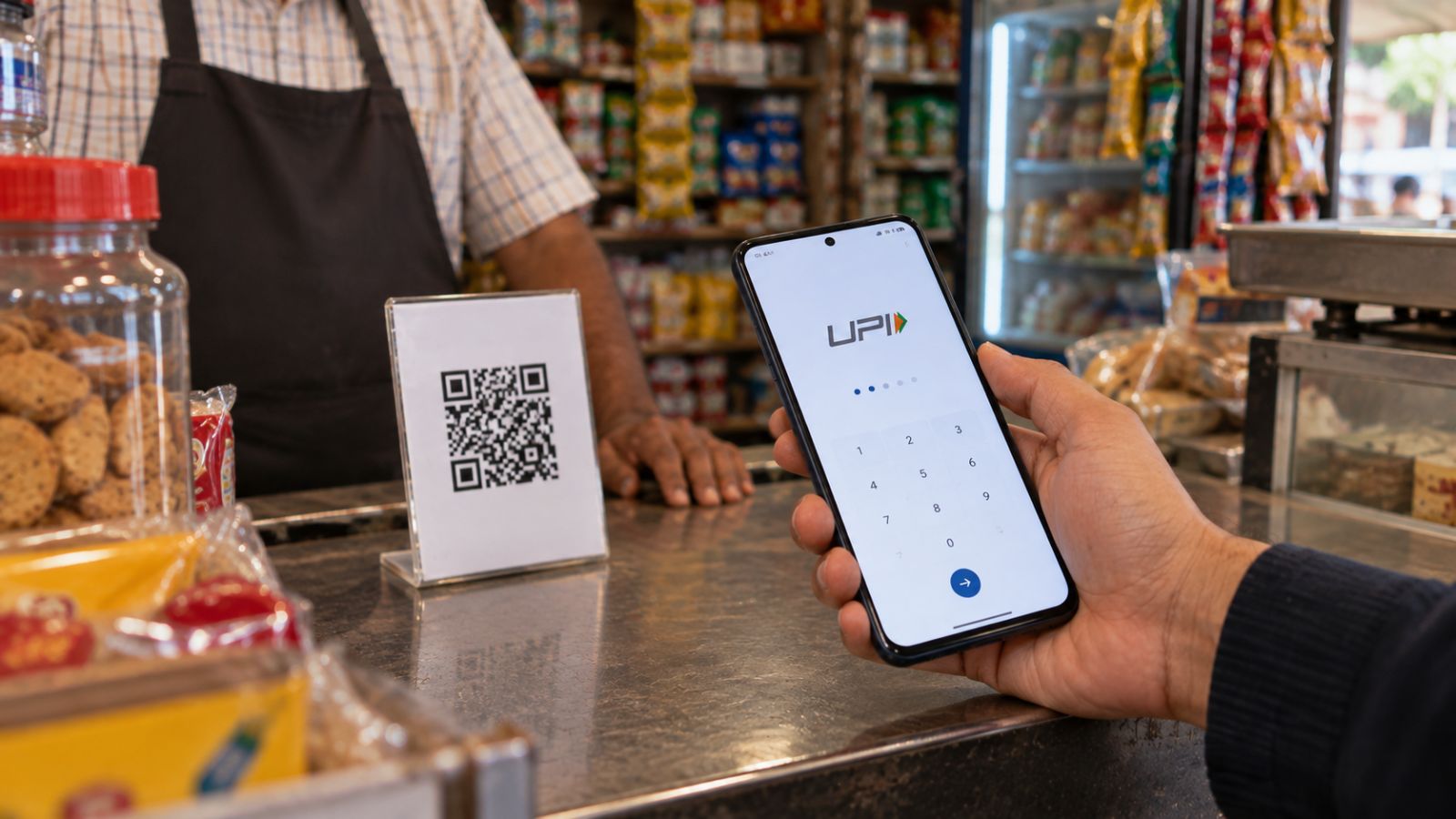
Amid fears that shopkeepers and other sellers will pass on the burden of the merchant fee on UPI payments of more than Rs 2,000 that comes into effect from October 15 and start charging consumers higher prices, government officials on Thursday said they will be monitoring developments on a daily basis.
They also argued that fully subsidising the fast-payment system won’t ensure innovation in the sector and rejected claims that the Merchant Discount Rate (MDR) fee of 0.4% has been introduced due to pressure from the US, adding that the government has in fact done the opposite of what the US wanted.
Sources also said the government is working with payment aggregators so that they conduct outreach and explain to shopkeepers and merchants how the new MDR charges will work and where they will be applicable and where they won’t be. Further, the incentive scheme currently in force to subsidise UPI transactions of less than Rs 2,000 up to 0.15% of the value will be disbanded after October 15.
“From October 15, we will monitor on a daily basis whether merchants are passing on the MDR to consumers. Comparisons will be made with last year,” a government official said, requesting anonymity.
While another senior official admitted that the impact of the MDR will only be known once the new framework comes into place, the source expressed confidence that there won’t be a fall in UPI transactions from October 15 and the government does not expect “much increase” in the use of cash.
“As a sovereign nation, if we want to have our own institutions, then some transactions have to bear the cost,” the official said, defending the decision and adding that “only time will tell” if multiple payments of Rs 1,999 are made to avoid paying the MDR fee.
When asked if the government is open to making changes to the revised MDR framework, officials asserted that the system has to be implemented first.
The MDR, or Merchant Discount Rate, is the fee merchants pay to entities that help facilitate a digital transaction: banks, payment service providers, and third-party apps.
‘No external pressure’
Officials also rejected criticism that the government had buckled under external pressure and imposed the MDR.
“The USTR report said credit cards operated by American companies should be allowed to be linked to UPI. If the government was under some kind of external influence, that would have been the first thing we would have allowed. But we have not agreed to that,” a source said. The official added that the government is “consciously promoting RuPay debit cards” by keeping all transactions using them outside of the purview of the MDR, whether the amount is below or above Rs 2,000.
“Any foreign company operating in India would like their product to be as competitive as local ones. But if the government has kept RuPay debit cards free (of MDR), how can anyone think we are acting under foreign pressure?”
In a March 2026 National Trade Estimate Report on foreign trade barriers, the United States Trade Representative had raised concerns that India favours domestic companies in the electronic payment services sector, with only credit cards backed by home-grown RuPay allowed to be linked to UPI. The decision to also limit the number of UPI transactions a third-party app can process at 30% of the system-wide figure was also cited as one which created a “non-level playing field”.
Walmart-backed PhonePe and Google Pay account for almost 80% of all UPI transactions. The 30% cap, initially set to come into force in January 2023, has been postponed several times, with the current deadline being December 2026.
“Smaller Indian players have come to us and said they cannot compete, have no source of revenue, and don’t have deep pockets like these giants. Introducing MDR enables new players to enter and lets existing small players compete,” the official said.
“The issue has been that we haven’t been able to implement the 30% cap. But to implement it, smaller players have to be able to come up and compete.”
‘No innovation with subsidy’
Earlier this week, the National Payments Corporation of India (NPCI) announced a revised framework for the levy of the Merchant Discount Rate on UPI transactions of more than Rs 2,000.
While the fee will be 0.4% of the transaction value with an upper limit of Rs 300, certain important goods and services when paid for using UPI will only attract a flat Rs 5 fee, irrespective of how big the payment is. This includes insurance and utility payments, railway ticket bookings, and tax payments, among others. A lower fee of 0.02% is applicable on certain capital market transactions, while recurring payments made via UPI such as OTT subscriptions and SIP investments will not face a fee.
The revised framework came after the government amended the law last month following years of requests from payments industry players. UPI became free of MDR only in 2020.
Estimates show running UPI costs around Rs 20,000 crore every year. The revised MDR framework is expected to fetch around Rs 15,000 crore annually, which will be split between banks, payment service providers, and third-party applications, according to industry officials.
The MDR, which is to be paid by sellers and not consumers, will only apply on person-to-merchant transactions. Money transfers between two individuals will not face any charge.
Of the 24,000 crore-plus UPI transactions that took place in 2025-26, only 30% were between persons to merchants. Further, of this category, only 4% of payments were for more than Rs 2,000. Only these will face an MDR.
Since January 2020, there has been no MDR on RuPay debit cards and UPI transactions. This was to promote the adoption of digital payments across the country. To help meet some of the industry’s costs, the government has been subsidising payments of up to Rs 2,000 made to small merchants through its ‘Incentive scheme for promotion of RuPay Debit Cards and low-value BHIM-UPI transactions (P2M)’. The incentive offered is capped at 0.15% of the transaction value. Large merchants are not covered under this scheme.
According to sources, this incentive scheme will be disbanded after October 15.
“You can keep a system running through subsidies, but that can’t ensure innovation,” a senior government official said. “Every economic activity which is based on subsidies, there is a limit to innovation and its spread.”
The move to charge merchants a fee for accepting payments of more than Rs 2,000 has caused a furore in the country, with merchants saying that they will pass on the additional cost to consumers or start accepting cash. This has sparked fears that prices will rise and lead to the slowing down of India’s digital payments revolution.