 ThePrint ·
Crime, law and justice
Navodaya schools row: SC nudges Tamil Nadu to identify land, discuss Hindi concerns with Centre
The apex court repeatedly invokes cooperative federalism and opines that JNVs will supplement Tamil Nadu's education system, not undermine it.
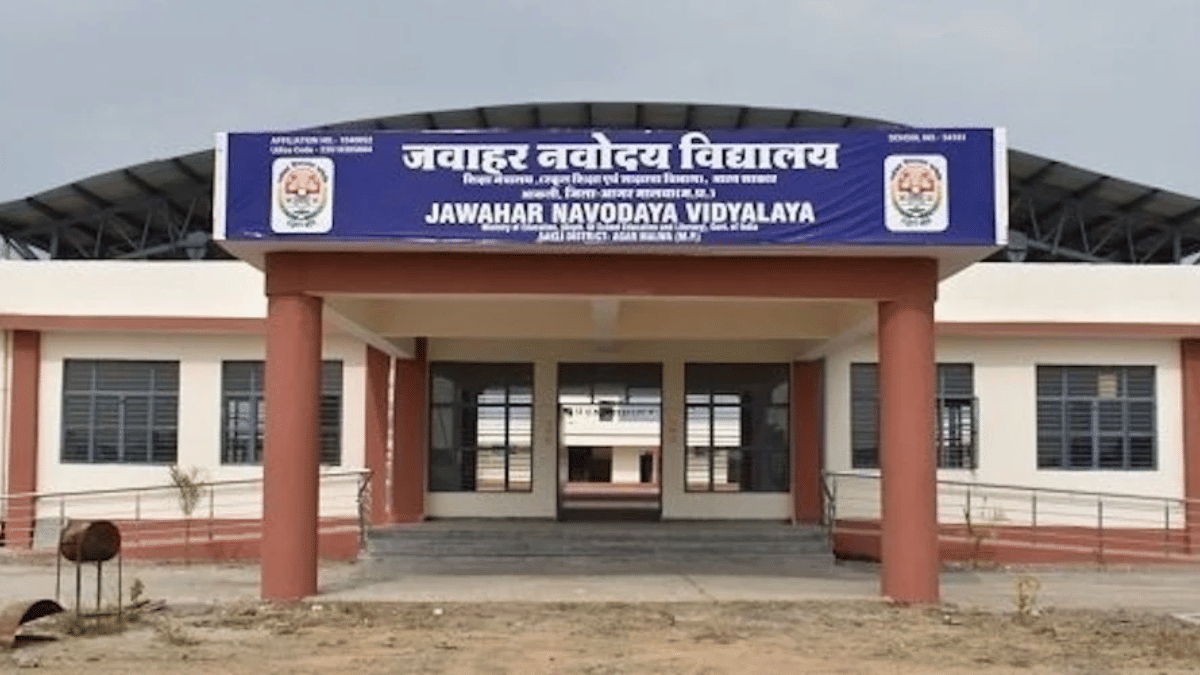
New Delhi: The Supreme Court Thursday pressed both the Centre and Tamil Nadu to resolve their differences over establishment of Jawahar Navodaya Vidyalayas (JNVs), even as it directed the state government to comply with the December 2025 order for identifying land to start the schools.
A bench of Justices B.V. Nagarathna and Augustine Masih repeatedly invoked the principle of cooperative federalism and opined that JNVs would supplement Tamil Nadu’s education system, not undermine it.
“People in Chennai should not alienate Delhi and vice versa,” Justice Nagarathna told senior advocate Jaideep Gupta after he said that the Tamilaga Vettri Kazhagam (TVK) government was seeking a recall of the December 2025 direction, which came when the Dravida Munnetra Kazhagam (DMK) was in power.
Gupta differed saying the court cannot issue a mandamus compelling a state to adopt an optional central policy. Since education is in the Concurrent List, states retain authority to set their own educational policy, he asserted.
Accepting a mandated policy would set a troubling precedent for federalism, he warned, maintaining the court should not enter into this debate.
Justice Nagarathna reassured Gupta that the court was not asking the state to work under pressure or surrender into a central policy. “That perception that you are surrendering to the central government should not be there.”
Gupta clarified the state was not against the schools or Hindi instruction, but had concerns over the scheme’s language policy—specifically at the insistence to keep Hindi as the predominant language in higher classes. This, he explained, was in conflict with the state’s law mandating Tamil instruction.
However, the court was of the view that Gupta’s concern was resolvable.
“We are not alienating you and we are not alienating them… This is not going to lower your standards,” Justice Nagarathna said.
On the state’s choice to opt out, she said: “Education is in the Concurrent List. There has to be cooperative federalism. If each state says that I don’t accept your policy, what will happen?”
The judge spoke highly of Tamil Nadu’s education system and its achievements. “In Tamil Nadu education level is high compared to other states… Education coming from Delhi will not lower the standards of Chennai,” she said.
The bench went on to give Tamil Nadu three months to identify suitable land and directed representatives of state and central governments to hold further talks on the scheme. It will hear the matter again on 14 December.
The court also noted in its order that the change in governance in Tamil Nadu had stalled the talks with the Centre due to which the state could not comply with the court’s December 2025 directive to identify the land.
Gupta said prior talks with the Centre had stalled because the latter “remained adamant about Hindi”. On the court’s advice, he agreed to another round of consultations.
The bench directed the state’s secretary to engage directly with the Centre’s secretary. “If you want Tamil as a second language, it is a matter which can be considered.”
The senior advocate complained against the Centre for not releasing Rs 5,000 crore funds towards education, which, he said, was a promise made to the state. The state, he added, is not in a position to take new financial commitments while the shortfall persisted.
Additional Solicitor General K.M.Nataraj contended that the state’s sole obligation was providing land (roughly 30 acres per district), whereas the construction and other costs would come from the Centre.
Since the scheme was at a “nascent stage” and construction would take years, he said, the two sides had enough time to iron out language disputes. Gupta pushed back, saying that identifying land before deciding on the policy itself would create difficulties for the state.
At this juncture, the bench clarified its order did not mean immediate land acquisition, but only identification of suitable land.
Advocates G.Priyadarshini and Rahul Shyam Bhandari, who appeared for Kumari Maha Sabha, the petitioner in the Madras High Court, argued the state could not deny its students access to free Navodaya education, pointing out that such schools already operate in Tamil-speaking Puducherry, a Union Territory.
On Sabha’s petition, the HC had in 2017 directed the Tamil Nadu government to establish Navodaya schools in every district, leading to an appeal before the top court by the erstwhile DMK government.
(Edited by Tony Rai)