 The Indian Express ·
Economy, business and finance
IV set bought for Rs 11, sold with Rs 325 MRP: Maharashtra FDA seeks price caps
FDA Commissioner Tukaram Mundhe says he has no authority over hospital bills but did survey of hospitals in MMR, Pune and Chhatrapati Sambhajinagar on wide price gaps in the interest of public health
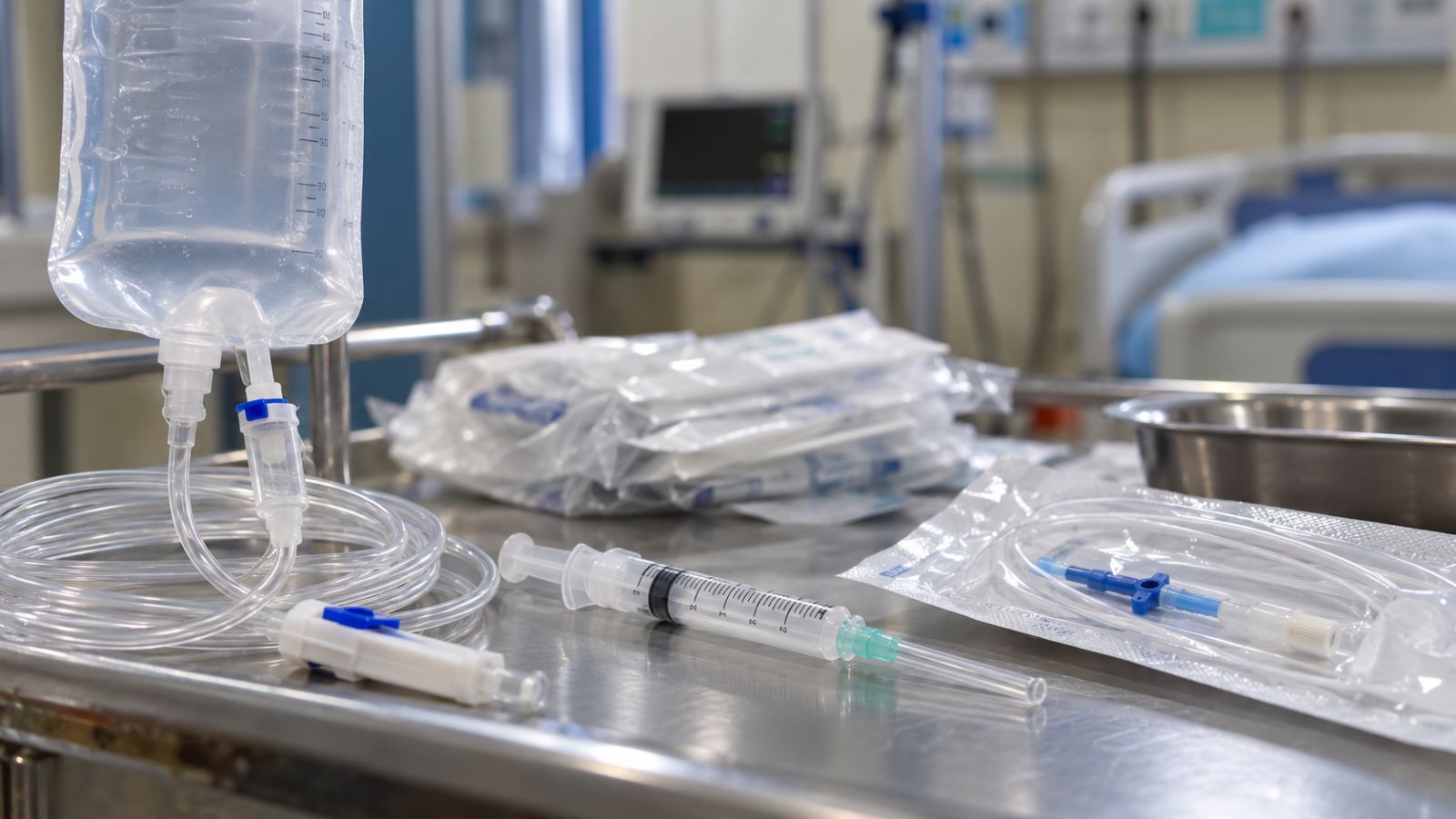
The Maharashtra Food and Drug Administration (FDA) has submitted a proposal to the National Pharmaceutical Pricing Authority (NPPA) seeking price controls on frequently used hospital consumables and medical devices, after a survey found wide gaps between their procurement prices and printed maximum retail prices (MRPs).
Earlier in the day, FDA Commissioner Tukaram Mundhe took to X to highlight the findings, saying an IV infusion set procured for Rs 11.05 carried a printed MRP of Rs 325, a markup of 2,841 percent. He also cited a syringe procured at Rs 6.75 with an MRP of Rs 57.20 and a catheter procured at Rs 29.41 with an MRP of Rs 310.
“The most expensive part of a hospital bill may never touch the hospital at all,” Mundhe wrote. He said patients admitted for care had no way of knowing whether the price of a medical consumable reflected its actual cost or a markup fixed before it reached the ward.
The FDA, however, said it had submitted the findings in the interest of public health and would await the NPPA’s decision on whether and how the prices of these products could be regulated. “The findings are in the interest of public health. The FDA has no authority to monitor hospital bills or drug prices,” Mundhe said.
“These are not elective purchases. Patients cannot compare prices, seek alternatives, or question a number printed on a box while receiving care,” he wrote, adding that the MRP was often fixed upstream by manufacturers and distributors and could be disconnected from the trade price by a wide margin.
Mundhe said the regulatory gap was structural, with scheduled medicines covered under the Drugs (Prices Control) Order, 2013, while most medical devices and consumables were outside the same price-control framework. “A review of these findings and clear guidelines on the permissible gap between trade procurement price and declared MRP have been recommended to the Department of Pharmaceuticals and the NPPA,” he wrote.
FDA officials said the survey was conducted in July at hospitals in the Mumbai Metropolitan Region (MMR), Pune and Chhatrapati Sambhajinagar. The FDA submitted its report to the NPPA in the first week of August.
The move follows complaints from patients and other stakeholders about exorbitant charges for consumables and medical devices used during inpatient treatment.
“Actually, we are getting so many complaints from the stakeholders, even from the public, that the consumables and medical devices used for IPD (in-patient department) patients were charged exorbitantly. The MRP mentioned on that will also be very high. When we conducted the survey, we saw that the purchase rate for some syringes or consumables like oxygen masks and catheters, even transfusion sets, had a wide gap with the MRP,” said the drug control official who conducted the survey.
The official cited the example of a perfusion set, saying its manufacturing cost could be around Rs 30 while its MRP could be Rs 150 or Rs 200.
The FDA also found substantial margins during inspections of hospital bills. The department examined bills from approximately 20–25 hospitals and found margins of around 200–300 per cent on some consumables, the official said.
The findings were part of the department’s broader examination of complaints about exorbitant charges for items used during inpatient treatment.
The FDA has proposed bringing such products under the price-control framework of the Drugs (Prices Control) Order, 2013, which currently covers scheduled formulations and specified medical devices.
At present, most of the consumables and medical devices surveyed are outside that framework, the official said.
“Only some critical medical devices like cardiac stents and some two or three medical devices are under the price cap but not the other medical devices. The proposal seeks to cover products that are frequently used and essential during inpatient treatment, when hospitals provide patients with lists of consumables, surgical items and medical devices. Once the price is fixed, nobody will mention exorbitant or as per some fancy of the manufacturer, this will be the MRP,” the official said.
However, the FDA clarified that it does not have the power to control hospital bills or charges levied by hospitals for admission and procedures.
“We do not have any jurisdiction to control the hospital bill or the charges incurred by the hospital for the patient admissions or any other further procedure. Our role was limited to bringing the pricing issue to the notice of the NPPA, which is the authority empowered to regulate prices under the relevant framework,” the official said, adding, the survey was part of the FDA’s routine enforcement and market-surveillance work.
“We are conducting the survey for availability of medicines and medical devices in the market and simultaneously our price monitoring unit, which is situated at headquarters under NPPA, used to conduct surveillance in the market for any issues of overpricing of medicines,” the official said.