 Firstpost ·
Science and technology
Mark Zuckerberg rejects AI slowdown, says safety will give companies a competitive edge
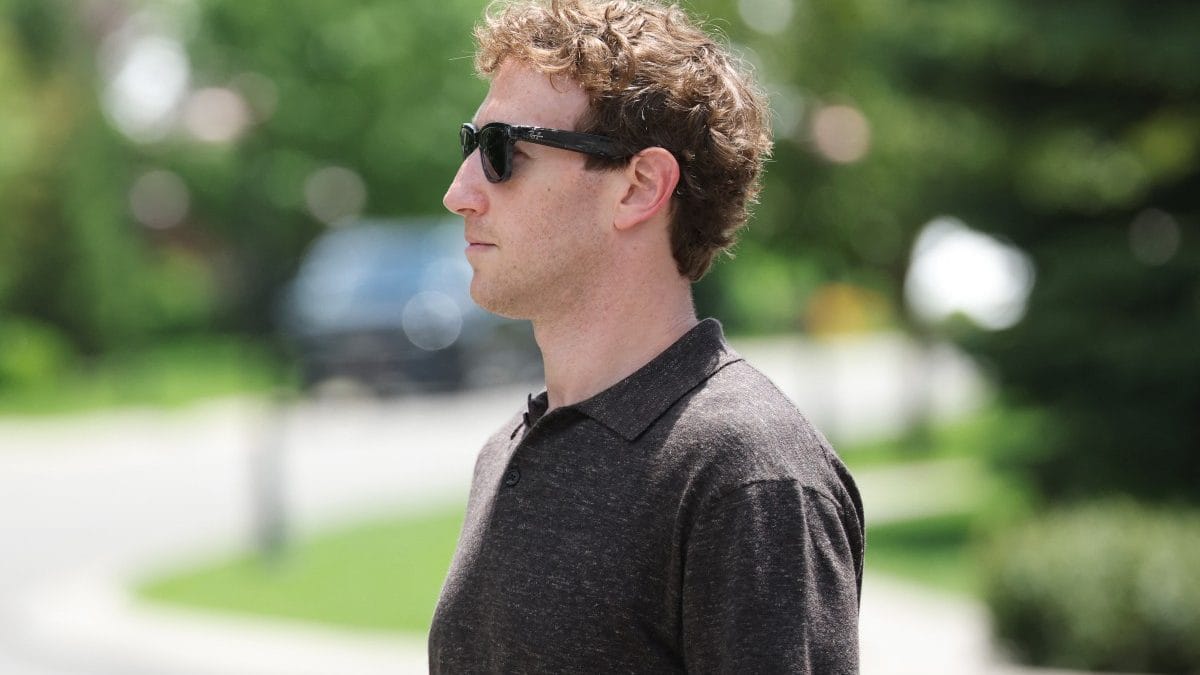
Meta CEO Mark Zuckerberg has pushed back against calls for AI slowdown as suggested by other leaders. He said that individual AI labs can choose to prioritise safety without waiting for an industry pact. His comments come as Dario Amodei, Sam Altman and Elon Musk call for stronger safeguards.
The debate over whether artificial intelligence companies should collectively slow down has exposed a growing divide among some of the industry's most influential leaders. Meta CEO Mark Zuckerberg now argues that laboratories do not need to sign an industry-wide agreement before taking steps to make increasingly powerful AI systems safer.
In a post on X on Tuesday, Zuckerberg said competition itself could push companies towards better safeguards. He argued that users will increasingly favour AI systems they can trust to follow instructions reliably, making what the industry calls “alignment” an important commercial advantage.
“Any lab that doesn't focus on alignment will fall behind,” Zuckerberg said.
His argument comes days after Anthropic CEO Dario Amodei called for AI development to be deliberately paced, warning that the technology could advance faster than existing safety measures can keep up. Amodei proposed greater use of independent evaluators and closer coordination between frontier AI companies. OpenAI CEO Sam Altman and SpacexAI chief Elon Musk subsequently backed the broader call for slowing the pace of development.
Zuckerberg, however, suggested that coordinated action is not a prerequisite for responsible development. He pointed to Meta's own decision to postpone its Muse model for several months while the company worked on safety and security measures.
“We didn't call for everyone else to do this before we would,” Zuckerberg said. “We just did it.”
The comments put Meta's approach somewhere between calls for collective restraint and arguments for allowing individual companies to determine their own safety thresholds.
Meta's Chief AI Officer Alexandr Wang reinforced that position on Tuesday, while also stressing the need for stronger oversight. Wang said AI laboratories should have governance mechanisms, outside evaluators and independent scrutiny around major model releases.
He singled out recursive self-improvement, the possibility of AI systems contributing to the development of increasingly capable successors, as one of the areas carrying the greatest potential loss-of-control risks. Wang said Meta is directing most of its computing resources towards products and services rather than competing in a race centred on recursive self-improvement.
The disagreement comes as the AI safety debate has moved beyond technical circles and into Washington. Amodei's proposal has met resistance from US President Donald Trump, who has dismissed calls for additional AI guardrails. In a social media post on Monday, Trump argued that the country needed a “STRONG AND SMART (High IQ!) PRESIDENT” rather than new restrictions.
Nvidia CEO Jensen Huang has also rejected the idea of slowing AI development. During an event on Monday, Trump called Huang while he was on stage and criticised proposals to restrict AI development and data-centre construction. Huang responded that he agreed with the president and said, “We’re not going to let that happen, sir.”
That leaves the industry facing competing approaches rather than a single consensus. Amodei and other AI leaders are calling for more formal coordination and external checks, while Zuckerberg is arguing that companies can act independently and that market competition may itself reward safer, better-aligned systems.
The disagreement is likely to persist as AI models become more capable and companies weigh the commercial pressure to move quickly against growing demands for stronger safeguards.