 Firstpost ·
Politics
Under PM Modi’s leadership, India’s foreign policy has grown confident in its own skin
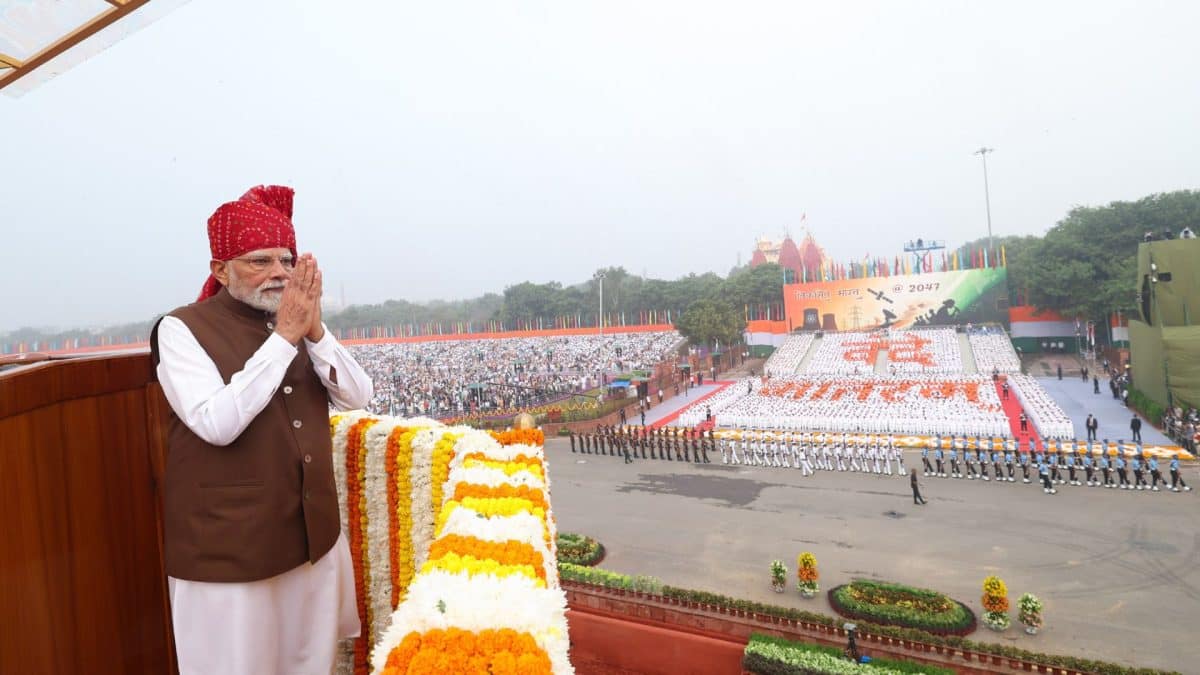
The prime minister is a generational leader and a global statesman, with a unique blend of vision, timing and influence.
Any assessment of Prime Minister Narendra Modi’s impact on India’s foreign policy is necessarily incomplete, because unlike politics, foreign policy has a longer arc and an even longer period of gestation. That said, one advantage we have with this prime minister is his longevity. Modi is already India’s longest-serving PM in terms of continuous elected tenure.
One more advantage is that Modi is a generational leader and a global statesman, with a unique blend of vision, timing and influence. He has, over the course of a 12-year journey as the occupant of India’s most powerful office, repeatedly given examples of his leadership skills in some exceptionally trying times for India and even the world.
Over this past decade, India’s engagement with the wider world has undergone a quiet yet profound transformation. A reflexively cautious approach has given way to self-assured maturity, and its regional footprint has extended to the global stage.
India has steadily transitioned into a rule-shaper — actively contributing to norms, institutions and mechanisms that govern the international system. Whether in stitching together global coalitions on clean energy and disaster resilience, championing digital public infrastructure as a template for emerging economies, or bridging global ‘North’-‘South’ divisions, New Delhi is no longer merely participating in global conversations and accepting rules. It is helping set the agenda.
And Modi is central to this transformation. What sets him apart as one of the world’s tallest leaders today is not merely political longevity, but a rare combination of decisive domestic authority and exceptional diplomatic dexterity.
In an era marked by fractured geopolitics and big-power contestation, Modi commands a degree of mandate and policy stability that few global peers possess. This political capital has allowed him to approach foreign policy with greater long-term strategic clarity than short-term electoral anxieties.
On the world stage, Modi has demonstrated an unusual ability to build genuine rapport across geopolitical and ideological divides. No other world leader can share an embrace with Israel’s prime minister and walk hand in hand with the Iranian president almost simultaneously. Modi is equally at home in the capitals of the West, the halls of the Kremlin, the monarchies of the Gulf, and the summits of developing nations across the Global South.
The prime minister’s ability to shape global outcomes was on display during India’s G20 presidency. Heading into the 2023 edition in New Delhi, deep divisions over the war in Ukraine had led many observers to predict that a joint communiqué was impossible.
Modi led India in navigating the fault lines to deliver a unanimous Leaders’ Declaration on the very first day. Three years later, as the chair of the 18th Brics Summit, India again pulled off the seemingly impossible by successfully achieving a consensus, leading to the unanimous adoption of the Brics New Delhi Declaration.
More importantly, Modi had used India’s G20 presidency to shift global attention away from geopolitical wrangling towards shared human concerns. India launched the Global Biofuels Alliance and demonstrated how its own scalable digital public infrastructure could empower developing nations to achieve rapid financial inclusion.
The same instinct was evident at the recently concluded Brics Summit. Led by Modi, India steered the agenda by driving a collective shift for the Global South from “rule-takers to rule-shapers”, an effort that included a 10-proposal global governance reform roadmap to democratise international decision-making and diversify the financial architecture. In so doing, Modi ensured that Brics as a bloc remains ‘non-Western’ rather than ‘anti-Western’, safeguarding India’s strategic flexibility and sparing the Global South the pressure of ‘picking a side’.
The international order faces active conflict zones in Eurasia and West Asia, alongside an uneasy relationship between the US and China. Amid this turbulence, the prime minister has systematically enlarged Bharat’s strategic space.
With the US, India has cultivated a strategic partnership of great depth, driving collaborations in critical domains such as defence and security, critical and emerging technologies, and supply chains such as the Pax Silica Initiative. And he has done so while navigating crippling challenges thrown at the bilateral relationship by a mercurial Donald Trump.
At the same time, New Delhi has maintained its historic relationship with Moscow, ignoring Western pressure while prioritising domestic energy security. With China, India has demonstrated strategic patience and resolve. Following the 2020 border tensions, New Delhi stood firm, maintaining that normalisation of ties was impossible without peace and mutual disengagement along the frontier. That determination has eventually led to a thaw in ties despite structural rivalry.
As a leader, what sets Modi apart is his ability to see the larger picture. He has spent considerable time and effort improving India’s relationship with its immediate neighbours (with the exception of Pakistan) while taking the long view. The aim, as External Affairs Minister S Jaishankar pointed out in an address in 2023, is to create a benign neighbourhood. In his words, “a benign neighbourhood doesn’t happen by itself. It happens when the largest country in the neighbourhood invests in the rest of the neighbourhood.”
In practice, that meant that when Sri Lanka was pushed to the brink of sovereign default and societal collapse, India stepped in with over $4 billion in food, fuel and financial lifelines without attaching predatory conditions. In Nepal, India has funded hundreds of high-impact community development projects, directly building schools, hospitals and rural roads. India’s power ministry, for instance, has just approved the urgent export of up to 654 megawatts of electricity daily to Nepal to help it recover from the devastating flash floods that crippled its power infrastructure.
Even in Afghanistan, despite political upheaval, India has consistently delivered grain, life-saving medicines and winter supplies directly to the people. Modi’s foreign policy is anchoring neighbouring economies directly to India’s growth engine, turning regional proximity into a shared advantage.
Beyond the immediate land borders, Modi has engineered a dynamic expansion of India’s influence in its extended neighbourhood. To the East, the ‘Act East’ policy is deepening institutional, physical and digital ties with Asean nations, extending India’s strategic horizon into the wider Indo-Pacific maritime domain.
To the West, he has overseen a truly transformative relationship with the Gulf before Trump’s reckless war against Iran created difficulties for everyone. This engagement enabled connectivity frameworks like the I2U2 grouping and the India-Middle East-Europe Economic Corridor.
To the North, India is intensifying engagement with Central Asia. Modi became the first Indian prime minister to visit all five Central Asian republics. Apart from geopolitical balancing, increased engagement with this region is crucial for India’s energy and mineral security and for bypassing transit blockades.
To the South, through the SAGAR doctrine and its broader evolution into MAHASAGAR, India views the ocean as an integrated space of shared prosperity. By deploying naval assets for rapid HADR assistance and investing in sustainable marine economies, India has established itself as the preferred security partner and first responder across the Indian Ocean basin.
This diplomatic outreach is backed by a complete reimagining of statecraft. For a leader who was taunted as “provincial” and “bereft of knowledge of statecraft” by elites, Modi has fundamentally redefined security, taking it far beyond military preparedness and counterterrorism to include economic, technological and health resilience.
In this framework, true sovereignty requires shielding the nation from weaponised supply chains and technological dependencies. Modi has woven economic diplomacy into foreign missions, driving export promotion and diversification of vital components.
Technological security has been placed at the centre of international negotiations, ensuring India is not left out of artificial intelligence and semiconductor ecosystems. For instance, on Wednesday, Modi chaired a ‘Semiconductor Roundtable’ with CEOs in New Delhi, as part of a major push to move India from building foundational capabilities to scaling up across the global chip value chain.
In the realm of health, the Vaccine Maitri initiative demonstrated how humanitarian values and strategic capability can deliver millions of life-saving doses to vulnerable nations during a global crisis, establishing India as an indispensable first responder.
The fullest expression of Modi’s geopolitical vision can be found in India’s increased footprint in Africa. India’s diplomatic engagement and developmental assistance in Africa have expanded exponentially under his tenure. Altogether, 18 Indian embassies have been opened in Africa alone, making India’s diplomatic network on this continent one of the world’s most extensive.
As Jaishankar has observed, “A global footprint means being present in Latin America, being present in the Caribbean, being present in Central America, engaging with the Pacific Islands, doing something in Mongolia, going to Norway.”
Taken together, these achievements reflect a foreign policy that has grown confident in its own identity. By combining civilisational connect with strategic realism, Modi has guided India away from ideological stiffness into strategic flexibility.
India today stands as a steadying and moderating force in an unpredictable world — a trusted partner, neighbour, active first responder, a vital hub for global technology and supply chains, and a leading power shaping the rules of a rapidly changing international order.
(Views expressed in the above piece are personal. They do not necessarily reflect Firstpost’s views.)