 Firstpost ·
Politics
India-Pakistan warships collide: Why a 1991 pact is in the spotlight
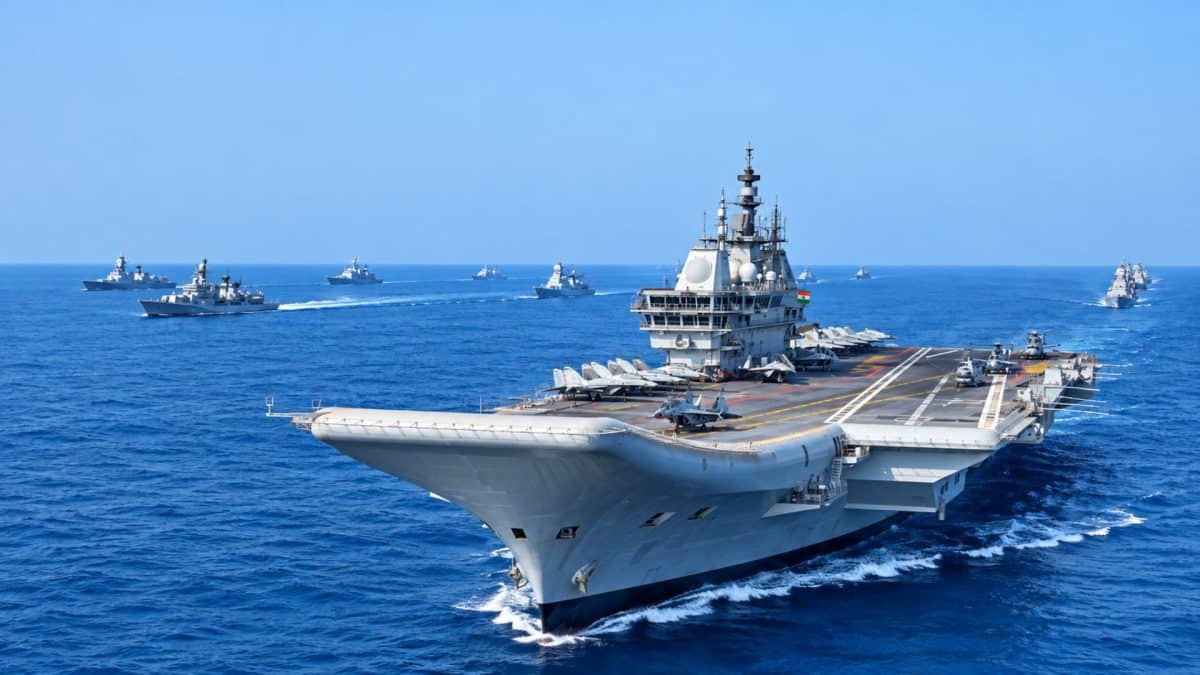
A Pakistan Navy vessel closed in at high speed on an Indian warship, which was on a routine surveillance mission in the North Arabian Sea. Describing the conduct of the Pakistani ship as 'unprofessional,' the MEA said the incident did not cause major damage, but noted that the conduct breached Article 10 of the 1991 India-Pakistan agreement
On Wednesday (September 16), an Indian Navy warship and a Pakistani naval vessel collided in the Arabian Sea. This led to New Delhi summoning Pakistan's senior-most diplomat in the capital.
Describing the conduct of the Pakistani naval vessel as “unacceptable and unprofessional," the Ministry of External Affairs also said the incident did not cause major damage, but noted that the conduct breached Article 10 of the 1991 India-Pakistan agreement.
This Article prohibits ships and submarines of the two countries from coming within three nautical miles of each other in international waters.
“The Pakistani ship was approaching at a high speed but was unable to manoeuvre safely and in time, causing a slight collision with the Indian warship," Indian Express reported, citing sources.
Following the incident, India has ordered its Chargé d’Affaires in Pakistan to lodge a strong protest with Islamabad's Ministry of Foreign Affairs.
We take a look.
On April 6, 1991, India and Pakistan signed the pact in New Delhi. During this time, Chandra Shekhar was India's prime minister.
The agreement came into effect on August 19, 1992, after ratification and in December 1994, India registered it with the United Nations.
Under this agreement, each nation is required to give prior notice of any significant troop exercise and military movement along the border.
Each side must ensure that any exercises are not directed or aimed at the other side to prevent misunderstanding or confusion that could escalate into a crisis.
“...India and Pakistan recognise the need to jointly formulate an agreement at the Government level on giving advance notice on exercises, manoeuvres and troop movements to prevent any crisis arising due to misreading of the other side's intentions,” the agreement notes, Hindustan Times reported.
The pact also adds that both sides must inform each other of the schedules of any crucial military exercises in writing, through diplomatic channels in advance.
“Their Land, Naval and Air Forces will avoid holding major military manoeuvres and exercises in close proximity to each other. However, if such exercises are held within distances as prescribed in this Agreement, the strategic direction of the main force being exercised will not be towards the other side, nor will any logistics build-up be carried out close to it,” it adds.
What does Article 10 of the pact say?
Article 10 of the 1991 India-Pakistan agreement lays down the naval safety guidelines in international waters.
Article 10 states: “The Naval ships and submarines belonging to the other country are not to close less than three Nautical Miles (NMs) from each other so as to avoid any accident while operating in international waters."
In simple words, India and Pakistan naval vessels or submarines are required to maintain a distance of at least three nautical miles from one another. Three nautical miles is around 5.56 kilometres.
The distance is designed mainly to separate and to avoid any possibility of an accident or dangerous encounter.
According to the 1991 pact, what must be shared is as follows: A nation holding any military exercise must provide the other side with the exercise's type and level, broad areas of operations across land, air and sea, expected duration of the exercise, any planned deployment of forces from other commands, corps or strategic formations and others.
The recent incident was not the first to be reported. On June 16, 2011, Indian Navy warship INS Godavari and Pakistan Navy ship PNS Babur confronted each other in the Gulf of Aden. During the incident, both nations were part of the operations surrounding the merchant vessel MV Suez, which was released after being captured by Somali pirates, News18 reported.
According to India’s Ministry of Defence, INS Godavari had reached out to MV Suez to establish communication and ensure the safety of its crew.
PNS Babur, while escorting the merchant vessel, approached Godavari from astern at high speed and undertook a manoeuvre that breached the navigational safety regulations, as described by India.
India then launched a formal protest, citing Article 10 of the 1991 agreement and the International Regulations for Preventing Collisions at Sea, the report noted.
Pakistan, on the other hand, at that time presented a different account and accused INS Godavari of carrying out dangerous manoeuvres. Both nations protested each other.
In 1996, an analysis cited a near-collision between a Pakistan Navy Alouette and an Indian Navy Sea King during surveillance linked to Pakistan’s Sea Spark exercise in the Arabian Sea.
The latest collision is now being dealt with through diplomatic channels, and India is now seeking Pakistan to ensure its military forces exercise due caution and adhere to bilateral agreements.