 The Indian Express ·
India’s lunar ambitions and the growing competition in space
As competition in space evolves, concerns over weaponisation mount, and explicit rules governing outer space remain absent, how does India seek to balance its ambitions? Could deepening international partnerships offer it greater leverage? See infographics.
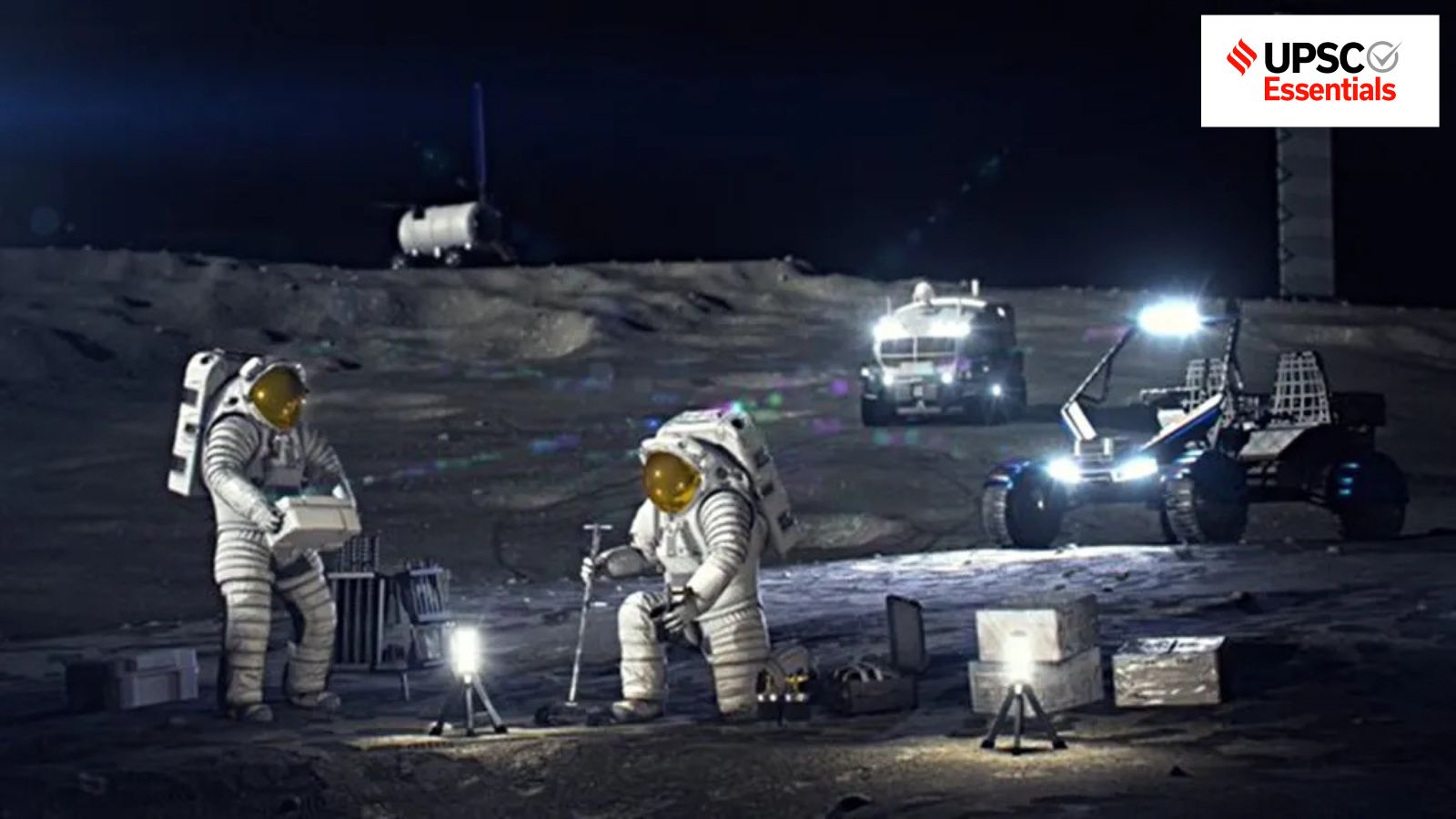
The growing international focus on sustained human presence on the Moon and its South Pole is driven by strategic considerations, including key locations on the Moon, the potential value of lunar resources, and the pursuit of technological sovereignty and industrial capacity.
With orbits becoming more crowded, technologies more powerful and actors more numerous, Prime Minister Narendra Modi stressed the need for global partnerships prioritising long-term sustainability over short-term gains. He made these remarks while addressing the International Space Summit in Paris via video-conferencing last week.
India has ambitious future targets for the space agency — establishing an indigenous space station by 2035 and sending an astronaut to the Moon by 2040. But as competition in space evolves, concerns over weaponisation mount, and explicit rules governing outer space remain absent, how would India balance its ambitions? Could deepening international partnerships offer it greater leverage?

