 Firstpost ·
Health
Raw or cooked carrots: What offers more vitamin A
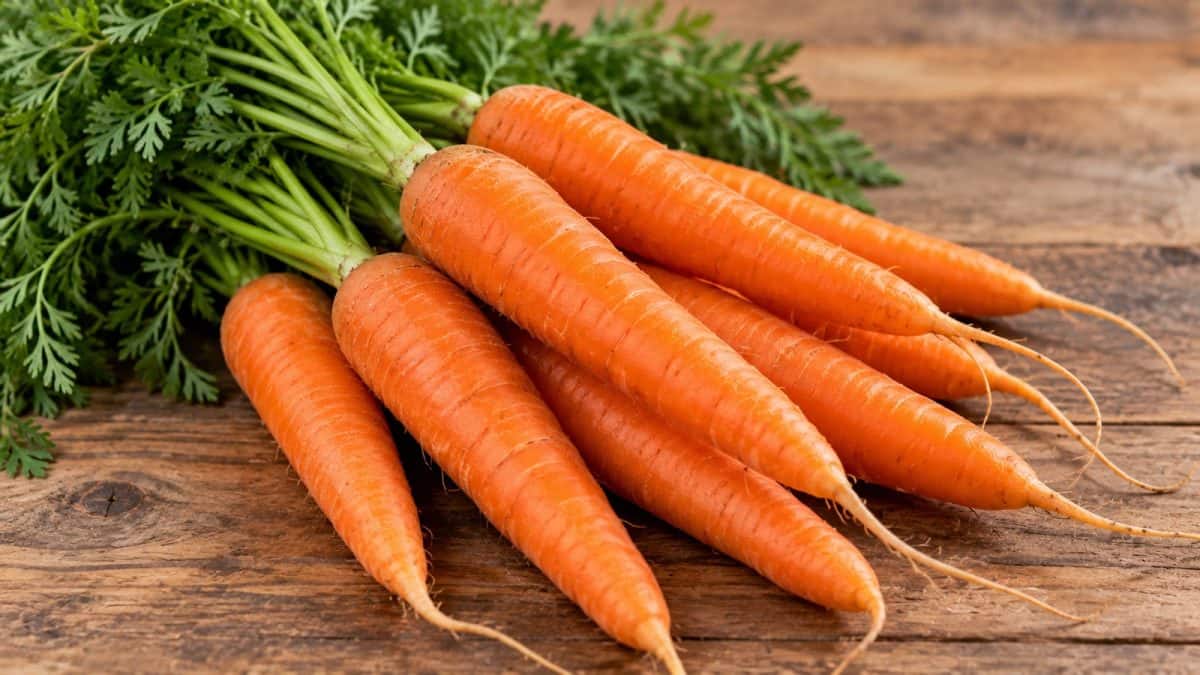
Carrots are often praised for their vitamin A benefits, but the way they are prepared can influence how much your body actually absorbs. A nutrition expert explains whether cooked or raw carrots are better for unlocking beta-carotene and supporting overall health
Carrots are widely used as a superfood for eyesight. However, in order to attain the maximum benefits from this red bungle of goodness, whether one must consume it raw or cook the veggie, is a pretty common question.
According to Charu Dua, HOD, Department of Clinical Nutrition, Amrita Hospital, Faridabad, the real story lies in how the body processes beta-carotene, the key compound found in carrots.
“Carrots contain beta-carotene, not vitamin A,” explains Dua. “First, the body must release the carotenoids, absorb them and convert them to vitamin A, and how we prepare our carrots can influence how much of this nutrient is made available.”
Carrots don’t contain vitamin A directly
One of the most common misconceptions is that carrots are a direct source of vitamin A.
In reality, they contain beta-carotene, a plant pigment that the body converts into vitamin A as needed.
“Carrots do not contain pre-formed vitamin A,” says Dua. “They provide beta-carotene, a plant pigment that the human body can convert to vitamin A as needed, unlike animal sources such as eggs, dairy products and liver which supply preformed vitamin A.”
She adds that beta-carotene acts as a natural storage form of vitamin A, which the body processes depending on its requirement.
Once converted, vitamin A plays several crucial roles in the body. According to the expert:
“Vitamin A is needed for the formation of visual pigments that assist us in seeing, particularly in low light. It also contributes to healthy skin and mucosal barriers, and supports growth and tissue repair.”
However, she stresses that nutrient availability is not just about what is present in food, but how much the body can actually absorb.
Bioavailability: Why absorption matters more than content
“Bioavailability is the amount of a nutrient that is absorbed and available for biological functions,” explains Dua. “This depends on how efficiently beta-carotene is released from the plant structure and absorbed by the body.”
In raw carrots, beta-carotene is locked within tough plant cell structures, making it harder for the digestive system to access.
How cooking improves beta-carotene absorption
Cooking carrots, according to the expert, can significantly improve nutrient availability.
“Cooking breaks down and softens plant cell walls, which makes beta-carotene more accessible to the body’s digestive enzymes,” says Dua. “This means more carotenoids are able to be absorbed.”
She adds that scientific studies support this - “Research shows that only a small proportion of beta-carotene is released from raw carrot tissue, while processing methods such as chopping, pulping and cooking greatly enhance its release.”
Raw carrots are still healthy, but not necessarily optimal for vitamin A
Despite the benefits of cooking, raw carrots are far from unhealthy.
“Raw carrots are still a great food,” says Dua. “They provide dietary fibre, crunch, hydration and a range of plant compounds.”
She also notes that raw carrots can still release beta-carotene if they are properly prepared.
“Shredding, finely chopping or thorough chewing can improve the release of beta-carotene even in raw form.”
A key factor in vitamin A absorption is dietary fat.
“Beta-carotene is a fat-soluble nutrient, so it is better absorbed when eaten with some dietary fat,” explains Dua. “Fat helps form micelles during digestion, which carry beta-carotene through the intestine for absorption.”
She recommends simple combinations such as carrot sabzi cooked in a small amount of oil, carrot soup topped with nuts or seeds, carrots with hummus or sesame seeds, and carrot and curd-based preparations like raita.
“A little fat is enough,” she adds. “Not to make the food greasy, but to support absorption.”
Cooking does not destroy the nutritional value
While cooking can reduce heat-sensitive nutrients such as vitamin C, Dua notes that this is less relevant in carrots.
“Carrots are not primarily valued for vitamin C,” she explains. “They are important for carotenoids such as beta-carotene, where cooking can actually improve availability.”
Does eating more carrots improve eyesight?
The popular belief that carrots dramatically improve eyesight is only partially true.
“Carrots are good for the eyes, but they do not correct refractive problems such as myopia or the need for spectacles,” says Dua.
Their benefits are most significant in individuals who are deficient in vitamin A, she explains, particularly for night vision.
Why people convert beta-carotene differently
Not everyone converts beta-carotene into vitamin A at the same rate.
“Conversion varies from person to person due to genetic differences, gut health, dietary fat intake, protein status and overall nutritional status,” says Dua.
She adds that the body regulates this process naturally. “When vitamin A levels are sufficient, conversion decreases. When the body needs more, it increases. This makes dietary beta-carotene generally safe.”
While natural foods are safe, the expert warns against excessive supplementation.
“High-dose beta-carotene supplements should not be taken without medical advice, especially by smokers or former smokers,” says Dua. “Large clinical trials have linked high-dose supplementation with increased lung cancer risk in smokers.”
She emphasises that this risk does not apply to normal food sources like carrots and spinach.
So, are cooked carrots better than raw ones?
Well, the answer is balanced.
“The best approach is a mix of both,” concludes Dua. “Lightly cooked, steamed or sautéed carrots with a small amount of healthy fat can improve beta-carotene absorption, while raw carrots still offer fibre, crunch and overall nutrition.”
Ultimately, she adds, “the best carrot is the one you enjoy regularly. But if your goal is to maximise vitamin A availability, gently cooked carrots with a little fat may give you the advantage.”
Anuj is a senior sub-editor (lifestyle desk) at Firstpost who covers food, travel, health, and fitness, mostly because they’re all excellent excuses to leave the house. Powered by coffee, he spends his downtime airplane-spotting and exploring spirituality, hoping one day to understand both turbulence and the universe.