 India Today ·
Arts, culture, entertainment and media
Vijay Sethupathi’s Maharaja goes to Hollywood but what makes it West-ready?
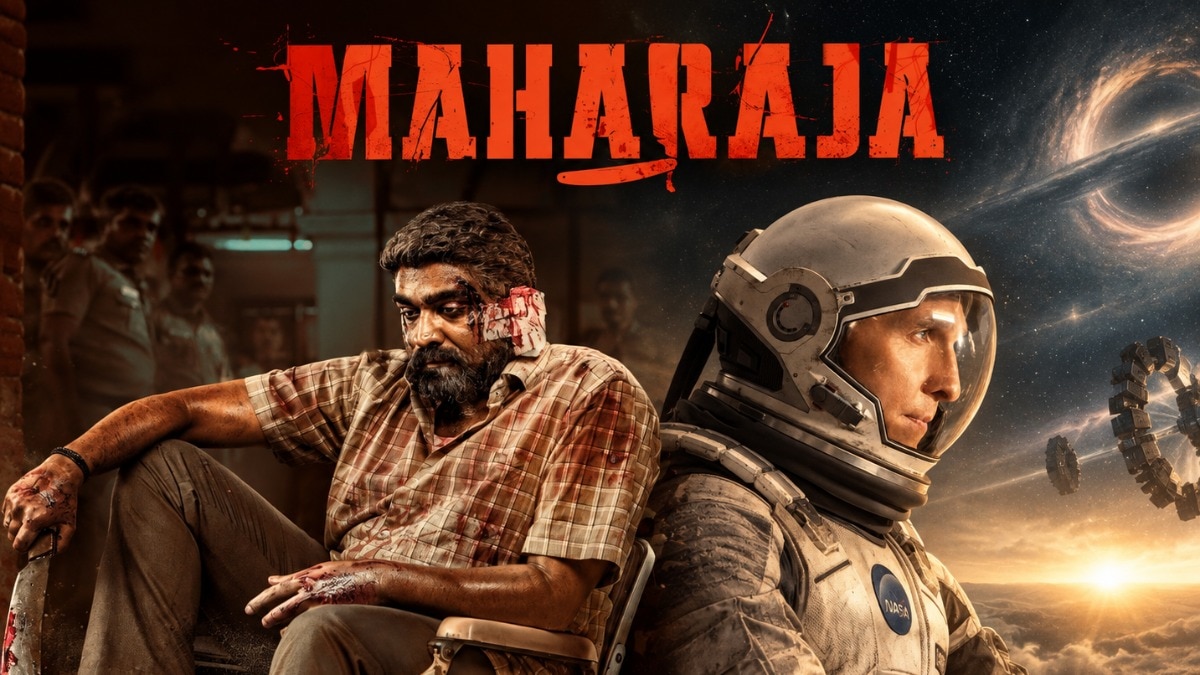
A Hollywood agency has begun developing an English-language remake of Maharaja after the film's strong run in China. The project remains at an early stage, but the thriller's mystery and father-daughter core have driven the interest.
Vijay Sethupathi’s Maharaja is heading to Hollywood. The 2024 Tamil crime thriller, directed by Nithilan Swaminathan, is set to become the first Tamil film to get an official Hollywood remake. The development comes after the film’s strong run in China, where it earned significant box-office and OTT attention. Producer Sudhan Sundaram confirmed that the makers were approached by a Hollywood agency for the remake rights, with the project now being developed around an A-list actor.
Producer Sudhan Sundaram confirmed the development to The Times of India, saying the agency reached out after Maharaja performed well in China both theatrically and on streaming, taking in around Rs 100 crore at the box office. The agency is now working to attach an A-list actor, with the film likely to go into production next year.
The remake is still at an early stage. No studio, lead actor or director has been officially announced, though Matthew McConaughey's name has been floated for the lead. Sundaram said McConaughey may be among those being discussed, but that any casting would need to be confirmed by the agency.
Rather than a straight translation, the remake is expected to be reworked as a standalone Western production, with the story relocated to an American setting. The original producers remain involved, but Swaminathan is not currently attached to direct the Hollywood version.
This latest step follows an increasingly international run for the film, which stars Sethupathi alongside Anurag Kashyap and Sanchana Namidass, and later found a second life on Netflix.
So why Maharaja?
It begins with a missing dustbin. The premise is deliberately odd. Maharaja, a quiet barber, walks into a police station to report a burglary: his most prized possession, a dustbin he calls Lakshmi, has been stolen. The police are baffled. Why would anyone care this much about a battered metal bin? That question becomes the engine of the film.
What looks like an eccentric complaint slowly unravels into something far darker, as the investigation starts pulling threads between Maharaja's present and a buried past involving crime, violence, revenge and his relationship with his daughter.
The dustbin was never really the point. It is simply what sets everything else in motion.
Maharaja's biggest strength is its writing. Swaminathan tells the story non-linearly, moving between timelines and withholding key information until exactly the right moment. Scenes that seem simple on first viewing take on new meaning once later pieces fall into place.
That structure is precisely what makes the film adaptable. The setting can change, the characters can be rewritten, and the story can move to the US without losing the scaffolding that makes the thriller work. An American backdrop also gives the new filmmakers space to reinterpret the material rather than simply reproduce it.
Sethupathi's character breaks the usual mould for this sort of film. Maharaja is not a conventional action hero. He is an ordinary barber and father who starts out looking vulnerable, almost powerless, against the police and the criminals closing in on him.
That vulnerability is what makes his strength, when it emerges, so effective. His arc is built on determination and intelligence rather than physical force, giving a big-name actor considerable room to perform. It is easy to see why a Hollywood agency looking for an A-lister would be drawn to the role.
But it's the emotion that really travels
Underneath the twists, Maharaja is a story about a father and daughter. That emotional core gives the film staying power beyond the mechanics of its plot. The mystery and non-linear structure are specific storytelling choices, but grief, guilt and love need no translation.
The film's success in China is a case in point. According to the producers, its performance there was a key reason the Hollywood agency came calling in the first place.
And this is where the Matthew McConaughey speculation becomes particularly interesting for Indian audiences. Nothing has been confirmed, but if McConaughey were to take on Sethupathi's role, there would be an intriguing connection with one of his most recognisable films, Interstellar. Christopher Nolan's 2014 science-fiction epic is, at its emotional core, deeply rooted in the relationship between a father and his daughter, much like Maharaja.
The two films could hardly be more different in genre or scale. Yet both place that relationship at the centre of their emotional stakes. If the casting does happen, that parallel could make McConaughey's involvement especially interesting to Indian audiences who know him through Interstellar.
For now, the remake remains very much in development. McConaughey's involvement is unconfirmed, there is no studio announcement, and Swaminathan is not directing.
What Hollywood has found, though, is a story with a sharp hook and a screenplay built on mystery, revelation and emotion.
Maharaja begins with a man trying to get his dustbin back. By the end, it becomes a story about crime, trauma, revenge and a father's love. An unlikely combination, perhaps, but one that has already travelled far beyond its original setting.