 Firstpost ·
Economy, business and finance
Hegseth called Iranian strikes on US bases ‘squirters’. Now report says Iran caused extensive damage
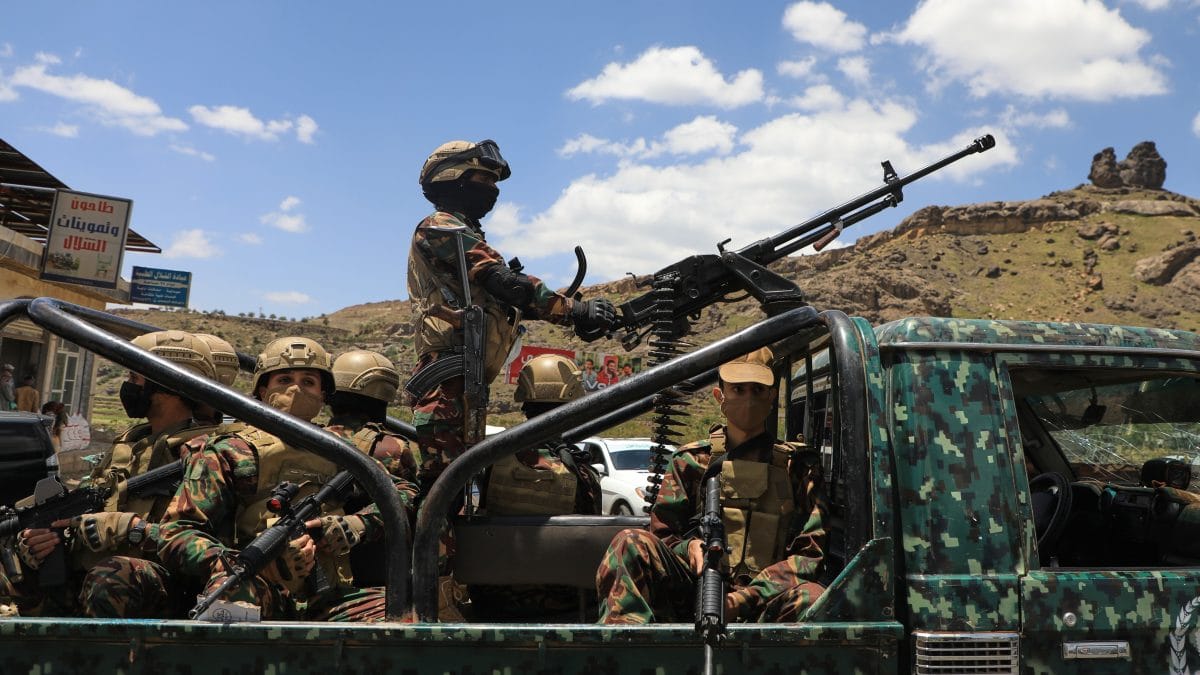
Newly obtained photographs shows significant damage at US military sites in Saudi Arabia and Kuwait after Iranian attacks, challenging earlier descriptions of limited impact, as reported by the CBS News.
Amid the ongoing conflict between US and Iran, CBS News has published a handful of new images. These photographs show substantial damage at several US military positions in the Middle East following Iranian missile and drone attacks.
The CBS news claims that these images were provided by a serving US military personnel. The photos show damaged buildings, vehicles and military equipment at bases in Saudi Arabia and Kuwait. The material provides a rare view of the impact of the Iranian attacks, although the full extent of the damage and its effect on US operations has not been established.
The revelations also sharpen the contrast with Defence Secretary Pete Hegseth’s previous description of Iranian projectiles that reached American installations as “squirters”, a term used to describe missiles or drones that evaded US defences but were not considered to have caused decisive damage.
One of the most striking photographs was reportedly taken at Prince Sultan Air Force Base in Saudi Arabia. It shows what appears to be a Boeing E-3 Sentry aircraft that suffered a direct strike, with the rear section of the aircraft separated from its burned fuselage.
The E-3 Sentry, recognisable by its large rotating radar system, is used for airborne surveillance and command functions. Damage to such an aircraft could therefore have implications beyond the loss of a single airframe, although the photographs alone do not establish whether the aircraft was operational at the time or how long any resulting disruption lasted.
Additional images from the Saudi base show buildings and barracks with sections apparently destroyed or heavily damaged. Nearby concrete T-walls appear to have remained standing. Such barriers have traditionally been used to provide protection against threats including indirect fire, but their ability to shield personnel and structures from modern missile attacks is limited.
Photographs from Camp Buehring in Kuwait similarly depict damage at the installation, a major staging point for US Army personnel and military equipment in the country's desert interior.
The images come amid a broader debate over the cost and consequences of the US military campaign against Iran. The administration has continued to argue that the operation is necessary to prevent Tehran from obtaining a nuclear weapon and to counter a government Washington has long accused of supporting militant groups.
President Donald Trump recently connected the conflict with the legacy of the September 11 attacks during a Pentagon ceremony marking 25 years since nearly 3,000 people were killed in the 2001 attacks.
Trump said the US had demonstrated its military strength in the years since September 11 and portrayed the confrontation with Iran as part of a continuing struggle against a major threat. Hegseth has likewise defended the campaign and said the administration remains focused on the objectives set by Trump.
“Over the past six months, we have laid waste to the world's most prolific state sponsor of terrorism,” Hegseth said, describing the conflict as a confrontation with Iran's Islamic government.
At the same time, opposition to the war has been growing on Capitol Hill. The House of Representatives voted 220-204 for a third time on a war powers resolution seeking to bring the conflict to an end. Previous attempts have not reached the president, and Trump would be expected to reject the measure if it did.
The vote followed a Congressional Budget Office assessment that put the cost of the conflict at at least $38bn and warned that US stocks of defensive missiles had fallen sharply enough that replenishment could take as long as five years.
The political debate is likely to intensify as the midterm elections approach. For now, the newly surfaced photographs add another dimension to the argument over the campaign. Alongside official claims about the effectiveness of US defences, they provide visual evidence of damage that was previously difficult for the public to assess.