 India Today ·
Politics
No foreign influence: Govt hits back at 'external pressure' charge on UPI fee
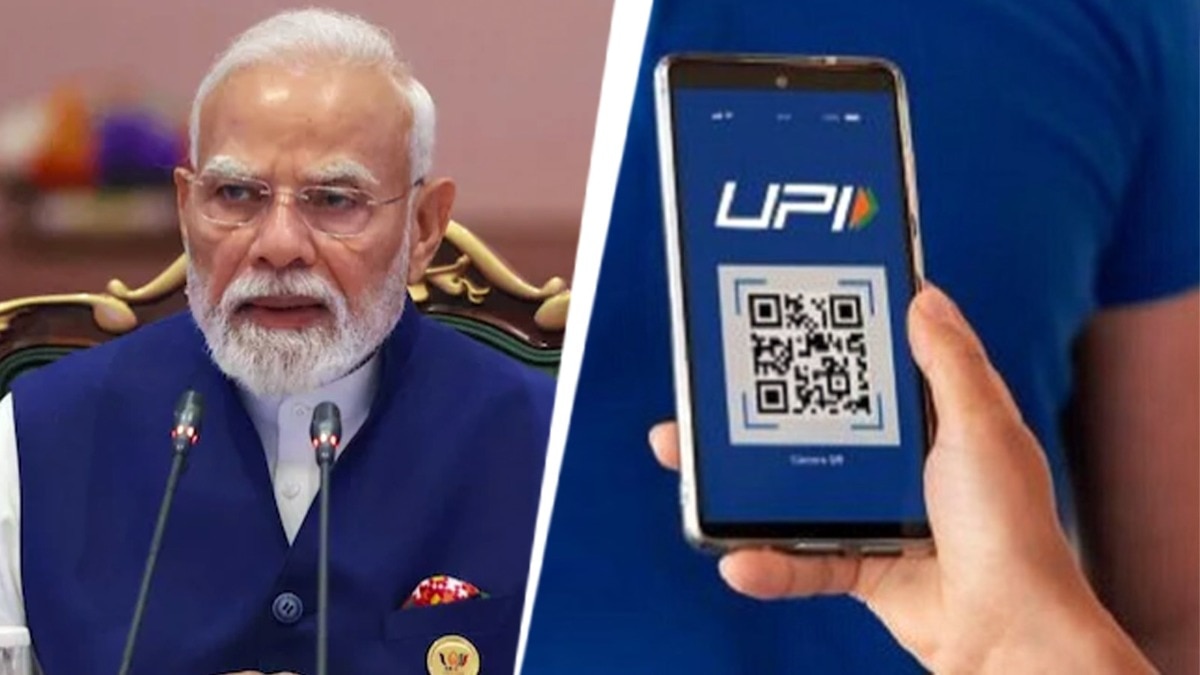
The government has rejected the opposition's charge that the introduction of a Merchant Discount Rate (MDR) on UPI payments was intended to benefit American card companies.
The Centre on Wednesday rejected claims that the introduction of a Merchant Discount Rate (MDR) on UPI payments was driven by foreign influence, after the opposition alleged that the move was aimed at appeasing US President Donald Trump. Clearing the air over the allegations, the Finance Ministry said India's UPI policy decisions were made "independently", and it would continue to remain free for consumers.
"Some claims suggest the change is due to foreign influence. This is false. India's UPI policy decisions are made independently, with the clear goal of building a self-sustaining, inclusive, and affordable digital payments ecosystem," the statement said.
The government's clarification comes after the Congress suggested the fee was being introduced to address US grievances that UPI and RuPay had hurt Visa and Mastercard.
WHAT IS THE NEW UPI MDR FEE?
From October 15, UPI transactions over Rs 2,000 will attract an MDR fee of 0.4%. However, the National Payments Corporation of India (NPCI) said this would be paid by merchants, and consumers won't be affected.
For instance, a merchant will pay Rs 40 when it receives a UPI payment of Rs 10,000. A shopkeeper or an entity receiving more than Rs 1 lakh per month from customers through UPI is categorised as a merchant.
The MDR fee, however, has been capped at Rs 300 per transaction.
Amid criticism from the opposition, which has sought its rollback, the Centre reiterated that "person-to-person transfers" would always remain free.
Separately, the Finance Ministry said banks have been advised to ensure merchants do not pass on the cost to customers. "Sending money to friends, paying at shops, or scanning a QR code - all remain without charges," the statement said.
'UPI MDR FEE NOT A TAX'
The Centre has also clarified that MDR on UPI payments was neither a "tax" nor a "charge" collected by the government or NPCI, which operates the UPI system.
"It (MDR fee) will be distributed among payment ecosystem participants, including banks and payment application providers, to support the operation and continued expansion of the UPI ecosystem," the statement said.
Until now, the government, banks and payment firms have largely borne the cost of running and expanding the UPI system. The MDR fee is expected to help cover some of those costs.
MOVE TO BENEFIT US CARD COMPANIES?
The Congress, however, has alleged that the move was intended to benefit American card companies. Rajya Sabha MP Jairam Ramesh has dubbed the move as nothing but "Narendra's Ongoing Trump Appeasement".
"Why 0.4% MDR? Is it because debit card MDR is also 0.4%? Is this being done to enable US card companies to compete with UPI?" Ramesh tweeted.
"The Modi govt has given in to a US demand to get rid of zero MDR and charge for UPI," he further said. To buttress his claim, Ramesh cited the US Trade Representative's (USTR) previous criticism of UPI being free in India.
The Congress has claimed the move would drive up prices of most commodities as merchants might pass on the levy to the consumers.
Earlier this year, the USTR, in its annual report, listed the inability of American electronic payment services suppliers to participate in India's UPI ecosystem as barriers to foreign trade. The report came as India and the US were working to finalise a trade deal.
However, the government has now dismissed the charges that the move was taken under foreign pressure.
Furthermore, the Finance Ministry also underlined that over 95% of UPI payments to merchants were below Rs 2,000, leaving the overwhelming majority of retail volume unaffected.