 Scroll.in ·
Politics
‘Have a spine’, roll back charges on UPI payments, Rahul Gandhi to Modi
The Aam Aadmi Party said the charges were part of the BJP government’s ‘new loot policy’.
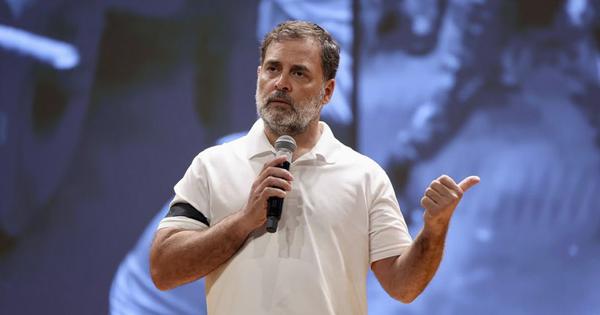
Opposition leader Rahul Gandhi on Wednesday demanded that the Union government roll back charges on Unified Payments Interface transaction, urging Prime Minister Narendra Modi to “have a spine” and “stop lying down in front of the United States”.
Gandhi alleged that the prime minister had “taxed” every Indian to give a “huge amount of money” to the US.
On Monday, the Union government said that UPI transactions to merchants valued above Rs 2,000 will attract a merchant discount rate of 0.4%.
Merchant discount rate is a fee charged to businesses by banks to cover the costs of processing transactions. The rate typically ranges between 1% and 3% of the transaction value for credit card payments and can be up to 0.9% for debit card transactions.
Congress MP Jairam Ramesh questioned whether the move was a means to allow United States’ card companies to compete with UPI payments in the Indian market.
“The Modi government has given into a US demand to get rid of zero [merchant discount rate] and charge for UPI,” Ramesh said in a social media post. “The US trade representative earlier this year criticised UPI for being free and having driven out visa and mastercard.”
“The PM has redefined NOTA – Narendra’s Ongoing Trump Appeasement,” Ramesh added.
Congress leader Supriya Shrinate alleged that Indians were being forced to pay charges on UPI transactions because the government was “surrendering to American pressure” and wanted to help US companies increase their valuations.
“People in India who are already struggling with inflation and unemployment are now being forced to boost the valuation of an American company before they sell shares to the public,” Shrinate alleged.
The Congress leader said that Walmart-owned PhonePe and Google Pay together command more than 86% market share of UPI payments in India and claimed that the charges will help them increase their valuations.
Congress chief Mallikarjun Kharge said that the government’s “surrender” by introducing the charges was an example of its “meekness”.
Other Opposition parties also criticised the new charges on UPI transactions.
Aam Aadmi Party said the charges were part of Bharatiya Janata Party-led National Democratic Alliance government’s “new loot policy” and described it as an example of “Trump’s pressure on PM Modi’s decisions and his direct influence over India’s internal matters”.
Nationalist Congress Party (Sharadchandra Pawar)’s Anish Gawande alleged that the government had taken the decision because it had run out of money.
“Income Tax rebates are delayed,” he said. “Taxes are charged on UPI in the name of convenience fees. We are the World Bank’s biggest borrower.”
On Wednesday, the Union Ministry of Finance said claims that the charges had been introduced because of “foreign influence” were false.
“India’s UPI policy decisions are made independently, with the clear goal of building a self-sustaining, inclusive, and affordable digital payments ecosystem,” the ministry said on social media.
The government had clarified on Tuesday that the 0.4% fee had been capped at Rs 300 per transaction for payments of Rs 75,000 and more.
The ministry said that the new framework will have no impact on person-to-person transactions, “irrespective of the amount transferred”.
It also “advised” banks to ensure that the charges are not passed on to the customers.
In 2025-’26, while transactions exceeding Rs 2,000 accounted for just 4% of person-to-merchant UPI payment, they represented nearly two-thirds of the total value of such transactions.
Written by Sara Varghese. Edited by Nachiket Deuskar.