 India Today ·
Politics
Despite Centre's denial, Rahul Gandhi sticks to UPI tax claim, says PM bowed to Trump
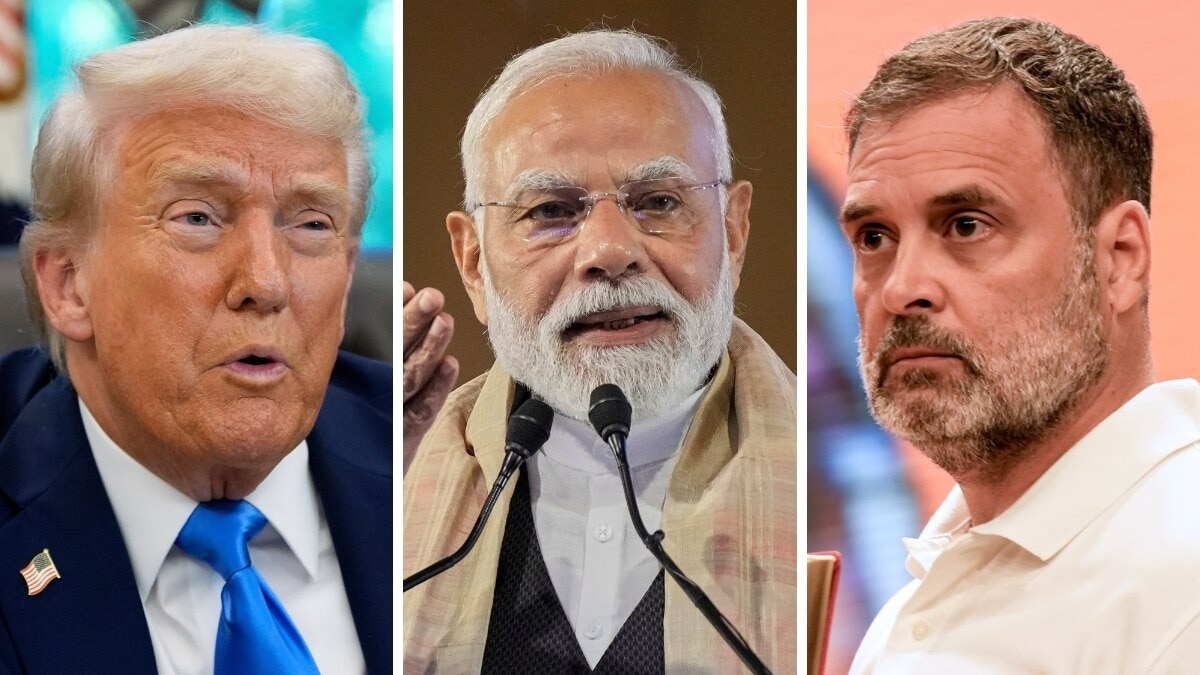
Rahul Gandhi demanded an immediate rollback of the new UPI merchant discount rate, calling it a "UPI tax" and alleging it would benefit the US. The Centre rejected the charge, saying MDR is not a tax, consumers will not bear it and the policy was decided independently.
Despite the Centre’s clarification that the newly announced merchant discount rate (MDR) is not a tax, Congress MP and Lok Sabha Leader of Opposition Rahul Gandhi on Wednesday demanded an immediate rollback of what he called a “UPI tax”. His remarks came amid a political row over the new framework for merchant UPI transactions.
Under the new framework, a 0.4% MDR will apply to specified merchant UPI transactions above Rs 2,000. The government has said customers will not bear the charge. The fee will also be capped at Rs 300 for transactions of Rs 75,000 and above.
As the row intensified, the Centre on Wednesday dismissed claims that the move had been shaped by foreign pressure. The Opposition had alleged that the decision was meant to appease US President Donald Trump.
Soon after the Ministry of Finance’s clarification, the Congress tweeted: “Narendra Modi weakened UPI under pressure from his friend Donald Trump and opened the way for American companies to earn from digital payments.”
Doubling down, Rahul Gandhi also took to X and invoked his grandmother, former Prime Minister Indira Gandhi, saying: “Indira ji was once asked whether she leans left or right and her response was, ‘I don't take left, I don't take right, I stand straight.’ Modiji has a completely different concept. He is neither left nor right. He has decided to lie down straight and prostrate himself in front of Donald Trump.”
Rahul Gandhi then claimed that the new move would divert a huge amount of money to the US.
“He has put a tax on every single Indian person by taxing UPI and giving huge amount of money to the United States. Modiji please stop lying down in front of the United States. Have a spine. Stand up and roll back the UPI tax.”
Responding to the criticism, the Finance Ministry said India’s policy decisions on UPI were taken independently and maintained that the payments system would continue to remain free for consumers.
In a statement posted on social media, the ministry said: “It is clarified that MDR is neither a tax nor a charge collected by the Government or NPCI. It is distributed among payment ecosystem participants, including banks and payment application providers, to support the operation and continued expansion of the UPI ecosystem.”
The ministry also outlined what it described as safeguards for consumers. It said banks had been instructed that merchants could not pass the MDR burden on to customers. It also said there would be no hidden fees, adding that UPI applications would not be allowed to impose platform charges.
Rejecting allegations of outside influence, the ministry said claims that the change had been made because of foreign pressure were false. It added that India’s UPI policy decisions were being made independently, with the aim of building a self-sustaining, inclusive and affordable digital payments ecosystem.
The issue has now turned into a political flashpoint, with Rahul Gandhi pressing for the framework to be withdrawn immediately, while the government insists that the MDR is not a tax, will not affect consumers and has been introduced as an independent policy decision.
AMENDMENT PAVED WAY FOR UPI CHARGES: SHRINATE
Addressing a press conference earlier today, Congress leader Supriya Shrinate said that running UPI requires Rs 20,700 crore every year and questioned claims that there was no money to run the payments system.
She said that in FY 2025-26, the RBI transferred Rs 3 lakh crore in surplus to the Modi government, the profit of the country’s listed banks was above Rs 4.11 lakh crore, and NPCI, which runs UPI, had a pre-tax profit of Rs 1,888 crore.
Shrinate said UPI could therefore be fully run with just 7.2% of the money transferred by the RBI to the government.
She then alleged that the Modi government had “lied in Parliament” over the issue.
According to Shrinate, the government brought the Taxation and Other Laws Amendment Bill, 2026, in August, which opened the way to impose merchant discount rate (MDR) on UPI transactions.
She cited Finance Minister Nirmala Sitharaman’s statements in Parliament, saying that on August 6, she said “no decision has been taken on MDR”, while on August 10, she said that “no framework for MDR has been finalized”.
Shrinate said that a notification imposing MDR charges was issued on September 14.
“Collecting from UPI means weakening UPI,” she said.
Shrinate alleged that Prime Minister Narendra Modi had weakened UPI under pressure from US President Donald Trump and opened the way for American companies to earn from digital payments.
Last year, the Finance Ministry dismissed speculation and claims that MDR would be imposed on UPI transactions, calling them “completely false, baseless and misleading”.
The ministry further said the speculation was baseless and sensation-creating, and would create needless uncertainty, fear and suspicion among Indians.
The official rebuttal came after several reports claimed that the government was planning to impose MDR on large-ticket UPI transactions. MDR is a fee charged by banks for processing payments in real time.