 The Indian Express ·
Politics
Writer’s Corner | Sahitya Akademi awardee Rosy D’souza on translating into Kannada
Although she has done extraordinary work in the field of Kannada translation, Rosy D'souza's native language is not Kannada.
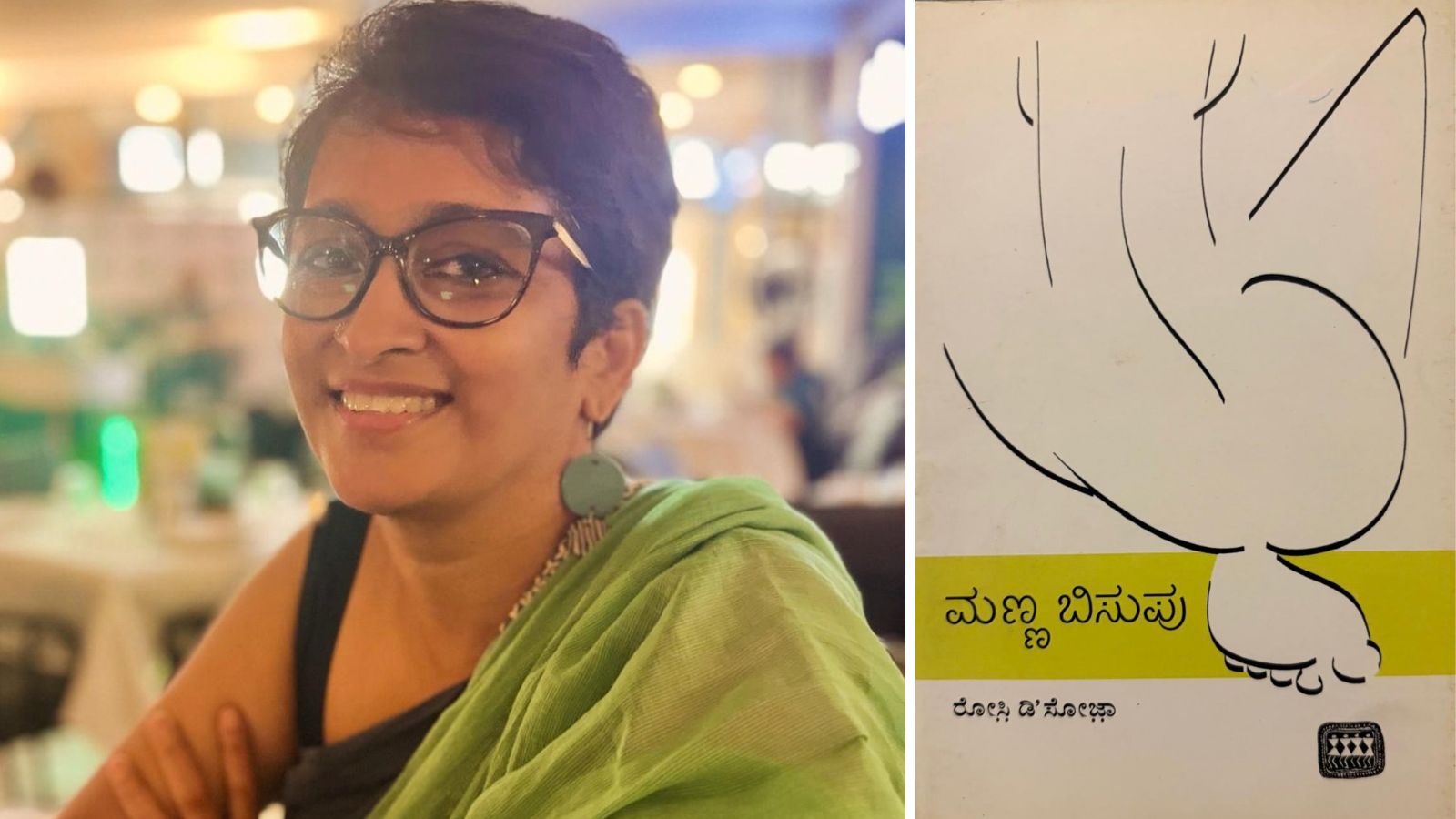
Among writers and translators in Karnataka, there are some who keep a low profile and stay out of the public eye. One of them is Rosy D’Souza, a Karnataka Sahitya Akademi awardee known for her work translating Furrows in a Field, the biography of former prime minister H D Deve Gowda, into Kannada.
She rather humbly puts it: “I am not an academic. I just do it out of my passion and love for reading. When I do a translation, it is because I love that work.”
D’Souza’s relationship with Kannada did not begin in Bengaluru; she hails from coastal Karnataka.
Explaining her outlook on writing in Kannada, she said, “My imagination is fed by the sea and the mountains and forests. It is geographically a very different landscape from Bangalore.”
The beauty of the coastal landscape inspired a poetry collection titled Mannina Bisupu, or warmth of the soil.
Although she has done extraordinary work in the field of Kannada translation, D’souza’s native language is not Kannada. She comes from a Konkani background and grew up in an area where the lingua franca was Tulu.
Recalling how she was exposed to Kannada literature, she said, “The love of reading began with Kannada books. Being in a small town, you read what you have in your school library, in the news stand, etc. I was also blessed with a lot of good Kannada teachers.”
A general love of Kannada literature turned into a knack for translation with an informal effort at translating the philosophical writings of Jiddu Krishnamurti. As she put it, her translation needed to feel like she had a personal reason to do it.
Moving into formal translation work, she translated the Prison Diaries of freedom fighter H Y Sharada Prasad, dating back to his incarceration at the age of 19.
Explaining the background of the translation, D’souza said, “He was a Mysorean Kannadiga. Translating the diaries, I was even told by his own family and many others at that function that they were reading Sharada Prasad himself. He was a true Mysorean and his language would reflect that.”
Later on, when veteran UK writer and journalist Jeremy Seabrook wrote a column for Vijaya Karnataka (which D’souza’s husband Sugata Srinivasaraju was editor-in-chief of at the time), she was the silent translator behind the scenes.
‘A translation that had to be done’
Her magnum opus, of course, was the translation of Deve Gowda’s biography, written by Srinivasaraju. As she put it, it was a translation that had to be done, as it was unimaginable for the local audience that a figure like Deve Gowda would have an English biography but not one in Kannada.
Veteran IAS officer and promoter of Kannada literature Chiranjeev Singh complimented the Kannada version as reading closer to home.
This is a sentiment that Deve Gowda himself shared, when he remarked, “Idhu hrudayakke, adhu buddhige [This (the Kannada version) is for the heart, that (English version) is for the mind].”
D’Souza said, “It is those personal commitments that have driven me. That’s why you won’t find me in seminars or literary circles.”
D’Souza’s next major translation effort will be a Kannada edition of Srinivasaraju’s The Conscience Network: A chronicle of Resistance to a Dictatorship, a history of the resistance to the Emergency, centred on the Indian diaspora.