
Why scientists’ nearly-100-year-journey towards creating ‘artificial Sun’ continues to face hurdles
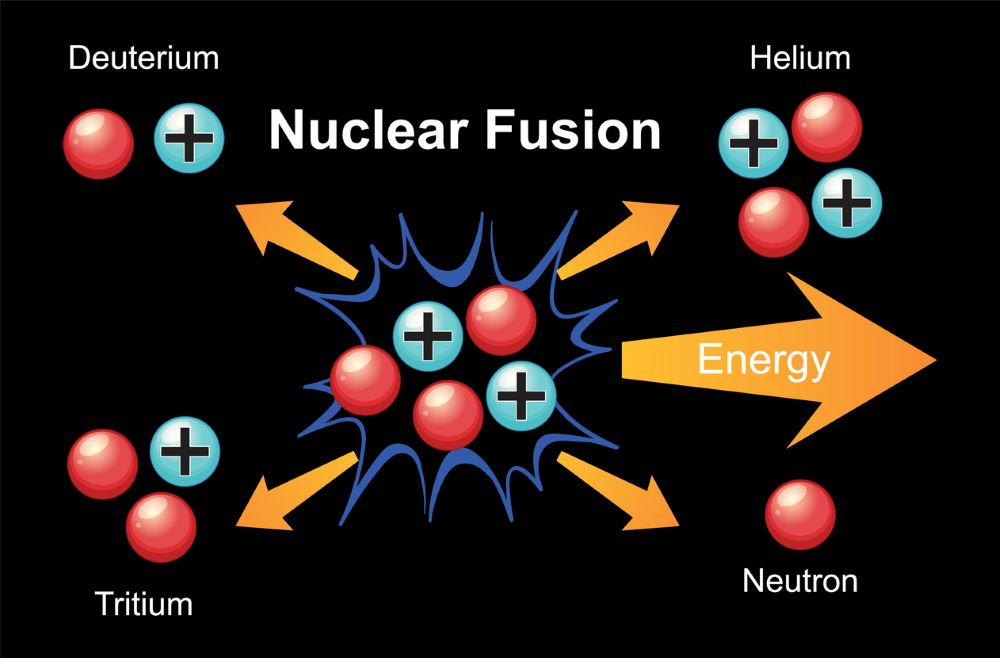
For decades, physicists have been trying to recreate on Earth the nuclear process that makes the Sun shine, building machines that heat hydrogen nuclei to blazing temperatures and confine them long enough for fusion reactions for energy generation. In India that work happens at the Institute for Plasma Research in Gujarat. And earlier this week, researchers there took another step towards that goal.
It was a late evening in March 1929. Twenty-six-year-old Fritz Houtermans was out for a walk with Charlotte Riefenstahl, a fellow young physicist. Both had received their doctorates in theoretical physics from Göttingen University two years earlier and were still associated with the university.
The Sun had set. Dusk gradually gave way to darkness and the first stars appeared in the sky. They walked close together, their conversation occasionally giving way to silence, their hands brushing as they strolled through the evening. It was a pleasant, romantic moment.
“Look how pretty the stars shine!” Charlotte exclaimed in a husky voice.
Houtermans, apparently unable to resist the opportunity to impress his girlfriend, replied with some pride: “I’ve known since yesterday why it is that they shine.”
It was not quite the romantic response Charlotte might have expected. But Houtermans had reason to boast. Just the previous day, he and the British physicist Robert d’Escourt Atkinson had solved the puzzle of how stars generate enormous energy and intense light. Their work, titled Zur Frage der Aufbaumöglichkeit der Elemente in Sternen (On the Question of the Possibility of the Synthesis of the Elements in Stars), was published a few months later in the physics journal Zeitschrift für Physik.
The paper showed that thermonuclear fusion deep inside the star's dense core produces the energy and radiation. Under the immense temperature and pressure in stellar cores, light hydrogen nuclei can combine to form heavier nuclei, releasing energy in the process. This is thermonuclear fusion.
We do not know what Charlotte thought of Houtermans’ rather unromantic answer. But the stellar pickup line evidently worked. The two married in August 1930, only to be separated in 1943 as a result of Nazi racial laws that prohibited Germans from marrying Jews.
Nearly a century later, physicists are still pursuing the question that Houtermans and Atkinson helped unravel. If stars can produce energy through nuclear fusion, can we reproduce the same process here on Earth? Can we have a mini-Sun shine in our hands?
That question has sparked one of the most challenging scientific and engineering efforts of the modern era. Around the world, researchers are building machines that heat hydrogen nuclei to blazing temperatures and confine them long enough for fusion reactions to occur.