 Firstpost ·
Politics
Drone attack prompts air alert over Mecca: Why this is unprecedented and alarming
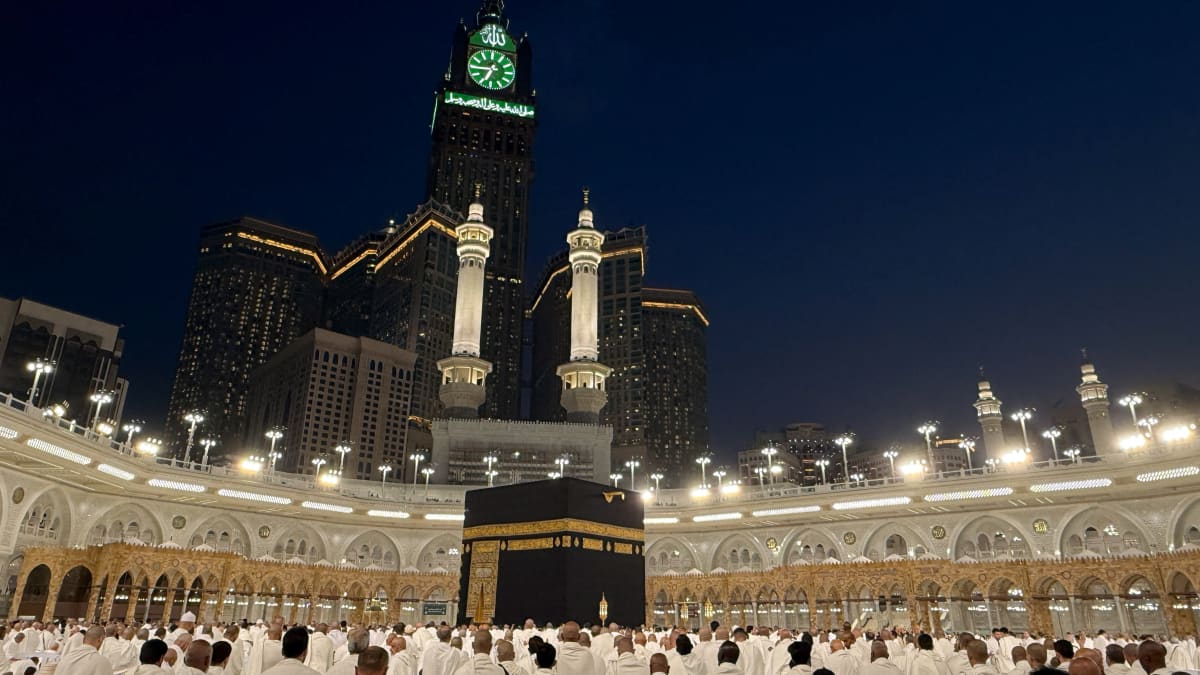
Saudi Arabia has claimed to have intercepted a Houthi drone south of Mecca. Riyadh issued an air alert and said that such an attack was a ‘red line’, while the Organisation of Islamic Cooperation condemned the incident. Mecca is Islam's holiest site, and the incident has fuelled fears that it could lead to further escalation between the kingdom and the Houthi group
Tensions between the Houthis and Saudi Arabia have kicked up further after Riyadh announced that it had intercepted a Houthi drone before it could reach the holy city of Mecca.
Following the attack, the Kingdom, for the first time in history, activated an aerial threat alert over the religious city. Moreover, it warned that an attack on Islam’s two holiest sites and on pilgrims was a “red line”, adding that it would take necessary deterrent measures against the Houthis.
Meanwhile, a Houthi official rejected the claim, with spokesperson Hazem al-Assad writing on X: “The claims about targeting Mecca are a worn-out lie that has been used before and no longer fools anyone.”
Analysts believe that the attempted drone strike aiming at Mecca will further stoke tensions between the two warring sides. Last week, the Iran-backed Houthis seized control of the entirety of Yemen’s Red Sea coast and the Bab el-Mandeb Strait, a vital artery for Saudi oil exports.
Let’s understand why the drone attack at Mecca is alarming.
Saudi Arabia intercepts drone near Mecca
Saudi air defences destroyed a drone attempting to enter the airspace of the holy city of Mecca on Tuesday evening. The Kingdom stated that the drone fired by the Houthis was intercepted at 6:50 pm Saudi time south of Mecca.
Saudi coalition spokesperson Turki al-Malki posted on X, “The Royal Saudi Air Defense Forces intercepted and destroyed a hostile drone launched by the Terrorist Houthi Militia before it entered the prohibited airspace of the Holy City of ‘Makkah Al-Mukarramah’.”
Many posted visuals of the reported interception on social media. However, its authenticity couldn’t be verified.
On Tuesday, Saudi Arabia issued security alerts across parts of the country — including in Mecca, in the Jeddah and Taif regions, and other cities. The alerts, including the first one issued in Mecca since the war began, were quickly lifted, according to the Saudi civil defence.
The US embassy also issued an advisory to “reconsider travel” to Saudi Arabia after Riyadh issued alerts in Mecca and other areas amid Houthi attacks. The advisory warned of the “risk of Iranian drone and missile targeting of American interests, armed conflict, terrorism, exit bans and local laws regarding social media activity,” adding, “Do not travel to the Yemen border due to threat of terrorism.”
Following the interception of the drone, Riyadh noted that the security of the holy city was a “red line” and the coalition would take necessary deterrent measures against the Houthis. “The security of the Two Holy Mosques and the pilgrims is a red line, and the Joint Forces Command of the Coalition will not hesitate to take the necessary and deterrent measures against the Terrorist Houthi Militia,” the coalition said in a statement shared by spokesman Turki al-Maliki on X.
Muslim world condemns drone strike on Mecca
The Organisation of Islamic Cooperation, which is a bloc of 57 Muslim countries, condemned “the heinous attacks launched by the Houthi group on the holy city of Mecca and the Medina region”, saying they were intended to “terrorise civilians, violate the sanctity of holy sites and mosques, and provoke the feelings of Muslims around the world”.
In a statement, the OIC General Secretariat said attacks on “holy sites, mosques and civilian objects constitute terrorism that contradicts Islamic values, international norms and laws”. It added that violating the sanctity of holy sites was “a transgression that cannot be accepted or tolerated” and required deterring those responsible.
The organisation expressed “full solidarity” with Saudi Arabia and support for measures taken by the kingdom to protect holy sites and civilians, as well as its security and sovereignty.
Pakistan also condemned the drone attack on Mecca. Pakistan PM Shehbaz Sharif on X wrote, “I condemn in the strongest possible terms the dastardly and heinous attempted drone attack against the Holy Site of Makkah Al-Mukarramah.”
The Pakistani leader’s statement also called on “all parties to exercise maximum restraint and to step back from the brink of further escalation”.
However, the Houthis have refuted charges of being responsible for the drone interception near Mecca. A Houthi military source denied the group posed any threat to Mecca or other holy sites, in comments carried by the Houthi-run SABA news agency on Tuesday.
Additionally, Hazem al-Assad from the Houthis’ politburo wrote on X, “The claims about targeting Mecca are a worn-out lie that has been used before and no longer fools anyone.”
Significance of Mecca to the Muslim world
But what makes an attempted drone attack on Mecca so alarming?
Mecca is regarded as the holiest city in Islam. It is traditionally recognised as the birthplace of the Prophet Muhammad and is home to the Kaaba at the centre of the Grand Mosque, Islam’s most important place of worship.
Located in the Hejaz region of western Saudi Arabia, it is also the focal point of the annual hajj pilgrimage — one of the five pillars of Islam — which millions of Muslims undertake each year.
The significance of Mecca goes beyond its religious practices. It symbolises unity and faith for over a billion people. The city not only attracts millions each year for Hajj, but also thousands of others for Umrah.
Despite all the fighting in the region, Mecca has never been attacked – barring the 1979 attack – highlighting just how sacred the place is. On November 20 that year, the Grand Mosque itself was seized by an armed group, led by former Saudi National Guard corporal and religious preacher, Juhayman al-Utaybi, in one of the most extraordinary episodes in modern Saudi history. Almost two weeks later, with the assistance of France, Saudi Arabia was able to break the siege and capture Juhayman alive.
In July 2017, Saudi air defence forces intercepted a ballistic missile launched toward Mecca by Yemen’s Houthi militia, according to the Arab coalition command. In a statement, the coalition command said the missile was shot down over Al-Wasliya area in Taif province, some 69 kilometres away from Mecca. No damage or injuries were reported. The missile attack was “clearly a desperate attempt to disrupt the Hajj season,” the statement said.
Houthis vs Saudi Arabia: A flurry of fighting
The alleged attack on Mecca comes at a time when the Houthis and Saudi Arabia are engaged in a bloody offensive.
Last week, the Houthis seized control of parts of Yemen’s Red Sea coast overlooking the Bab el-Mandeb, one of the world’s most important shipping straits, threatening Saudi oil exports rerouted from the Strait of Hormuz.
Additionally, the Houthis have launched ballistic missiles and drones at several Saudi Arabian cities, including Khamis Mushait, Abha, and Taif, injuring 13 civilians. And on Sunday, the Houthis claimed responsibility for an attack on a Saudi military base.
In response, the Houthis claimed Saudi forces had launched airstrikes across Houthi-held areas of Yemen. The military spokesman of the Houthis, Yahya Saree, was quoted by Al Jazeera as saying Saudi warplanes launched more than 450 strikes in the past week.
The question now arises: Will the drone attack on Mecca escalate this fighting even further? Only time will tell.