 Firstpost ·
Politics
Saudi Arabia accuses Houthis of targeting Mecca, says drone intercepted near Islam’s holiest city
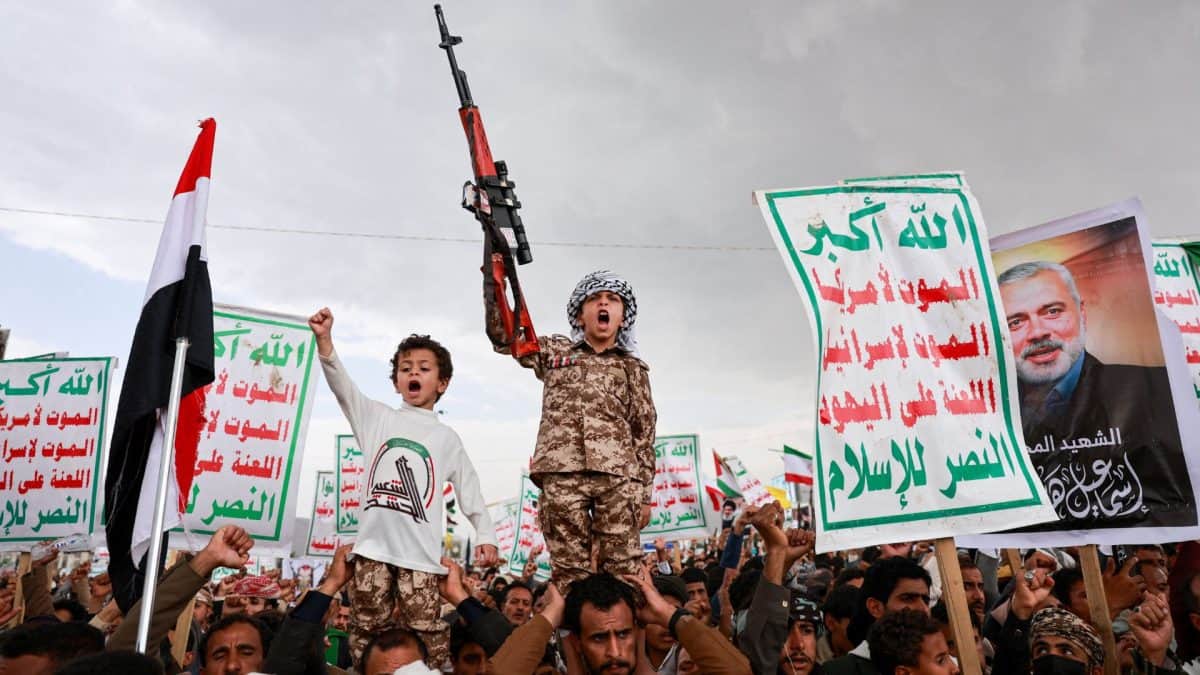
Saudi Arabia has accused Yemen-based Houthis of targeting Mecca, the holiest city in Islam, after intercepting a drone headed in its direction.
Saudi Arabia on Wednesday accused the Yemen-based Houthis of targeting Mecca, Islam's holiest city, after intercepting a drone headed in its direction.
The Saudi air force intercepted a drone launched by the Houthis towards Mecca at 6:50 pm on Tuesday before it entered the city's prohibited airspace, according to Major General Turki Al-Malki, spokesperson for the Saudi-led coalition against the Houthis.
The Saudi accusation comes at a time of heightened tensions in West Asia as the Houthis have stepped up attacks on the kingdom and opened a second front in the region by choking the Bab al-Mandeb Strait, the southern entrance to the Red Sea. The Houthis have declared a blockade of Saudi Arabia and frequently launched missiles and drones at the kingdom in recent weeks.
The Houthis have denied attacking Mecca and called the accusation "a worn-out lie that has been used before and no longer fools anyone".
The 57-member Organisation of Islamic Cooperation (OIC) condemned the attack as "heinous" and supported any action that Saudi Arabia might undertake against the Houthis.
"The General Secretariat expresses its full solidarity with the Kingdom of Saudi Arabia and its support for all measures taken by the Kingdom to deter the aggressors, preserve the sanctity of holy sites and the lives of Muslims, and protect its security and sovereignty," the OIC said in a statement.
Saudi Arabia warns Houthis of 'red line'
The incident could further inflame tensions in the region as Saudi Arabia is expected to respond to the attack. As the Custodian of the Two Holy Mosques in Mecca and Medina, the kingdom would be unable to let the incident pass.
Al-Malki has called it a "deliberate act intended to provoke the feelings of millions of Muslims" and said an attack on Mecca remains a "red line" and that the kingdom "will not hesitate to take the necessary and deterrent measures" against the Houthis.
"This can only be described as a disgraceful act, an attempt to target the birthplace of revelation, the land of the message, and the destination that draws the hearts of millions of Muslims from around the world. It was also an attempt to terrorise the Umrah performers visiting the Grand Mosque in peace and to harm citizens and residents," Al-Malki further said.
The OIC also echoed that framing and dubbed the incident "an unacceptable and intolerable transgression".
But how Saudis may respond remains to be seen as their strikes have so far failed to deter the Houthis, who have continued to mount pressure on the kingdom and its partners. While attacks attributed to Iranian proxies in Iraq have forced the closure of the Saudi East-West oil pipeline, the Houthis have choked the Bab al-Mandeb, the gateway to the Red Sea — around 12 per cent of the world's seaborne oil and 30 per cent of container traffic passes through the waterway.
Last week, the Houthis captured the Yemeni port of Mocha on the Red Sea and the island of Perim to gain a chokehold on the Bab al-Mandeb. With the chokehold, Iran and its proxies now essentially dominate two of the world's most critical waterways.