
At Baba Bakala, Punjab parties draw battle lines ahead of 2027 polls
Read at The Indian Express1 outlet covered this
At Baba Bakala, Punjab parties draw battle lines ahead of 2027 polls
How outlets told it
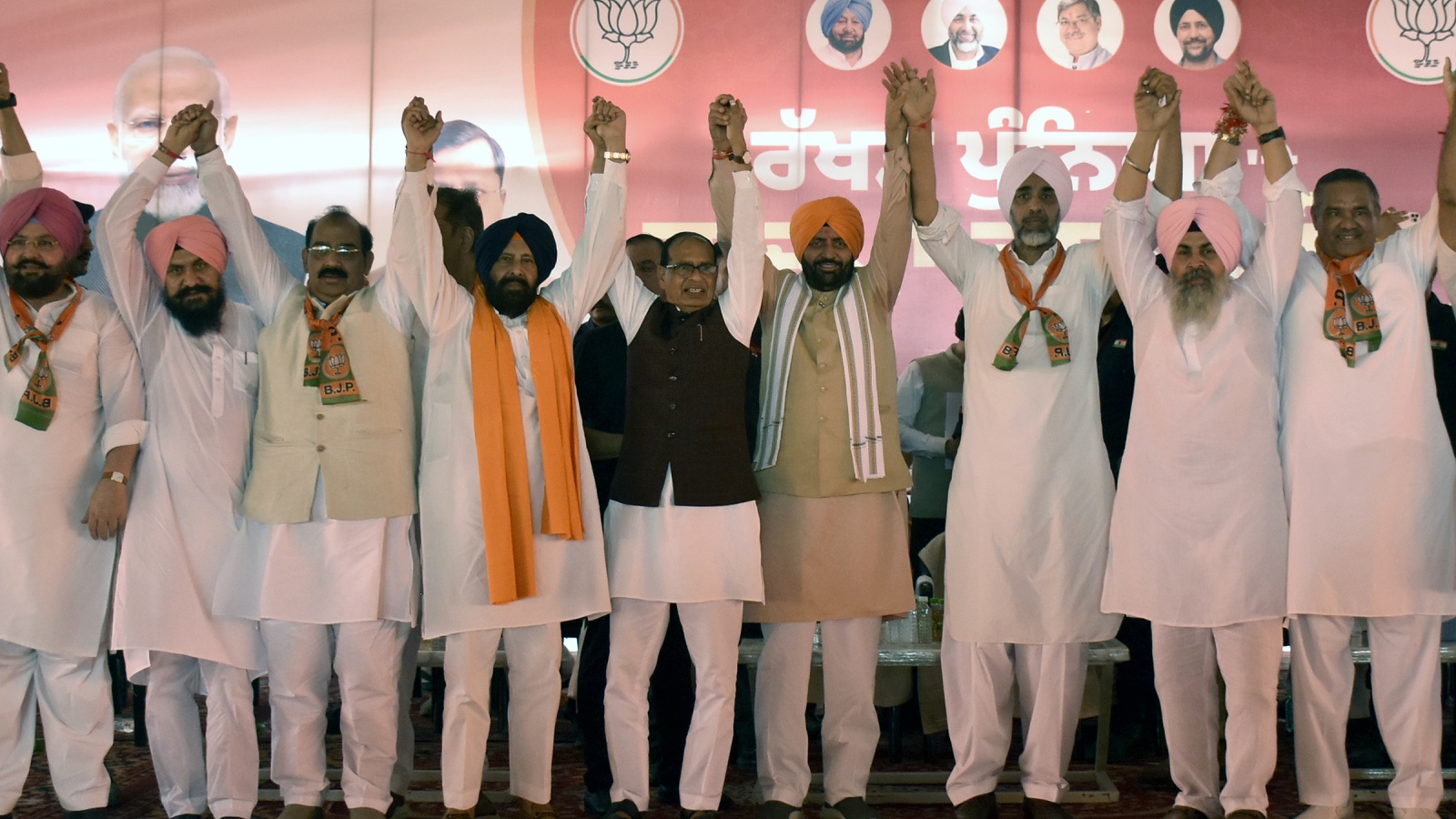
Union Agriculture Minister Shivraj Singh Chouhan with Haryana CM Nayab Singh Saini and other leaders. (Rana Simranjit Singh) It is a small, historic town and a major centre of pilgrimage for Sikhs that turns into a major political battleground annually during the Rakhar Punia festival. On Friday, Baba Bakala in Amritsar district — where Guru Tegh Bahadur was revealed to be the ninth Sikh Guru — transformed into the site of the tensions and contradictions that animate Punjab politics today, as all the major parties held parallel conferences months before the Assembly elections next year. Congress In the faction-ridden state Congress, state Congress president Amrinder Singh Raja was conspicuous by his absence. For weeks, Warring and former CM Charanjit Singh Channi have engaged in a bitter feud as the latter tries to take control of the state unit again, replacing the Pradesh Congress Committee president who appears to enjoy the party high command’s trust.Channi, who is trying to position himself as the Congress’s CM face, took aim at incumbent Bhagwant Mann from the podium, accusing him of hurting deeply rooted religious sentiments and openly challenging the authority of the Sri Akal Takht Sahib, the highest seat of authority in Sikhism. Channi alleged that his successor had turned the CM’s official residence into an “epicentre of systemic corruption”, while official appointments are dictated from Delhi. While Channi targeted Mann, his ally and former Deputy CM Sukhjinder Singh Randhawa appeared to launch a veiled attack at the absent Warring, saying Punjab requires leaders of courage and accountability rather than those who barter political interests for personal gains. He said the party’s ongoing struggles transcend “individual ambitions” and the fight was fundamentally about safeguarding Punjab’s collective future from drug syndicates, gang violence, and administrative failures. Aam Aadmi Party (AAP) At the ruling party’s gathering, Bhagwant Singh Mann targeted political rivals and highlighted his administration’s developmental and welfare initiatives. The CM announced the immediate disbursement of Rs 181.5 crore in three-month instalments directly into the bank accounts of 5.3 lakh additional women beneficiaries under the flagship Mawan-Dheeyan Satkar Yojna, reinforcing the government’s commitment to women’s empowerment and financial inclusion. Mann targeted “modern-day masands” — masands were officially appointed local representatives of Sikh Gurus in the 16th and 17th centuries — and “fraud priests” attempting to “exploit religious sentiments” for political survival. The CM also accused the Shiromani Akali Dal (SAD) of committing “unpardonable historical sins”, referencing the incidents of sacrilege that occurred during the SAD-BJP government’s tenure. The Akali leadership had “compromised its political dignity” by “begging for an alliance” with the BJP, which was responsible for the deaths of farmers during the protests against the now-repealed farm laws, he alleged. The BJP, he added, would never find a foothold in Punjab. Mann also dismissed the Congress, saying it lacks a coherent vision for the state’s progress and was solely driven by power. BJP The BJP’s conference was the first-ever it held on its own in Baba Bakala. Heavyweight party leaders from the Centre and the state addressed the event. Union Agriculture Minister Shivraj Singh Chouhan, who spearheaded the party’s rally, assured the farming community that national trade pacts, whether with the US, the UK, or European nations, would safeguard the country’s agricultural interests. Taking digs at AAP national convener Arvind Kejriwal and Bhagwant Mann, Chouhan challenged them to account for their governance failures, specifically questioning why the AAP government opted out of the PM Fasal Bima Yojana, a central welfare scheme that, he said, could have shielded Punjab’s farmers from devastating crop losses during recent floods. Choudhan alleged that the state government took three months merely to compile a basic list of houses that had collapsed during the floods and had failed to deliver homes to those in need even though central funds had been released under the PM Awas Yojana. Haryana Chief Minister Nayab Singh Saini — whom the party has deployed in Punjab for the past several months with an eye on the elections — urged voters to evaluate the Mann government based on what it had delivered. He said that revitalising the Majha region’s infrastructure and dismantling the entrenched drug and weapon smuggling networks were the BJP’s primary objectives. Punjab BJP president Kewal Singh Dhillon also addressed the event. The BJP’s conference was attended by senior leaders such as national vice-president Manpreet Singh Badal, former Union Minister Ravneet Singh Bittu, national general secretary Tarun Chugh, and former state BJP president Sunil Jakhar. Shiromani Akali Dal (SAD) From the stage, SAD president Sukhbir Singh Badal, whose hold over the Panthic vote is under pressure, launched an offensive against “anti-Panth stooges of agencies”. He accused them of attempting to weaken his party and “drag Punjab back into the turbulent and dark era of the 1980s”. More than the established parties, Badal’s chief aim was the Shiromani Akali Dal (Waris Punjab De) breakaway group that is trying to erode the Badals’ Panthic vote bank. Badal targeted jailed MP Amritpal Singh, whose father is one of the members associated with the outfit, saying he was trying to emulate Khalistani militant Jarnail Singh Bhindranwale. Amritpal’s family had maintained active ties with the Congress for over three decades without ever condemning Operation Blue Star or the anti-Sikh violence, he alleged. Badal also accused the CM and his family of corruption, claiming he had “concrete evidence” against Mann. Akali Dal (Waris Punjab De) The party, with which Amritpal Singh is associated, unveiled an anti-drug action plan, with his father Tarsem Singh reading out the vision document from the stage. Saying that widespread addiction was an existential threat that had “tragically transcended” traditional communal and socioeconomic boundaries, the document proposes setting up autonomous anti-narcotics task forces reporting directly to the CM. These task forces must operate completely outside traditional police hierarchies, equipped with specialised training to tackle transnational drug cartels, said the document.