
How Stalin turned Vijay’s jaw gesture into a warning on power and politics
Read at The Indian Express1 outlet covered this
How Stalin turned Vijay’s jaw gesture into a warning on power and politics
How outlets told it
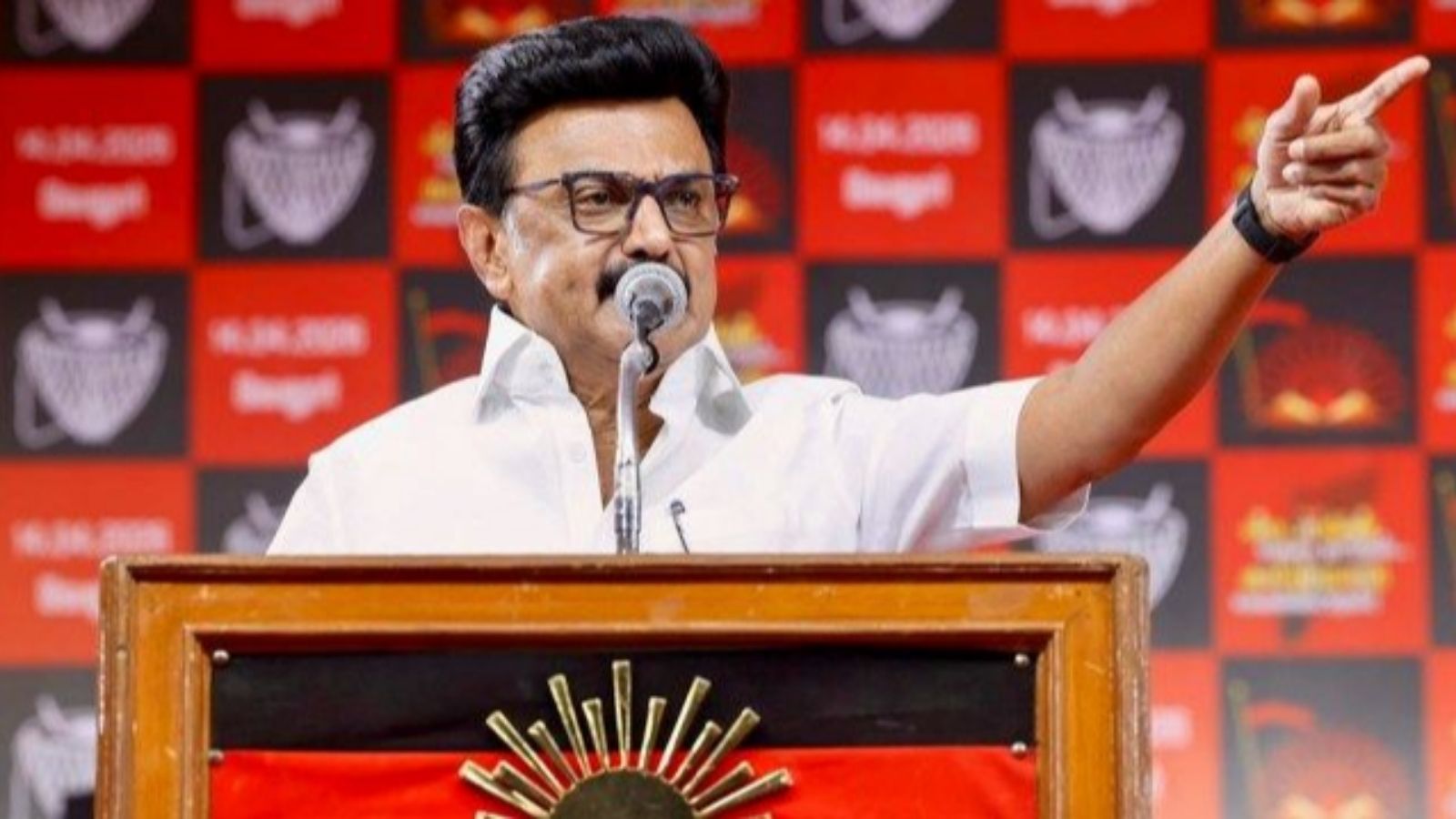
For nearly four decades, C Joseph Vijay trained Tamil audiences to understand a gesture before the dialogue arrived. A raised eyebrow could announce defiance; a pause could precede the punch line. On Wednesday, M K Stalin supplied the dialogue to one such gesture — and attached to it half a century of Tamil Nadu’s political history.Responding to the controversy over Chief Minister Vijay touching and slightly lifting his jaw with his right hand during his Assembly speech, the DMK president acknowledged the history Vijay had invoked before accusing him of trivialising it.“Brother Vijay, what you said about the history of MISA is true. There is nothing false about it,” Stalin said. “Under the MISA (Maintenance of Internal Security) Act, the police came to the Gopalapuram house to arrest me. I was subjected to many cruelties in prison.” Then came his answer to the gesture: “You even placed your hand like this and pointed to the jaw, didn’t you? That is correct.” Vijay had placed a palm against his jaw and moved it upwards — somewhere between holding, indicating and lifting the chin. In another setting it might have been unnoticed. In Tamil Nadu politics, where cinema has taught generations to read bodies almost as carefully as words, a few seconds acquired a political afterlife.
Vijay, after criticism from the DMK and parties supporting his government, including CPI(M) and VCK, clarified Tuesday that no insult was intended. “My body language was an involuntary expression. I would like to make it known that it was not in any way intentional,” he said. “Therefore, I kindly request that it should not be interpreted as an act intended to hurt anyone’s feelings on a personal level.” The clarification followed a tumultuous Assembly sitting in which DMK legislators demanded that Vijay’s references to Enforcement Directorate documents, the Sarkaria Commission and MISA be removed from the record. Speaker J C D Prabhakar rejected the demand and ordered marshals to evict protesting DMK members. ‘How did you not know all this’ What made the controversy combustible was that it touched one of the DMK’s foundational memories of persecution. Prime Minister Indira Gandhi imposed the Emergency in June 1975. The Karunanidhi government was dismissed in January 1976 amid an increasingly hostile relationship with New Delhi. It was a period that witnessed a larger churn of cinema, charisma and political power with MGR as the ruler. Stalin, then a young DMK activist and newly married, was detained under the MISA. On Wednesday, he reconstructed his arrest as a family scene frozen in memory. “Kalaignar (late M Karunanidhi) told them, ‘The boy has gone out for campaigning. He will return tomorrow. Once he comes back, I myself will call you. Come and arrest him,’ and sent them away,” Stalin said. “The next day, when I returned, he himself asked the police to come and told them to arrest me.” Stalin described incarceration in harsher terms. Ten detainees, he said, were packed into a small room and forced to use a single pot as a toilet. “At night, the police would not allow us to sleep. They would beat us with lathis and stamp on us with their boots,” he said.
“Because of those beatings, my dear elder brother and Member of Parliament Chitti Babu, who was with me, died in jail. Because of their beatings, the bones in my jaw were broken.” That history sharpened Stalin’s attack on Vijay, who describes the BJP-led Union government as his ideological enemy. “How did you, who portray the Union government as your ideological enemy, not know all this?” he asked. Stalin challenged Vijay’s reliance on the Sarkaria Commission and ED material too, arguing that governments had changed repeatedly since the 1970s and action would have followed had the allegations established wrongdoing. But Stalin’s larger target was Vijay’s three-month-old government. “Turning the Legislative Assembly itself into a place for shooting reels, standing on the bridge that we built and doing photoshoots – you are running the government and administration itself like a cinema shoot,” he said. “To conceal your incompetent administration, you are putting out all kinds of reels and deceiving an entire generation.” Real to real: Confronting a superstar The attack goes to the paradox confronting a superstar who reached power with a historic mandate. Vijay’s political asset remains his ability to compress emotion and meaning into an image. But the government is resistant to cinematic time. Files move slowly, promises acquire eligibility clauses, crime statistics refuse choreography and every problem does not disappear after an interval fight. Tamil Nadu has seen the actor-to-Chief-Minister transition before. MGR converted screen charisma into durable political authority, but his career also showed that image eventually had to coexist with organisation, welfare, administration and compromise. Vijay faces its digital-age version, where every gesture can become content before the Assembly has finished its day.
Stalin listed law and order, crimes against women, Parandur airport, farm-loan waiver and promises on cooking-gas cylinders and women’s assistance as evidence of a gap between campaign and government. “What you said then is one thing; what you are doing now is another,” he said. He also recalled Vijay visiting him after becoming Chief Minister and saying: “During the election campaign, I criticised you a lot. I am sorry, sir.” Stalin said he replied: “It’s all right, brother. I haven’t kept any of that in my mind. You are now the Chief Minister of a State. Whenever you speak about anyone, speak with the dignity that comes with that position.” “It seems you have forgotten all that,” Stalin said. “We fought for their grandfather. We fought for their father. Now, we will fight for them themselves,” Stalin said. “This is the history of our DMK. That history will never change.”