
Tamil Nadu awaits Wapcos report to desilt reservoirs
Read at The New Indian Express1 outlet covered this
Tamil Nadu awaits Wapcos report to desilt reservoirs
How outlets told it
CHENNAI: The TVK government is keen to expedite desilting works in major reservoirs, including Mettur, Vaigai, Amaravathi and Pechiparai, once the Water and Power Consultancy Services Limited (Wapcos) submits its feasibility report on the same.
The DMK government in 2024 entrusted Wapcos — a central public sector enterprise engaged in engineering and consultancy services — with obtaining statutory approvals from various agencies, including clearance from the Union Ministry of Environment, Forest and Climate Change, preparing a detailed project report (DPR), and conducting a feasibility study.
According to Water Resources Department (WRD) officials, Wapcos is expected to submit the report by December. The report would examine the feasibility, cost, technology and logistics involved in undertaking large-scale desilting works.
Officials said several advanced technologies, including underwater robotic crawlers and modern dredgers, could enable desilting in active reservoirs without disrupting water flow. However, funding and finding space to store dredged material remain major hurdles. “When desilting is taken up in major reservoirs, a massive area is required to store different types of dredged material,” a senior WRD official told TNIE.
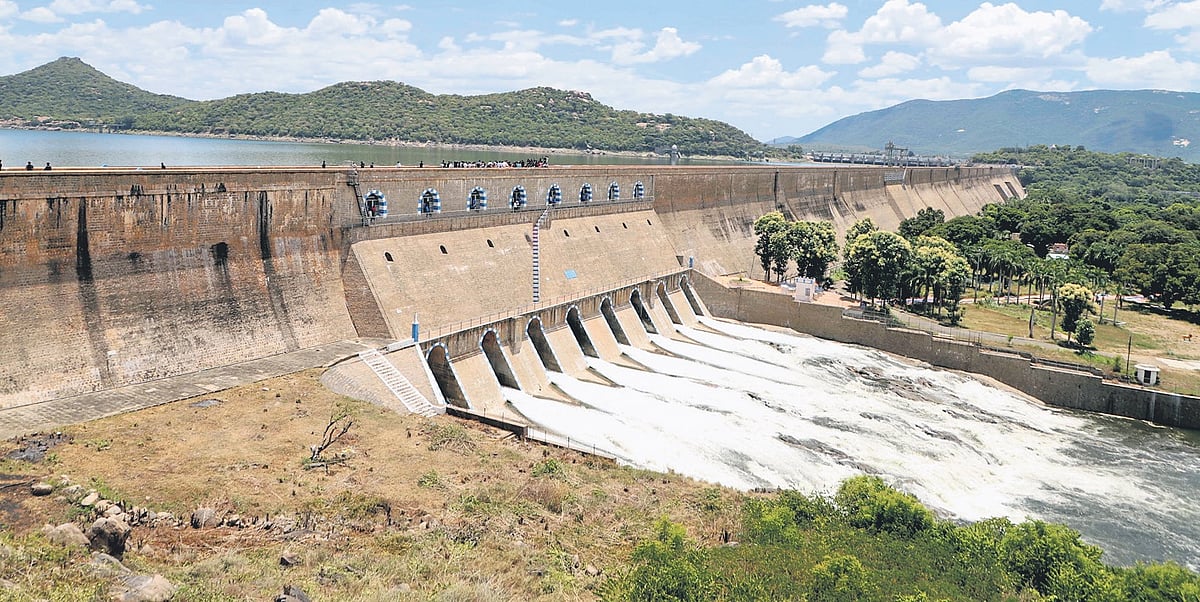
The Mettur reservoir, a major source of water for irrigation and drinking purposes in the delta districts, has a maximum water level of 120 ft and a capacity of 93.47 tmcft.The Mettur reservoir, a major source of water for irrigation and drinking purposes in the delta districts, has a maximum water level of 120 ft and a capacity of 93.47 tmcft. According to a Central Water Commission (CWC) assessment, the Mettur reservoir has lost nearly 18 tmcft of its capacity due to sedimentation since it was commissioned in 1934, the official said, adding that such perennial waterbodies could not be emptied for desilting.
However, the state government is planning to begin work under a revenue and expenditure model. The Wapcos report is, therefore, expected to provide clarity on whether large-scale desilting can be taken up, technologies that can be adopted, estimated cost, and arrangements required for handling and storing the dredged material.
Another senior WRD official said the state’s reservoirs faced relatively less siltation compared to those in the northern states. “We do not have extensive hill areas that contribute to heavy sediment inflow into reservoirs,” he said.
TN’s 90 reservoirs, with a combined capacity of 224.343 TMC, held 87.805 tmcft (39.74%) of water as of September 13, 2026. The official acknowledged that periodic desilting could have helped the state augment the storage capacity of its reservoirs. Had the WRD undertaken desilting of major reservoirs at least once a decade, the state could have increased its overall water storage capacity by around 50 tmcft, he said.