Padma Shri 'Badi Didi' who brought schools to 570 Bastar villages
Read at The Times of IndiaEducation and jobs · 1 outlet covered this
Padma Shri 'Badi Didi' who brought schools to 570 Bastar villages
How outlets told it
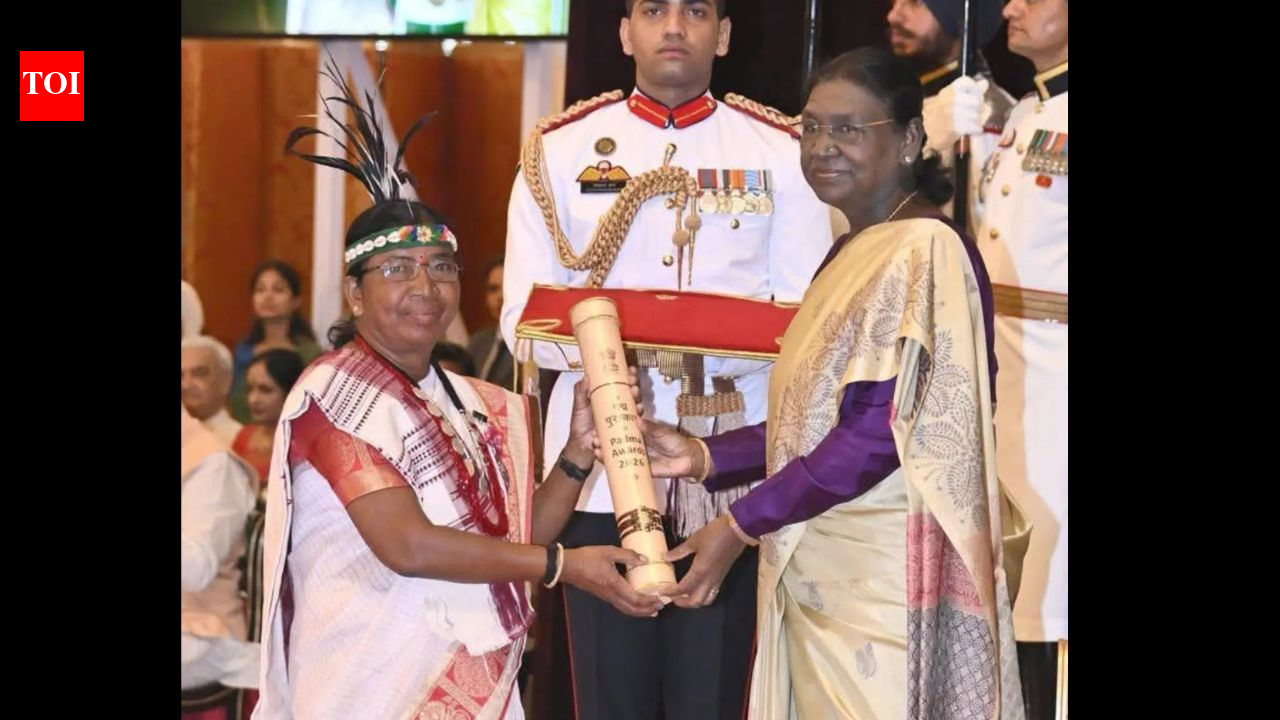
For over 40 years, Dr. Budhri Tati has travelled through the remote tribal villages of Bastar, Chhattisgarh, working to bring education, health and greater independence to local communities. Fondly known as “Badi Didi,” she has walked through hundreds of villages to encourage girls to stay in school, support women’s health and help families become more self-reliant. Her decades-long work has been guided by a simple belief: every child should have access to education, and every woman should have the opportunity to build an independent life. According to reports by ThePrint and The Better India, her decades of grassroots work were recognised in 2026 when she was awarded the Padma Shri for Social Work, one of India’s highest civilian honours.A childhood shaped by Bastar’s struggles13 Jul 2026 | 13:11What's one stereotype about women that you're tired of hearing?Dr. Budhri Tati was born on September 15, 1966, into a poor family in Hiranar village in Dantewada district, Bastar. Her childhood was spent in a region where remote villages often lacked easy access to education, healthcare, and other basic services. At around six, she went to a tribal welfare ashram, where she studied up to Class 10. Her early experiences eventually shaped the direction of her life. According to the Government of India’s Padma Awards citation, she received initiation into social service at the age of 15 and formally joined the All-India Vanvasi Kalyan Ashram in January 1984. That distinction is important: her connection with service began in her teenage years, while her education at the ashram began much earlier.When others stayed away, she walked inThe 1980s were an especially difficult period for Bastar, with conflict and isolation making it difficult for many organisations to work in remote areas. Tati chose a different path. In 1986, she began travelling through the rugged forest areas around Bastar, reaching villages that were difficult to access by road. Over the years, her journeys took her to 570 tribal villages, according to multiple reports about her work. She did not wait for families to come looking for help. She went to them.Her mission: get girls into classroomsOne of her biggest priorities was education, particularly for tribal girls. In many remote settlements, distance itself could prevent children from attending school. Parents also faced economic and social challenges that made sending children, especially girls, to school difficult. Tati began speaking directly to families and encouraging them to send their daughters to school. But she soon realised that simply telling children to study was not enough. If a school was too far away, families needed another solution.So she helped establish a residential hostel for girls from remote forest settlements. The first girls’ hostel was inaugurated in Barsur in 1990 with 11 girls. Today, a free hostel in Hauranar provides accommodation and education support to around 50 girls, according to the Government of India citation. For children who were among the first in their families to receive formal education, this created a path that had previously been almost impossible.Her work was never limited to educationEducation was only one part of Tati’s work. She also worked to spread awareness about maternal and child health, encouraged women to come together through self-help groups, and supported efforts to help women become economically independent. The Government of India describes her as someone who has continuously worked for women’s education and self-reliance through self-employment while also participating in social service in Naxal-affected areas. Reports on her work also highlight her efforts around literacy, healthcare awareness, women’s empowerment and social development across remote Bastar communities.Four decades, hundreds of villages and countless livesWhat makes Tati’s story remarkable is not one particular achievement. It is the consistency of her work. For decades, she kept returning to villages that were difficult to reach. She built relationships with families, encouraged education, supported women, and worked with communities rather than simply speaking about them from a distance. Her journey shows what grassroots work can look like when someone is willing to spend years earning people’s trust.The Padma Shri belongs to a lifetime of serviceOn May 25, 2026, President Droupadi Murmu conferred the Padma Shri on Dr. Budhri Tati at Rashtrapati Bhavan. The honour recognises decades of work that happened far away from the spotlight. For years, Tati walked through Bastar’s forests so children could walk into classrooms. She worked so women could become more aware of their rights, health, and opportunities. Today, Bastar’s “Badi Didi” has a national honour to her name. But perhaps the most powerful part of her story remains the simplest: she kept walking towards the people who needed her most.