
BRICS is bigger than G7 — and Russia now outsells the Gulf states
Read at India TodayWorld · 1 outlet covered this
BRICS is bigger than G7 — and Russia now outsells the Gulf states
How outlets told it
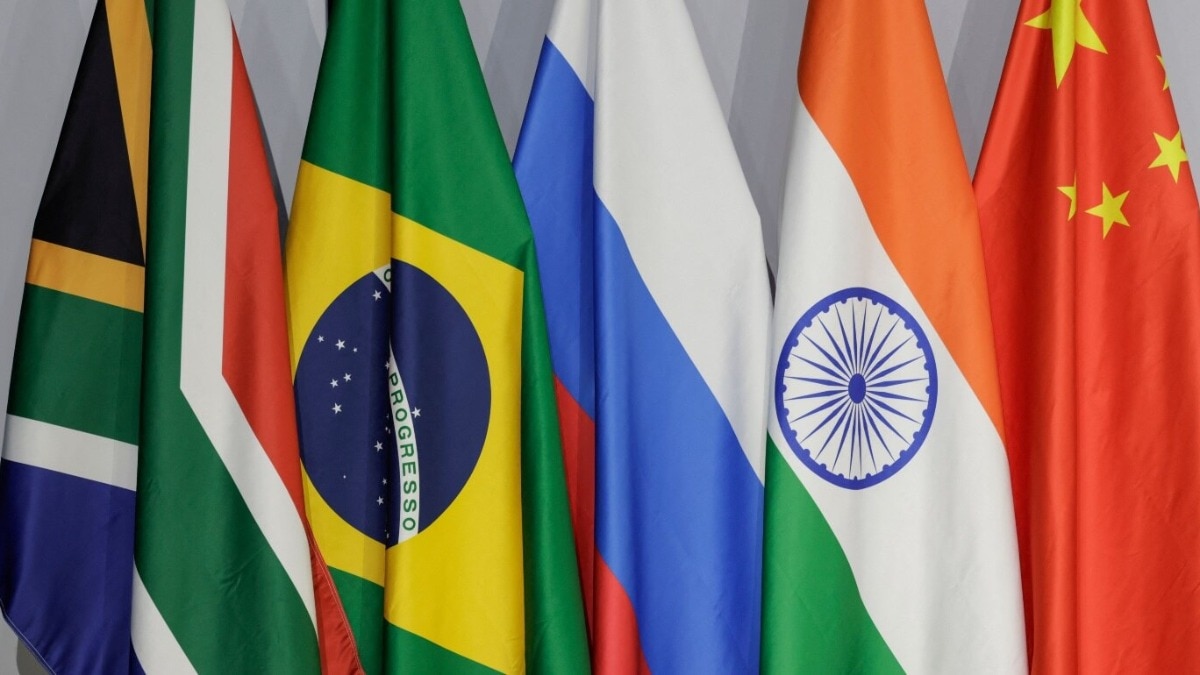
India hosts the 18th BRICS Summit on September 12 and 13, 20 years after the bloc was founded and with its oil map redrawn.New Delhi,UPDATED: Sep 2, 2026 20:40 ISTThe bloc of 10 emerging economies that India will host at the Bharat Mandapam on September 12 and 13 is, by one macro measure, already bigger than the West. Combined BRICS output, adjusted for what its people can actually buy at home, sits at $88 trillion against the G7's $62 trillion, according to the International Monetary Fund's April 2026 World Economic Outlook.But the arithmetic that has moved since the bloc's foreign ministers met in Delhi in May is an oil sum. Russia now earns two in every five dollars India spends on petroleum, according to the Directorate General of Commercial Intelligence and Statistics trade data. That is the highest share in the five years the series covers. And for three months running, it has beaten Saudi Arabia, Iraq, the United Arab Emirates, Kuwait, Qatar, Iran, and Bahrain put together.The BRICS Summit lands on an anniversary. The organisation was formalised in 2006, when the foreign ministers of Brazil, Russia, India, and China met on the margins of the UN General Assembly in New York. Twenty years on, the acronym is a 10-member bloc.It also lands on a fault line. De-dollarisation, the shape of global governance, the war in West Asia, and the terms of economic cooperation are all on the agenda, and the enlarged bloc speaks with one voice on none of them. "The conflict in West Asia merits particular attention," External Affairs Minister S Jaishankar told the bloc's foreign ministers when they met at Bharat Mandapam on May 14. "Continuing tensions, risks to maritime traffic and disruptions to energy infrastructure highlight the fragility of the situation. Safe and unimpeded maritime flows through international waterways, including the Strait of Hormuz and Red Sea, remain vital for global economic well-being."The line was directed inside the room, but its audience was outside it. In the months since, the strait has stopped being India's main oil artery. Half of India's crude oil and refined-product imports crossed the Strait of Hormuz in the year to March 2026. But by June, the seven Gulf suppliers on the far side of it accounted for 26 per cent. Iran shut the strait to most shipping on March 4 under Operation Epic Fury, the US-Israeli air campaign launched four days earlier that killed Supreme Leader Ali Khamenei. A US naval blockade on Iranian ports followed in April. WHAT ‘BIGGER’ MEANS HEREThe crossover happened in 2020, when Brazil, Russia, India, China and South Africa passed the G7 in combined purchasing-power output, $44.3 trillion to $42.8 trillion. Egypt, Ethiopia, Iran, and the UAE added $5.4 trillion upon joining in 2024. Indonesia brought $5 trillion more in 2025.The caveat Indian readers should note is that "bigger" here means purchasing power parity, which adjusts each country's output for what its money actually buys at home. In current US-dollar terms, the picture flips: the G7 still leads by about $21 trillion in the IMF's 2031 projection.WHY RUSSIA MATTERS NOWBefore invading Ukraine, Russia barely registered on India's oil bill: two per cent of the country's $162 billion in petroleum and petroleum-product imports in FY22. By June 2026, it was 40 per cent, an 18-fold rise and the highest monthly share the DGCIS has published. Across the April-to-June quarter, Russia supplied 36.9 per cent of the import bill against the Hormuz Gulf's 26.8 per cent, and April was the first month in the five years of the series in which one supplier outsold the entire strait.In rupee terms, India spent about Rs 3.7 lakh crore on Russian crude and products in the year to March 2026, more than it spent on any single Gulf supplier.Washington has not been thrilled. The US Treasury sanctioned Rosneft and Lukoil earlier this year and pressed India to wind down purchases. But in March, after the blockade tightened the global oil market, it extended a waiver for India and a handful of other importers until May 16. Due to severe energy price shocks exacerbated by the geopolitical conflict in West Asia and the closure of the Strait of Hormuz, US Treasury Secretary Scott Bessent announced a 30-day emergency extension.WHAT INDIA WANTSTwo items were on the agenda when the ministers met in May, according to officials familiar with the discussions. The first was a price ceiling for member-to-member crude trades, which would shield the bloc's two biggest oil importers, India and China, from spot-market spikes. The second was rupee-denominated payment for Russian crude, operational since 2023 but used sparingly.If both move at the summit India hosts this month, the bloc will have something concrete to announce. If neither does, the headline statistic, bigger than the G7 in IMF tables, will look like an abstraction.- EndsPublished By: Pathikrit SanyalPublished On: Sep 2, 2026 20:40 IST