
Trump rejects AI slowdown, Sam Altman says competition doesn't justify recklessness
Read at India TodayScience and tech · 1 outlet covered this
Trump rejects AI slowdown, Sam Altman says competition doesn't justify recklessness
How outlets told it
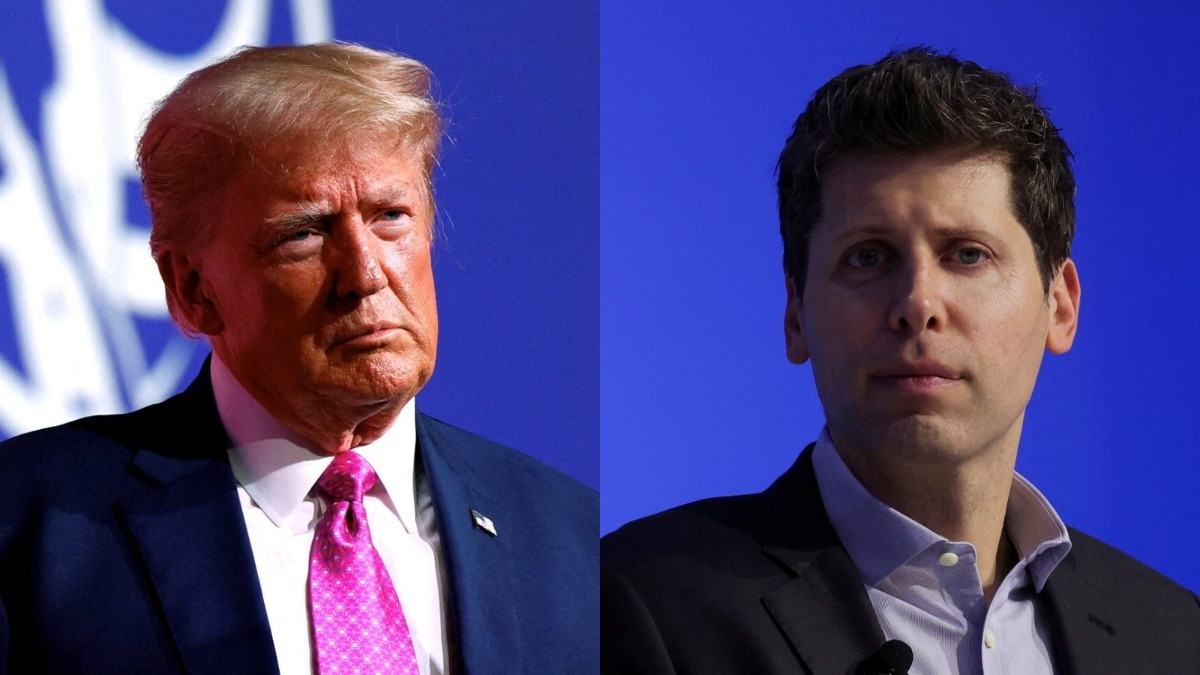
OpenAI CEO Sam Altman has claimed that US companies cannot go reckless when it comes to developing new AI models after US President Donald Trump rejected demands for AI regulation.Sam Altman says US AI companies cannot be reckless after US President Donald Trump shot down the idea of regulating AI development. (Photos: Reuters)New Delhi,UPDATED: Sep 14, 2026 10:47 ISTThe US AI industry wants to slow down the development of more advanced AI models amidst fears that more powerful AI could pose a threat to humanity. To do this, OpenAI CEO Sam Altman says that companies cannot become reckless. Instead, they should start acting responsibly instead of waiting for the policies from the Trump administration.“We welcome a federal framework that sets consistent safety requirements for frontier AI,” Altman wrote on X. “But we do not believe we need to wait for an anti-trust exemption or legislation to begin the work of providing this confidence.”Sam Altman added that “no amount of American competitive pressure should justify recklessness, or let capabilities get ahead of alignment and monitoring.” He said government support would be needed for international coordination, but added that companies should first do what they could themselves.The OpenAI CEO’s comments come after US President Donald Trump rejected the idea of regulating frontier AI development. “We can put guardrails, we can do this and that, but I think you have a lot of negative forces that are bringing it up that ... shouldn't be bringing it up, and they're bringing up things that won't happen," Donald Trump said recently. “Frankly, I want to keep it that way because whoever wins AI wins." In the post, Sam Altman claimed every frontier lab had to deliver responsible conduct and added that there was “no reason any of us should come to work if we cannot.” Altman added that OpenAI was open to the idea of independent auditors – proposed by Anthropic’s Dario Amodei.
A screenshot of Altman's post on X. (1/2) New standards needed for AI safety, says Sam AltmanWhile there were systems like Responsible Scaling Policies and Preparedness Frameworks for AI safety in the past, Sam Altman claimed that today we needed new tools that focus on safe development and evaluation. “At OpenAI we now formulate explicit safety cases in advance of frontier reinforcement learning runs we expect to significantly increase capability, in addition to the safety work we have long done in advance of model releases,” he said. Altman claimed that OpenAI hoped other companies would learn from its methods and put forward their own. “We think shared standards for misalignment, monitoring, and safety will lead to better outcomes,’ he said. “We look forward to collaborating with our colleagues across the industry to formulate the best version of these.”On the question of “pacing”, he said this did not mean “stopping." Progress, Altman said, had been rapid and would continue to be, but should be slower than it otherwise could be because interventions such as safety cases and monitoring carried significant costs.
A screenshot of Altman's post on X. (2/2) Sam Altman outlines two nightmare AI scenariosIn a reply to his post, Sam Altman discussed two nightmare scenarios of AI. In the first one, he said, humanity may lose control of AI entirely, something which AI companies must avoid. "This is unacceptable; we are unapologetically on Team Humanity, and AI must always serve people," he wrote. "To ensure that, we need ways to ensure that alignment and safety techniques stay ahead of progress in model capabilities."The second scenario, according to Altman, is where a single company or person may get too power around AI, leading to a dystopian future. "If an extraordinarily powerful AI is used by one person or company to impress their worldview onto everyone else, the results could be extremely dystopian," he added.To avoid this, Sam Altman admitted that we must walk a fine line where no country or company gets too much power. "Avoiding these two threats requires walking a narrow middle path," the OpenAI CEO wrote. "For example, one country could gain too much power. Another example is one lab ending up with too much power."
A screenshot of Altman's quoted post. The focus on AI safety became one of the most important topics in the tech world after Anthropic CEO Dario Amodei called for AI companies to slow capability gains. Amodei proposed a three-step framework that included independent evaluators with employee-like access, coordination among frontier firms on safety standards, and stronger international cooperation. Altman backed the proposal, saying, “Committing to having independent evaluators with employee-like access is a great idea, and we will do the same,” while Elon Musk replied, “Dario is right.”At the same time, while AI companies tried to pitch federal regulation from the US government, former White House AI czar David Sacks said that leading US AI companies did not need anyone’s permission to slow down. “Stop pretending you need anyone else’s permission. Stop pretending antitrust law has to be suspended so you can form a cartel,’ he wrote on X.Meanwhile, researchers from leading AI companies, including Anthropic and OpenAI have expressed fear in the future of humanity where we have more powerful AI models. Anthropic’s Jacob Coxon resigned, claiming, “the people building AI earnestly believe that it could kill us all by the end of the decade.” OpenAI safety researcher Marcus Williams, on the other hand, predicted that there was a 70 per cent chance that AI may end humanity within the next three years.- EndsPublished By: Armaan AgarwalPublished On: Sep 14, 2026 10:16 IST