
Lavasa terms SIR legal but unfair, urges civil servants to have empathy
Read at Business StandardPolitics · 1 outlet covered this
Lavasa terms SIR legal but unfair, urges civil servants to have empathy
How outlets told it
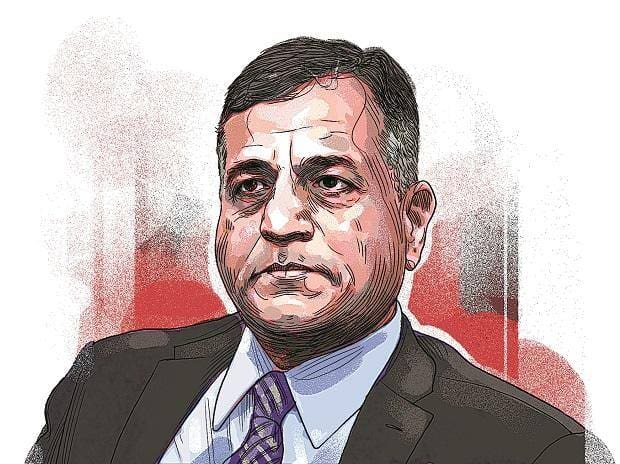
Terming the Election Commission’s (EC’s) Special Intensive Revision (SIR), which has until now struck the names of 130 million electors off electoral rolls, as unfair, former Election Commissioner of India Ashok Lavasa said on Thursday that personalisation of the government and the state within a political party, threats to the country's federal character, and the belief among statutory bodies and the government that might is right, are challenges facing Indian democracy.Delivering the first Jagdeep Chhokar Memorial Lecture on “leadership, ethics and public service”, Lavasa termed it disturbing that statutory institutions, and constitutional bodies of India’s body politic, including the government, have started behaving as if might is right. He said the concept of “might is right” belongs to medieval times “where somebody who had might would say that whatever I do is right”.Pointing to the EC’s SIR, Lavasa said, “Now the institutions which have the might of law invested in them, think that whatever they do is right.” He said SIR is an unfair procedure imposed on millions of people in the country, and the judiciary has validated it since it’s been argued that it is legal. “Of course, it is legal. (But) Is it fair,” Lavasa asked, adding that justice is not merely about enforcing the letter, but is also about protecting its spirit.The former Indian Administrative Service (IAS) officer said 130 million electors have been deleted from electoral rolls, and the reply is that they have the recourse to file an application. “But is this necessary at all,” he asked, and spoke of the predicament of an 87-year-old woman in Chandigarh, wife of a former chief secretary of the state, who has lived in that house for 36 years, getting a notice that her name has been deleted from the electoral rolls. He said the old woman has no interest in subjecting herself to submitting the documents required.“Are we trying to create a situation in which people are disenchanted with the process of democracy? As it is, 33 per cent of people don't even vote. The highest voting percentage (in a Lok Sabha election) has been 67 per cent. Now we are creating an environment in which people find it so difficult. Much mass anxiety has been created over their constitutional right,” he said, adding that such was never the case.Also Read The former election commissioner said the framers of India’s Constitution did not envisage that there would be a time when the country’s federal character would be under threat. He said it also appears that there is a personalisation of the state. “We have started to identify government and the ruling party as if there is no difference. There is a difference and that is what I think we need to understand,” he said. He faulted all political parties for refusing to come under the purview of the Right to Information (RTI) Act, and for agreeing to the electoral bond scheme, which the Supreme Court eventually struck down in 2024. He bemoaned that political parties have stopped raising issues that are of public interest.Lavasa underlined the need for ethics and empathy in public life, and urged civil servants and people’s representatives to have the ability to hear the voice of the poor and the marginalised, invoking John Stuart Mill’s warning that a people can be induced to “lay their liberties at the feet of a great man, or trust him with powers which enable him to subvert their institutions”.Lavasa also spoke about his association with Chhokar, including their shared love for Urdu poetry. Chhokar passed away on September 12, 2025, in New Delhi at the age of 80. He was a co-founder of poll rights body Association for Democratic Reforms (ADR), and also a respected academic, civic activist, lawyer, engineer and conservationist. On his death, the ADR said that Chhokar’s vision reshaped the way India thinks about elections and accountability. A memorial book containing his articles released on the occasion stated that Chhokar’s life was distinguished by his commitment to strengthening democratic governance promoting transparency in Indian public life.Born on November 25, 1944, Chhokar earned degrees in engineering in 1967, pursued a Master of Business Administration (MBA) from Delhi University's Faculty of Management Studies (1977) and later earned a doctorate from the Louisiana State University in the US. He joined IIM-Ahmedabad in 1985, teaching in the field of organisational behaviour, including at IIM-Ahmedabad, until his retirement in 2006. He co-founded the ADR in 1999. For over two decades, Chhokar and his colleagues at the ADR spearheaded several landmark judicial interventions. These included the 2002 Supreme Court judgment making it mandatory for candidates to disclose their criminal cases, assets, and educational qualifications, and its most recent has been to challenge the EC’s SIR. The ADR’s other recent notable intervention was challenging the electoral bonds scheme, which the Supreme Court struck down in 2024.In 1999, Chhokar and his IIM colleague Tarlochan Sastry petitioned the Delhi High Court, where they said candidates in elections to the Lok Sabha and state assemblies disclose criminal cases pending against them in their nomination papers. In its verdict next year, the court said it should be mandatory for candidates to disclose criminal cases pending against them, which the Supreme Court upheld in 2002. The Centre amended the Representation of the People Act, 1950, to get around the apex court’s order, which the SC struck down in 2003. Looking back, Chhokar told a newspaper two decades later that the government’s effort to stonewall the reform turned him into a “diehard activist”.