
After BRICS push for ‘greater role’, US economist backs India for UNSC seat: ‘No country has stronger claim’
Read at Hindustan TimesPolitics · 1 outlet covered this
After BRICS push for ‘greater role’, US economist backs India for UNSC seat: ‘No country has stronger claim’
How outlets told it
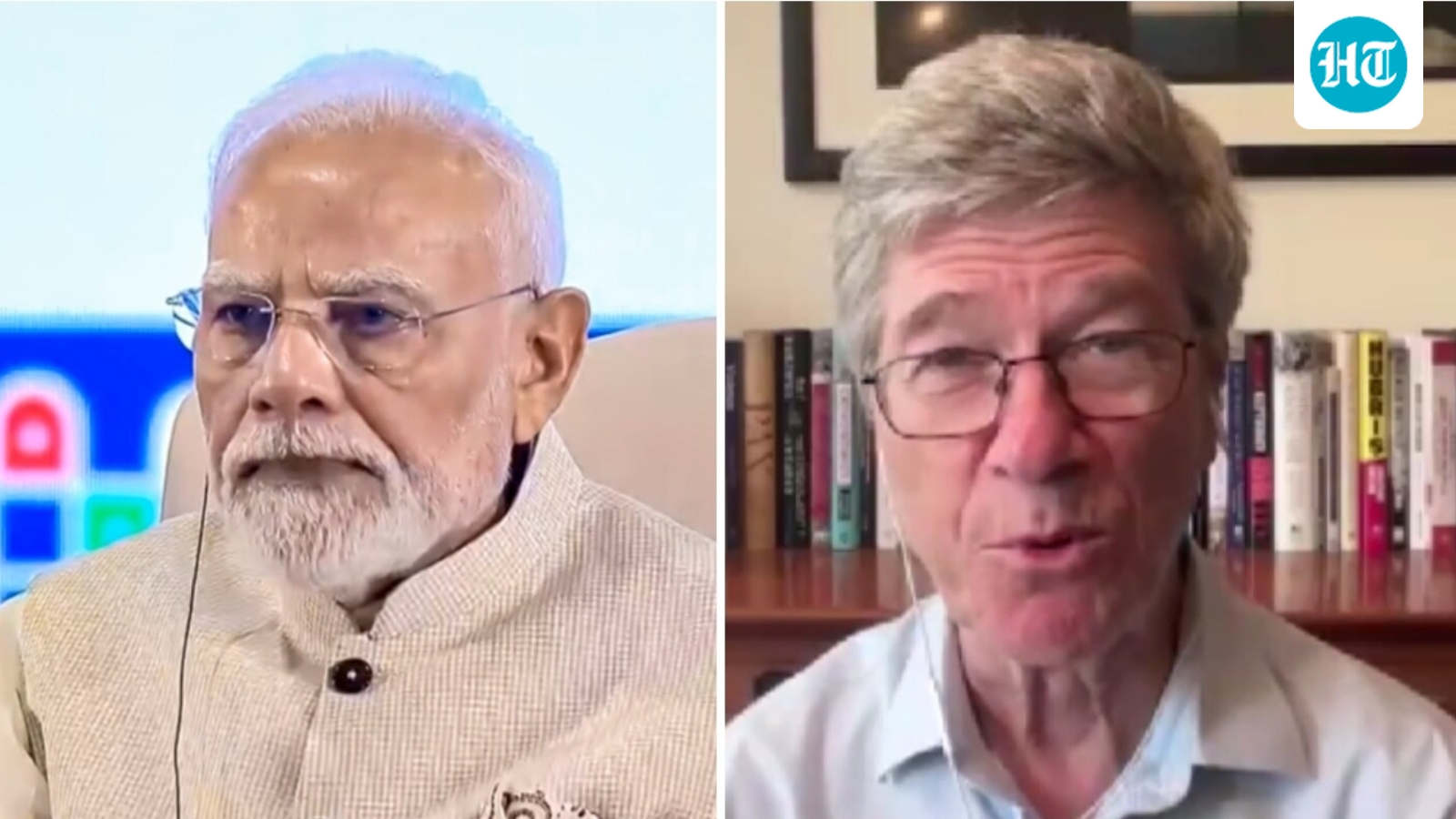
No other country has as strong a claim to become the sixth permanent member of the United Nations Security Council (UNSC) than India, American economist Jeffrey Sachs has said. The Columbia University professor called on China to support New Delhi’s bid and said India’s population, economy, global influence and diplomatic role strengthened its case.American economist Jeffrey Sachs spoke of India’s population and its position as the world’s most populous country. (PTI, HT file)“Think of all countries in the world, there is no country other than India that has such a strong claim as the sixth permanent member of the UN Security Council,” Sachs said in an interview with news agency PTI.He made the remarks amid the 18th BRICS Summit in New Delhi, where the grouping’s leaders backed India and Brazil’s aspirations to play a “greater role” in the United Nations, including its Security Council.Sachs pointed to India’s population and its position as the world’s most populous country. “India’s 1.5 billion people. It’s the most populous nation. It’s a superpower. It’s the world’s third largest economy in terms of purchasing power parity. It is a rapidly growing economy,” he said.ALSO READ | ‘Weaponisation of critical minerals…’: PM Modi’s BRICS message, with Xi, Putin by his sideSachs also cited the recently concluded BRICS summit in Delhi and India’s presidency of the G20. “It’s extremely deft at diplomacy, as we just saw in the BRICS summit, and as we saw when India chaired the G20 as well,” he said. “So to my mind, to build that multilateralism, India absolutely should be a member of the UN Security Council,” Sachs said.‘India, China should work together’Sachs also called on India and China to work together to overcome their differences and said Beijing should support New Delhi’s bid for a permanent seat on the Security Council.“I always urge India and China to work closely together on everything to overcome divisions, and for China to support India as the sixth permanent member of the UN Security Council,” he said.ALSO READ | China's Xi Jinping calls for stronger Global South ties, puts forth 5 initiatives at BRICS Summit“Because I think that that would say not only to the United States, but to everybody, look, we big countries take responsibility for multilateralism. We work together. We reject hegemony by the US or by the West,” Sachs said.BRICS backs India’s UNSC aspirationsSachs’ remarks came days after BRICS leaders adopted the New Delhi Declaration at the grouping’s 18th summit in the Indian capital.The declaration said China and Russia, both permanent members of the Security Council, “reiterate their support to the aspirations of Brazil and India to play a greater role in the UN, including its Security Council”.ALSO READ | BRICS declaration: China, Russia back India, Brazil’s aspirations for greater UN roleUNSC member countriesThe UNSC currently has 15 members -- five permanent members and 10 non-permanent members elected by the UN General Assembly for two-year terms. The permanent members are China, France, Russia, the United Kingdom and the United States.The five permanent members have veto power, meaning a negative vote by any one of them can block a substantive resolution. The council is responsible for maintaining international peace and security and can impose sanctions, authorise peacekeeping missions and, in some cases, the use of force.China’s stance on India’s UNSC pushIndia has for years pushed for an expansion of the Security Council. China previously stopped short of formally backing India’s push for a permanent seat on the UNSC even as the other four permanent members supported New Delhi’s candidature.Any expansion of the Council’s permanent membership, though, would require agreement among UN member states and amendments to the UN Charter.