
Haryana’s Dalit shift: How BJP is building a broader Hindu identity
Read at The Indian ExpressReligion and culture · 1 outlet covered this
Haryana’s Dalit shift: How BJP is building a broader Hindu identity
How outlets told it
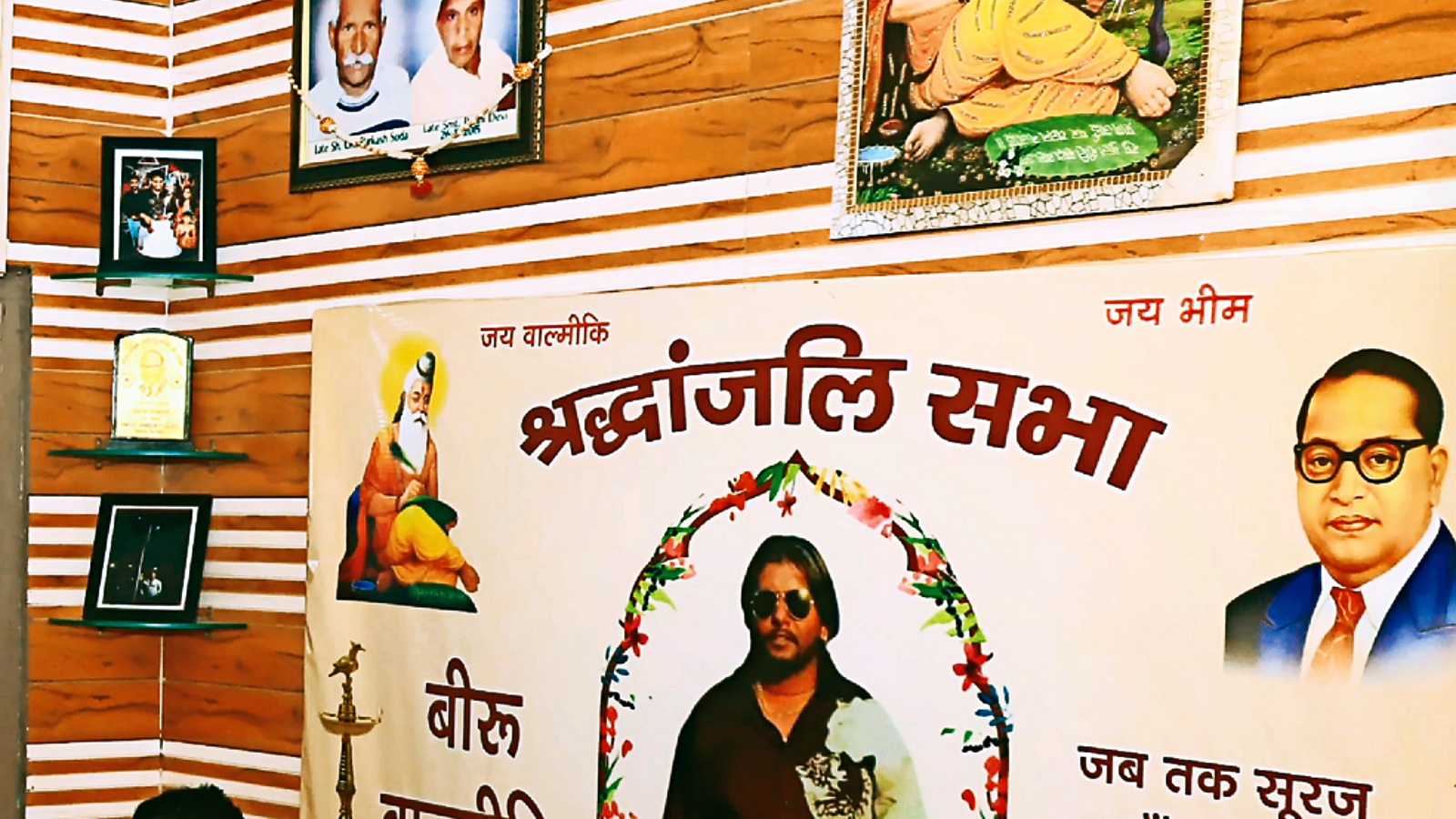
Biru Balmiki was shot dead by bike-borne assailants on August 5. 5 min readChandigarhAug 28, 2026 12:24 PM IST First published on: Aug 28, 2026 at 07:00 AM IST The slogans that rang out in Karnal earlier this month captured a political shift underway in Haryana. The last prayers for Biru Balmiki, 25, shot dead in Karnal by bike-borne assailants on August 5, rang with “Jai Bhim, Jai Balmiki, Jai Shree Ram”. Hours after the killing, the police shot dead two alleged shooters, one from the upper-caste Ror community. It was a response so swift that Dalit representatives such as advocate Sonia Tanwar noted people struggled to digest such stringent action for a Balmiki youth. Hindu Raksha Dal members stood alongside the Balmiki community leaders throughout the protests and at the bhog (a ceremony to mark the end of the mourning period after someone dies).The Karnal incident is a sharp contrast to the July 2025 case of Ganesh Valmiki in Hisar. The teenager died following a scuffle with the police for playing loud music at a birthday party. The family and the Balmiki community rose in protest and did not cremate the body for 11 days until their demands, including action against erring cops, were met amid intervention by senior Congress leaders. The difference in the police response to the two incidents has not gone unnoticed.
Dalit assertion itself is relatively recent in a state long described as Jat land. The change gained pace after the BJP came to power in 2014 under Manohar Lal Khattar, ending a long line of Jat chief ministers. Ever since, the party has pursued caste engineering by consolidating non-Jats and non-dominant Dalit groups, particularly Balmikis. The approach has continued under CM Nayab Singh Saini. Scheduled Castes (SCs) form roughly a fifth of Haryana’s population, with Jatavs the largest bloc and Balmikis, or Valmikis, among the largest of the rest. The BJP bets that splitting the Jatav bloc from other SC communities yields a decisive edge. Family members of Biru Valmiki. (Express Photo by Kamleshwar Singh)Post-poll data from the 2024 Haryana elections backs this: according to Lokniti-CSDS, the Congress led among Jatavs 50%-35%, while the BJP led among other SCs 45%-33%. This explains why Saini chose to be sworn in on Valmiki Jayanti, after visiting a Valmiki temple in Panchkula. The outreach has moved past symbolism. After the Supreme Court’s August 2024 ruling permitting SC sub-classification, Haryana was the first state to act on it, splitting its 20% SC quota in November 2024 into Deprived Scheduled Castes (DSC, 36 communities including Balmikis, Dhanaks, Mazhabi Sikhs, and Khatiks) and Other Scheduled Castes (OSC, covering Jatavs and a caste associated with leather work), each entitled to 10% of total seats. In May 2025, of 7,596 Group D posts announced, 605 were reserved for DSC candidates and 604 for OSC. Caste assertion and Hindu identity The project is as much about identity as reservation. The slogans at Biru Balmiki’s prayers reflect a vocabulary where caste assertion and Hindu identity aren’t seen as contradictory. Young Balmikis increasingly call themselves “sab se kattar Hindus (the most fundamentalist Hindus)” online. Political scientist Krishan Kumar, the author of “Reading Caste in India”, notes that this also reflects divisions among Dalits: Kanshi Ram’s Bahujan Samaj steered away from Brahmanical traditions towards Buddhism, with some rejecting Valmiki as mythological, while Balmikis assert their distinct identity and stress Valmiki’s authorship of the Ramayana.
This is the space the BJP occupies, mobilising caste identities such as Balmiki, Dhanak, and Khatik around specific grievances while inviting them into a larger Hindu collective. It dovetails with RSS chief Mohan Bhagwat’s repeated calls for Hindus to shed caste divisions in the name of unity. In a September 2024 Nagpur speech, he said caste discrimination had no place in Hindu society and Hindus must treat each other as one family, ending the “feeling of superiority and inferiority” tied to caste. His focus, notably, is integration into a Hindu framework, not autonomous Dalit politics, an ideological vocabulary in which caste is acknowledged but ultimately subsumed. In Haryana, these three strands are coming together: Ambedkarite (Jai Bhim) dignity, Balmiki community pride, and a wider Hindu identity represented by Lord Ram. The BJP is trying to bring these strands together, giving Dalit assertion a place within a larger Hindu identity. Whether it becomes a unifying or a polarising factor vis-à-vis other Dalit communities, only time will tell.