
UDF’s 100 days in office: Congress CM Satheesan still searches for footing
Read at The Indian ExpressPolitics · 1 outlet covered this
UDF’s 100 days in office: Congress CM Satheesan still searches for footing
How outlets told it
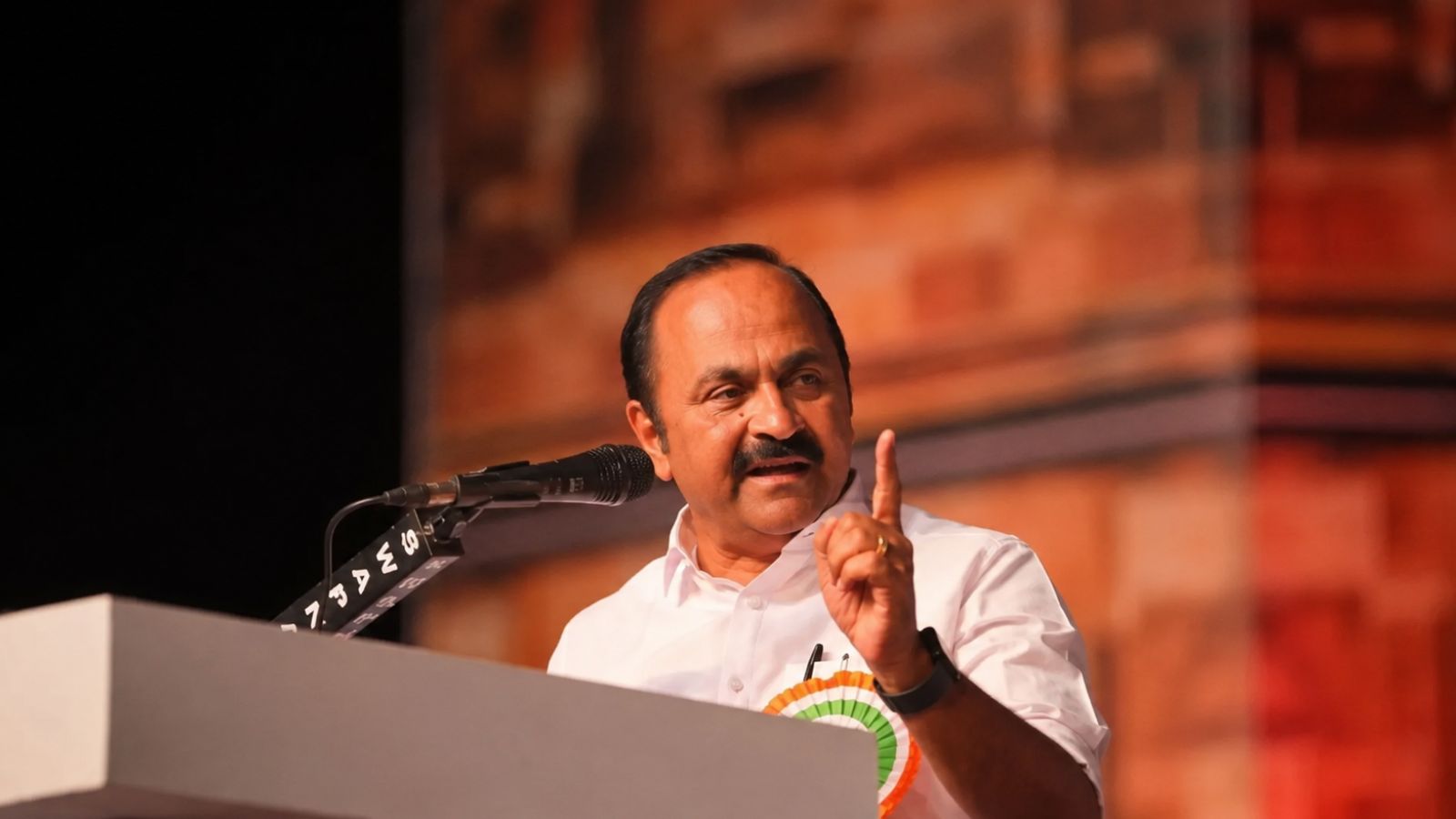
V D Satheesan does not exercise control over either the Congress organisation or his council of ministers. (File photo, Image enhanced using AI) 5 min readThiruvananthapuramAug 27, 2026 04:28 AM IST First published on: Aug 26, 2026 at 02:57 PM IST Over its first 100 days in office, the Congress-led UDF government in Kerala is yet to leave a decisive imprint on several key policy matters, reflecting the political and organisational constraints facing Chief Minister V D Satheesan. Unlike the previous CPI(M)-led LDF government, led by a strong political and administrative power centre in Pinarayi Vijayan, the Satheesan government is yet to project a sense of cohesion and direction.Satheesan does not exercise control over either the Congress organisation or his council of ministers. Differences within the ruling front have delayed decisions on issues such as PM SHRI and the reconstitution of the Waqf Board. The appointment of private secretaries to some ministers was finalised only last week after prolonged efforts to build consensus. Some of Satheesan’s Congress colleagues have also publicly declared their loyalty to AICC general secretary K C Venugopal, whom they credit with architecting the UDF’s historic victory, winning 102 of the 140 Assembly seats.
In the absence of a strong organisational leadership and a full-time KPCC president, Satheesan has increasingly found himself taking decisions on contentious issues where policy and politics overlap. His first 100 days have also been marked by controversies over appointments. Several decisions were either kept in abeyance or rolled back following opposition from within the party and among alliance partners. This has allowed the Opposition to portray him as a “U-turn Chief Minister”. The delay in reconstituting government boards, corporations, commissions and public sector entities is another indication that the Congress is yet to put its stamp on the administration after a decade of Left rule. Several boards and commissions, therefore, continue to function with nominees appointed by the previous CPI(M)-led government. BJP shadow over the government Since taking over from Vijayan, the Satheesan government has faced the CPI(M)’s allegation that the UDF administration is being driven by the Sangh Parivar. The recital of Vande Mataram during the swearing-in ceremony, the appointment of a person alleged to have links with the Sangh Parivar as the State Election Commissioner, and the government’s submission before the High Court that the Waqf Board would be reconstituted with non-Muslim members, in accordance with the amended law, have given the Opposition ammunition. The government had also initially decided to implement PM SHRI, a move the Congress had strongly opposed when the CPI(M)-led government was in power. Following protests from Muslim organisations, the decision was put on hold. The government faces another challenge from the Lok Bhavan, which has repeatedly intervened in administrative matters. Governor Rajendra Arlekar has summoned senior bureaucrats and convened meetings with them, leaving the government seeking to assert its authority over the administration. The BJP, however, has adopted a different line of attack. With three members in the Assembly, it has sought to portray the Congress-led government as being heavily influenced by Muslim organisations, particularly the Indian Union Muslim League (IUML), a key UDF constituent. A visible anti-drug campaign Among the government’s more visible initiatives has been the anti-drug campaign, Operation Toofan, led by Home Minister Ramesh Chennithala. The campaign has boosted Chennithala’s public profile after he lost the chief ministerial race. It has also received wide acceptance in Kerala society. Another major decision was the introduction of free bus travel for women in ordinary services operated by the state-run transport corporation. The measure has been widely welcomed by women and has strengthened the government’s welfare credentials. However, it has also added to the financial difficulties faced by a section of private bus operators. Accessible CM If the government’s first 100 days have produced a mixed record on policy and governance, Satheesan has established a distinctly different style of functioning. He has sought to make the government more accessible to the public, marking a departure from his predecessor Vijayan. After weekly Cabinet meetings, Satheesan has regularly briefed the media and responded to issues of immediate political and public interest. Ironically, several controversies during the first 100 days have centred on Satheesan himself. His decision to use a state-leased helicopter for a private visit drew widespread criticism and questions over propriety. The road ahead Policy formulation remains the biggest challenge for the government as it navigates administrative constraints and the competing demands of coalition politics. The choice of the next KPCC president will be particularly important for Satheesan, who is yet to secure the unequivocal loyalty of his Cabinet colleagues. Satheesan, who also holds the Finance portfolio, was among the most vocal critics of the previous LDF government’s financial management. Yet, in his first 100 days, he is yet to offer a clear roadmap to address Kerala’s financial crisis, even as the government has loosened its purse strings to provide benefits to various sections of beneficiaries ahead of Onam.