
From the Urdu Press: ‘At SRCC, Modi should have held a dialogue with students’
Read at The Indian ExpressCrime and courts · 1 outlet covered this
From the Urdu Press: ‘At SRCC, Modi should have held a dialogue with students’
How outlets told it
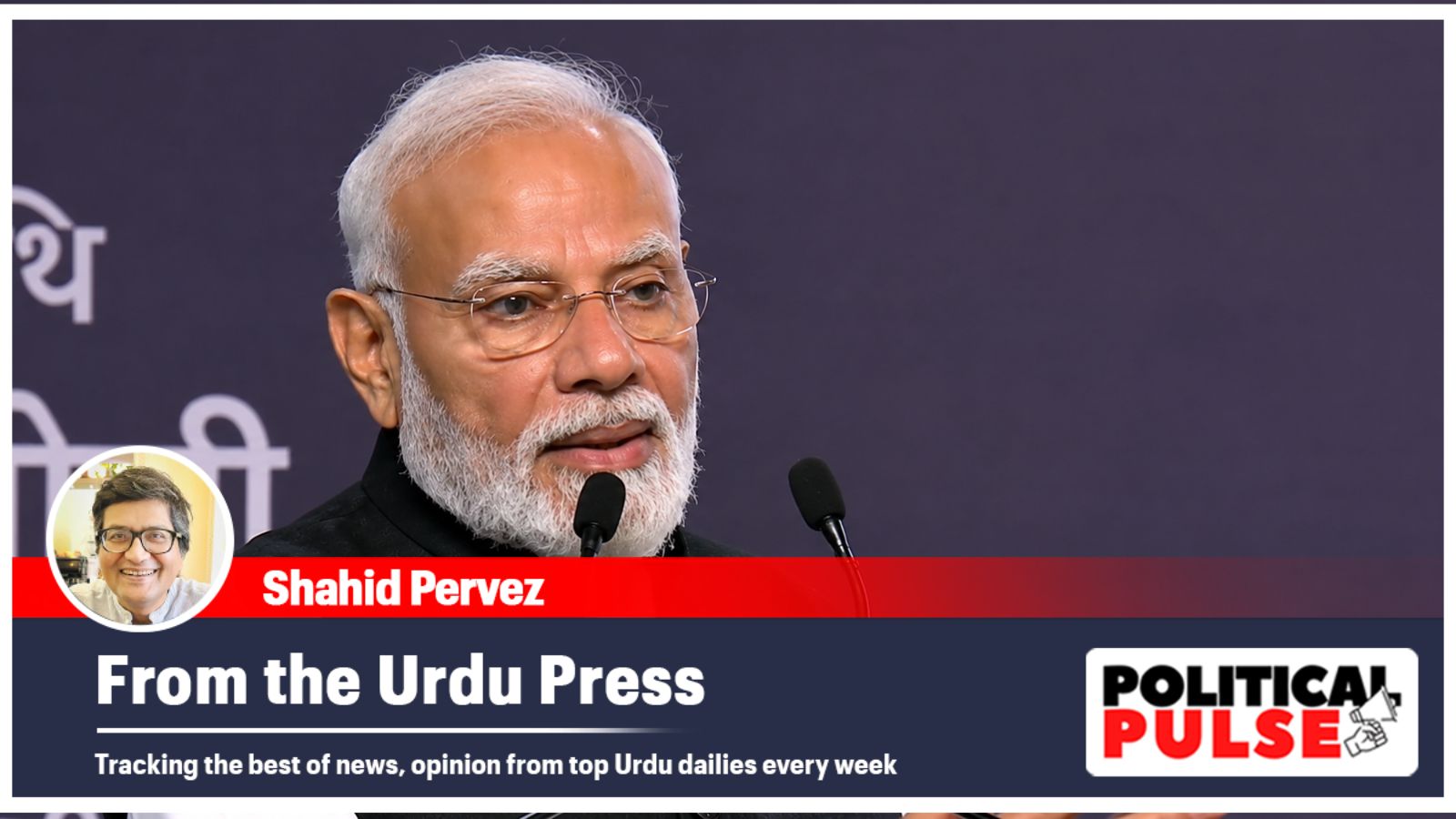
Prime Minister Narendra Modi had visited SRCC last Saturday (September 5) after nearly 13 years since his previous visit. (Express photo) 6 min readNew DelhiSep 8, 2026 06:46 PM IST First published on: Sep 8, 2026 at 05:44 PM IST Two stories created ripples across the Urdu dailies over the week: the official release of 7.8% GDP figure for the first quarter (April-June) of FY2027, and Narendra Modi’s return to Shri Ram College of Commerce (SRCC) in Delhi after 2013, when he had first addressed the college students as the then Gujarat chief minister and the BJP’s prospective Prime Ministerial candidate. The growth data triggered a row with former finance secretary Subhash Chandra Garg and the Opposition questioning its credibility, which was rejected by the government, even as the PM called the Opposition and dissenters “naaraaz fufa” (angry uncle) and “Dimaagi Naxals”. These developments triggered a lively debate on the pages of the dailies. SIASATCommenting on PM Modi’s return to Delhi University’s SRCC after 13 years, the Hyderabad-based Siasat, in its September 7 editorial, points out that while addressing the college’s centenary event, the PM went all out against the Opposition and his critics, calling them “Dimagi Naxals” again for their “negative mindset” and for questioning his government’s every move. It notes that Modi even drew an analogy with the homeopathic treatment to describe how he has given a “Dimagi Naxal” dose to such people. The daily says Modi has thus missed a “golden opportunity” to connect with the young. “The PM should have addressed the concerns of students and youths. He should have discussed their problems and suggested his roadmap to fix our broken education system. He should have interacted with them, taken their questions and suggestions, and given them his response,” it says. “However, Modi did not do this, sticking to his political playback of targeting the Opposition and dissenters.” In contrast, Leader of Opposition (LoP) Rahul Gandhi has been reaching out to youths through his “Chhatron ki Goonj” campaign in different cities of the country, the editorial states. “Rahul is holding interactive discussions with students. He is inviting them onto the stage to seek their views and understand their grievances,” it says. “At the SRCC event, if Modi had also held a dialogue with students and spelt out his proposals to resolve their issues, it would have sent a stirring message to them,” the edit says, adding that education and employment, two key issues for youth, was not the focus of his speech.
SALAR Flagging the case of Hindutva influencer Swatantra Bhardwaj, who is now in custody for having allegedly attacked the father of a minor student protester at Jantar Mantar in July, the Bengaluru-based Salar, in its September 7 leader, says the episode has raised a serious question: “Are persons with political links above the law in the country?” It points out that Bhardwaj’s purported claims in a viral video about cracking the skull of a protester girl’s father, which caused him grave injuries, is “not a small matter but a test of the rule of law”. “His anti-Muslim remarks and his claims about avoiding arrest due to his political connections do not just betray his mindset but puts a question mark over the justice delivery system,” the editorial says. “In a democracy, the Constitution is supreme, not anyone’s political influence. A guilty person must be booked if there is evidence against him, even as an accused has the right to defend himself. This is the spirit of law and justice.” The daily writes that if those claiming political patronage spread hate and cause communal discord, its consequences could be disastrous. “Law must be equal for everyone, which cannot be subject to anyone’s identity or political clout,” it says. “The biggest strength of our society is its unity, diversity and Ganga-Jamuni culture. Any bid to drive a wedge between communities for political gains not only damages social fabric but also the soul of India.” Referring to Bhardwaj’s arrest following protests by the members of the Cockroach Janta Party (CJP), Youth Congress and Opposition MPs Chandra Shekhar Azad and Pappu Yadav, the editorial asks, “Will action against hatemongers be taken only after such street protests? Should not the government crack down on such divisive elements beforehand on its own?” The edit points out that our Constitution crafted by Ambedkar provides equal rights and protection for every citizen. “If some believe that their political ties shield them from any punitive action, it would only lead to a weakening of public confidence in the rule of law, which would be detrimental to democracy.” Highlighting the GDP growth rate for the first quarter of the current financial year clocking 7.8% in real terms, Siasat, in its September 3 editorial, points out that PM Modi, in a video message, hailed this growth while noting that this has been achieved in the face of global challenges, wars and economic disruptions. Pitching for self-reliance and Viksit Bharat, Modi also repeated his appeal to the people to avoid gold purchases, foreign travels and destination weddings overseas, it says. “There is a contradiction here. If the country is really growing at such a fast clip, then why should people be advised not to buy gold or tour abroad?” The edit states that Modi also took a swipe at Rahul Gandhi by saying that some people were spreading “jhooth ki goonj (echo of lies)” over the state of Indian economy when it was progressing by leaps and bounds. “The question is, given the prevailing situation, could the dream of Viksit Bharat turn out to be just an unfulfilled promise like two crore jobs per annum or Rs 15 lakh in every citizen’s account?” it asks. The larger issue, says the daily, is that the touted high growth does not seem to be reflected by the lived reality of common people. “The point remains that the people have been scrambling to make both ends meet. The prices of essential commodities, from cooking gas and fuel to food items and medicines, have gone through the roof,” it notes. And then there is the crisis of unemployment, the edit states. “The government jobs have dried up. In the private sector, even big companies are consistently downsizing their staff, attributing it to the AI factor,” it says. “While the urban middle class is struggling, the people in rural belts are in distress too. If the country’s GDP growth is really soaring, why are its fruits only reaching the corporates and not the common people? The government must answer this key question.”