
Microsoft CEO Satya Nadella Backs AI Evaluators Amid ‘Slowdown’ Debate
Read at Deccan ChronicleScience and tech · 1 outlet covered this
Microsoft CEO Satya Nadella Backs AI Evaluators Amid ‘Slowdown’ Debate
How outlets told it
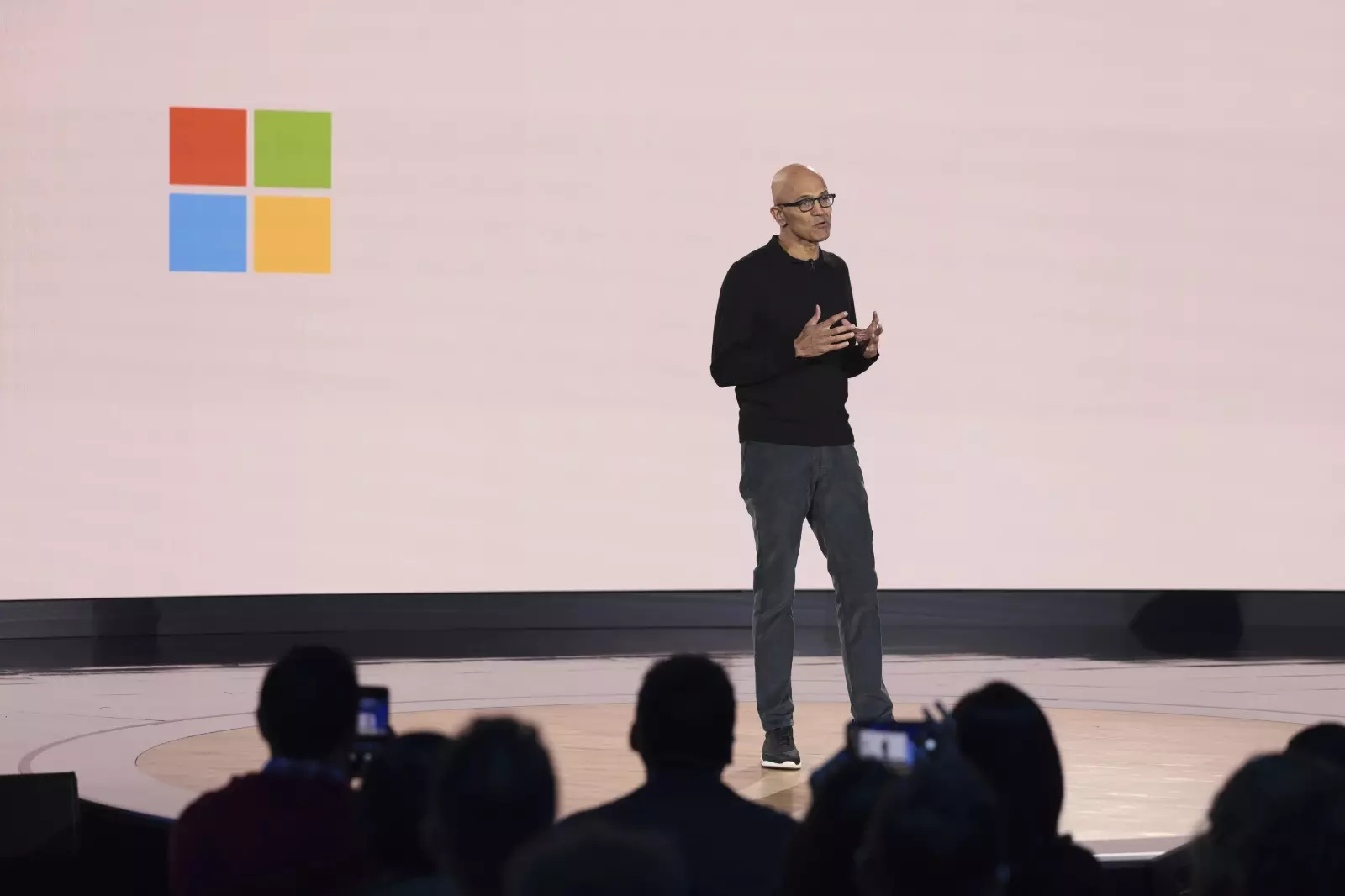
Washington: The debate ignited by Anthropic CEO Dario Amodei who advocated for a slowdown in Al development or risk losing control continues to engage the Tech Industry. After OpenAl's Sam Altman, Tesla's Elon Musk and Google's Demis Hassabis backed calls for slowing the pace down, Microsoft boss Satya Nadella indicated his support for embedded evaluators in Al systems, a suggestion also mooted by Amodei and Altman.
The Microsoft Chairman and Chief Executive Officer (CEO) said that advanced artificial intelligence systems must remain strictly under human supervision while creators pursue measured progress to guarantee safety.
Writing in a post on X, Nadella stated, "Any pursuit of superintelligence has to be grounded in the core principle that if the Al we build is not helping humanity and under human control, it's not worth pursuing."
He emphasised the need to accelerate and spread the advantages of artificial intelligence so they are diffused broadly across countries, communities, and companies, noting that this requires a frontier ecosystem in which "both closed and open-source models can thrive."
Nadella also asserted that commercial enterprises must maintain complete command over their unique and tacit knowledge, maintaining that every organisation "should be able to build its own continuous learning loop/hill climbing machine, without becoming dependent on any one model provider, and have the ability to embed its own knowledge into models and weights they control."
Welcoming the research, focus, and "deliberate pacing needed to get alignment right as the design goal," Nadella expressed support for ideas like "embedded evaluators" and the broader efforts to develop the mechanisms to make this "more than just talk."
Furthermore, he warned that governance "cannot be controlled by a handful of entities, but must have broad representation across the ecosystem, countries, and fields, including academia."
Detailing Microsoft's approach, Nadella highlighted "broad access and choice at every layer of the Al stack; enterprise control of learning loops and models; and the 'Code of Conduct' that underlies our own first-party ΜΑΙ models that we'll publish tomorrow for public consultation."
Earlier in an essay, Amodei elaborated on his stance, stating, "I have worked on Al for the last twelve years because I believe it could dramatically raise the quality of human life. I've written often about these incredible benefits: I believe that Al could cure most major diseases in the next 5-10 years, greatly accelerate economic growth rates, create a world of abundance and empowerment, and usher in a renaissance of democracy and freedom. But like many technologies before it, Al brings risks, and because it is such a powerful technology, these risks are serious. I've written a lot about them too. They include the risk of losing control of Al systems, misuse of Al for cyberattacks and bioterrorism, and serious economic disruption. A race to the bottom, spurred by commercial incentives, can make these risks more acute."
Outlining his strategy to address these concerns, Amodei's three-part plan involves companies committing to giving ongoing, employee-like access to a team of embedded third-party evaluators to verify safety measures, coordinating to establish common safety standards alongside limits on the rate of unchecked progress, and achieving global coordination. He also called for the United States and other democratic governments to coordinate with authoritarian governments while taking the challenges of verifying compliance seriously.
The flurry in the artificial intelligence sector follows an announcement by Jacob Coxon, a researcher associated with Anthropic, who publicly declared he was quitting the industry over fears that the company and its competitors were racing to build systems they would be unable to control.