
 The Indian Express ·
From Ralph Lauren to Fendi: Why Indian crafts are easy to borrow but hard to protect
Indian craft traditions can have centuries of provenance yet no clearly identifiable legal owner. Experts say that gap is leaving communities exposed to appropriation while luxury brands capture the commercial value.
India’s crafts and weaves are skills and visual languages carried across generations, embedded in particular regions and communities. Yet when these traditions enter the global luxury fashion system, the people and places behind them become invisible.
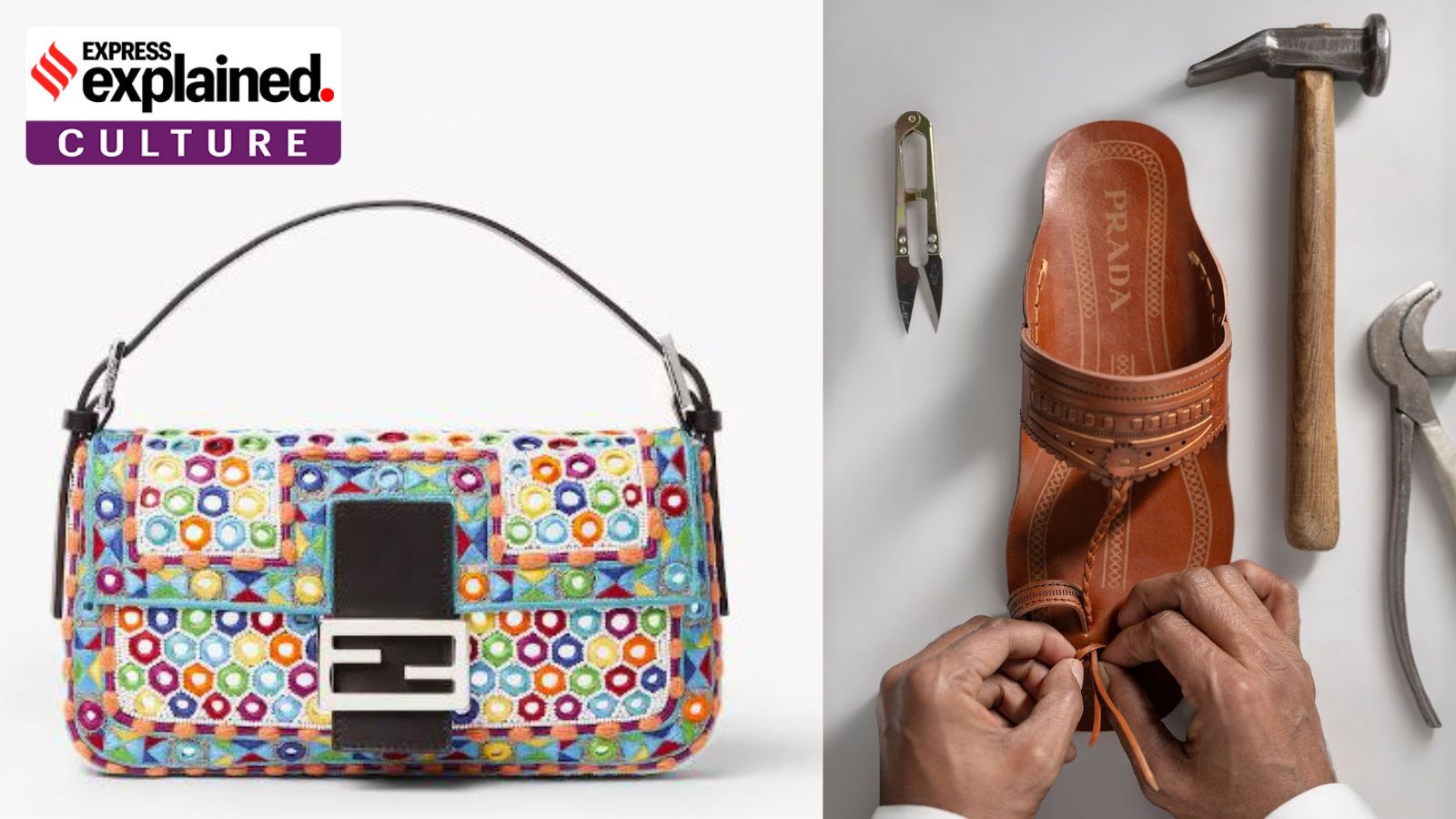
Fendi’s autumn collection has a mirror-work Baguette bag, made in Italy over 138 hours, using 39,500 beads and 475 mirrors, and priced at $10,000. It is a knock-off of the mirrored purses that you would find in crafts fairs here.
This raises a larger question as to why is it so much easier for a traditional Indian craft to be commercially appropriated than it is for the community behind it to demand recognition, ownership or participation in the value it creates? “The difficulty begins with a fundamental contradiction: Intellectual property is territorial, while culture is not,” says Safir Anand, senior partner and head of Trademarks, Contractual and Commercial IP at the law firm Anand and Anand.
