
 The Indian Express ·
Why melting glaciers could ‘put 20% of India’s GDP at risk’, and one change that can help
How much of India’s economy depends on the Himalaya? What is ‘peak water’, and why do we need to care about it? We explain
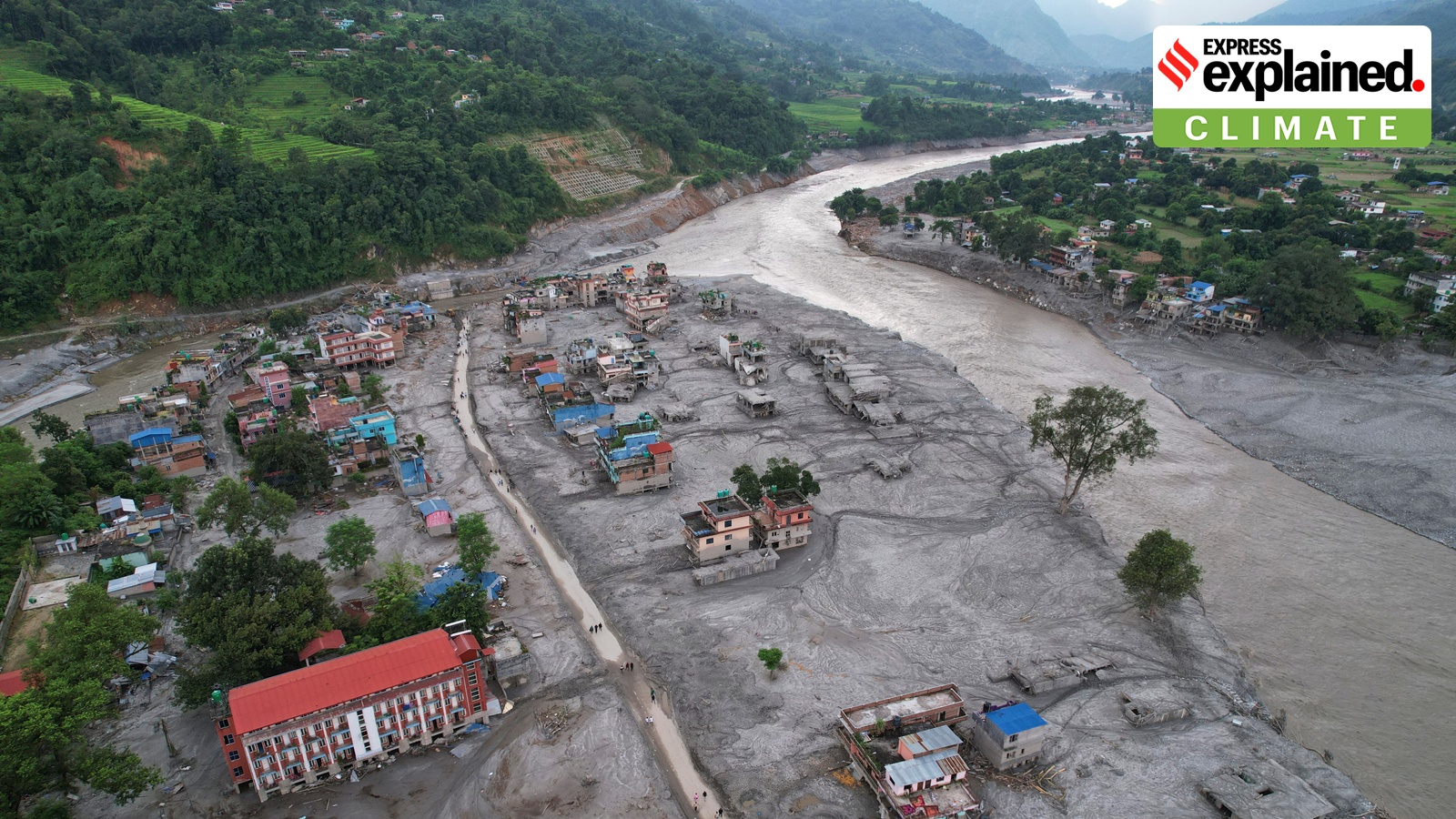
The recent floods in Nepal have put the Himalayas’ melting glaciers under the spotlight. But damage from the warming Himalayas does not always come in the form of a spectacular disaster. It also means slow economic drain, as glaciers retreat, water supplies become less reliable and the rivers that sustain agriculture, industry, cities and hydropower change. A new report puts a number to the economic dependence: more than one-fifth of India’s GDP is underpinned by the Himalayas.
The report, ‘A resilient Himalaya: protecting a region at risk and securing future prosperity’, was compiled by the global consultancy Systemiq, in partnership with Integrated Mountain Initiative, and supported by the International Centre for Integrated Mountain Development (ICIMOD), Nepal, and GB Pant National Institute of Himalayan Environment, Uttarakhand.
The report estimates that Rs 64.8 lakh crore, or 21.5% of India’s FY24 GDP, is dependent on the Himalayas. This does not mean that glacier melt would wipe out 21.5% of India’s GDP. The report describes the figure as a measure of economic activity that can be traced to dependence on Himalayan water, rather than an estimate of climate damages.