The New Indian Express ·
Economy, business and finance
'Will protect trade, economic interests': India committed to energy security, says MEA amid US tariff threat
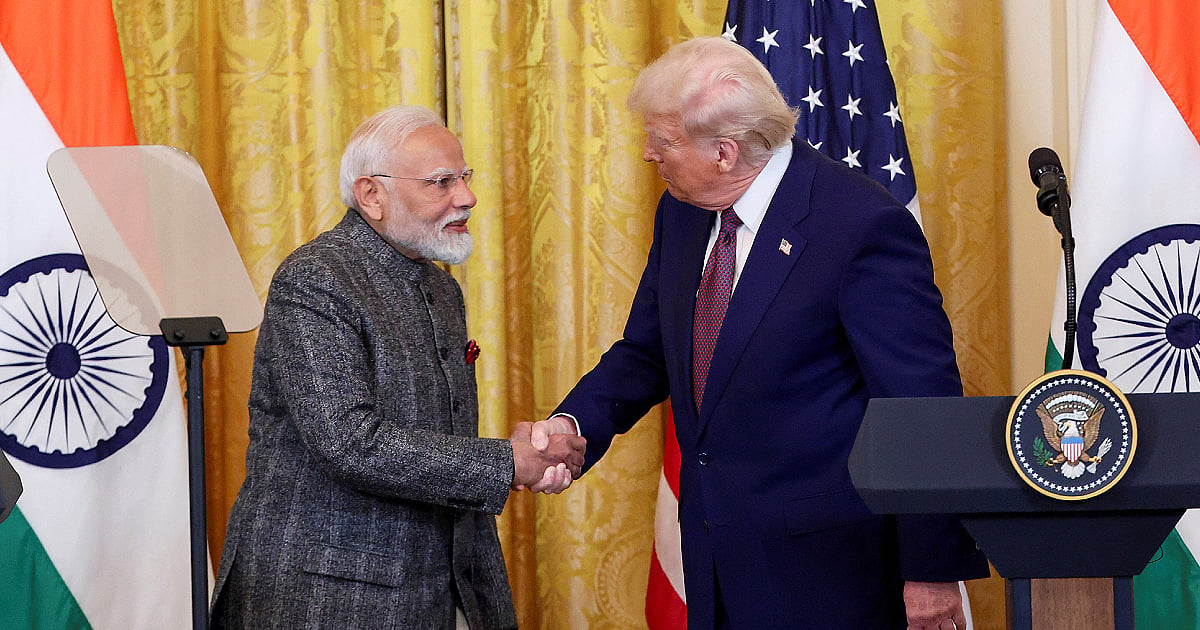
NEW DELHI: India on Thursday pushed back against the latest US sanctions legislation targeting buyers of Russian energy, warning that the measures could have implications for both bilateral ties and global energy markets. New Delhi said its immediate priority remained ensuring energy security for its 1.4 billion citizens while protecting the country’s trade and economic interests.
External Affairs Ministry while responding to the passage of the Lindsey O Graham Sanctioning Russia and Iran Act 2026 in the US Congress, said India was closely monitoring further developments and had already raised its concerns with Washington at senior levels.
“The Government of India has noted the passage of the Sanctioning Russia and Iran Act in the US Congress. We are monitoring further developments on this matter,” the MEA said in a statement. Reiterating India’s position on energy imports, the Ministry said: “India remains firmly committed to ensuring energy security for its 1.4 billion people.”
It further said that India would continue to pursue this objective through “diversified sourcing and on the basis of evolving market dynamics.”
The statement indicated that the issue has been discussed extensively between Indian and US officials in recent months. “Its potential implications for not just the bilateral relationship but also the international energy market have been very clearly articulated by the Indian side,” the MEA said.
The Ministry also made clear that New Delhi was prepared to respond to any economic consequences arising from the new US measures. “The Indian side has also made clear its determination to take all necessary measures to protect its trade and economic interests,” it said, adding that the government would work with Indian trade and industry bodies to address the implications.
The US House of Representatives earlier passed a sweeping sanctions package aimed at increasing economic pressure on Russia over its war in Ukraine. The legislation, which was approved by the House by a 262-159 vote after clearing the Senate 86-11, has been sent to President Donald Trump, who has said he will sign it.
Among other provisions, the legislation gives the US president authority to impose tariffs of up to 100% on countries that continue significant purchases of Russian oil and gas. China and India, two major buyers of Russian energy, could potentially face such measures. India is the world’s third-largest oil importer and has significantly increased its purchases of Russian crude in recent years, making the issue particularly important for its energy policy and trade relations with Washington.
However, opposition within the US Congress also remains. Gregory Meeks, the top Democrat on the House Foreign Affairs Committee, described the bill as “deeply flawed,” arguing that its tariff provisions could give the White House broad authority over US import taxes.
Moscow has also criticised the legislation. Kremlin spokesperson Dmitry Peskov said additional US sanctions would make negotiations more difficult.
“We are, of course, monitoring the progress of this document,” Peskov said. He added that additional US sanctions would “certainly complicate efforts to find a peace settlement in Ukraine.