 Firstpost ·
Russia, China veto UN bid to extend Iran sanctions monitoring panel: Report
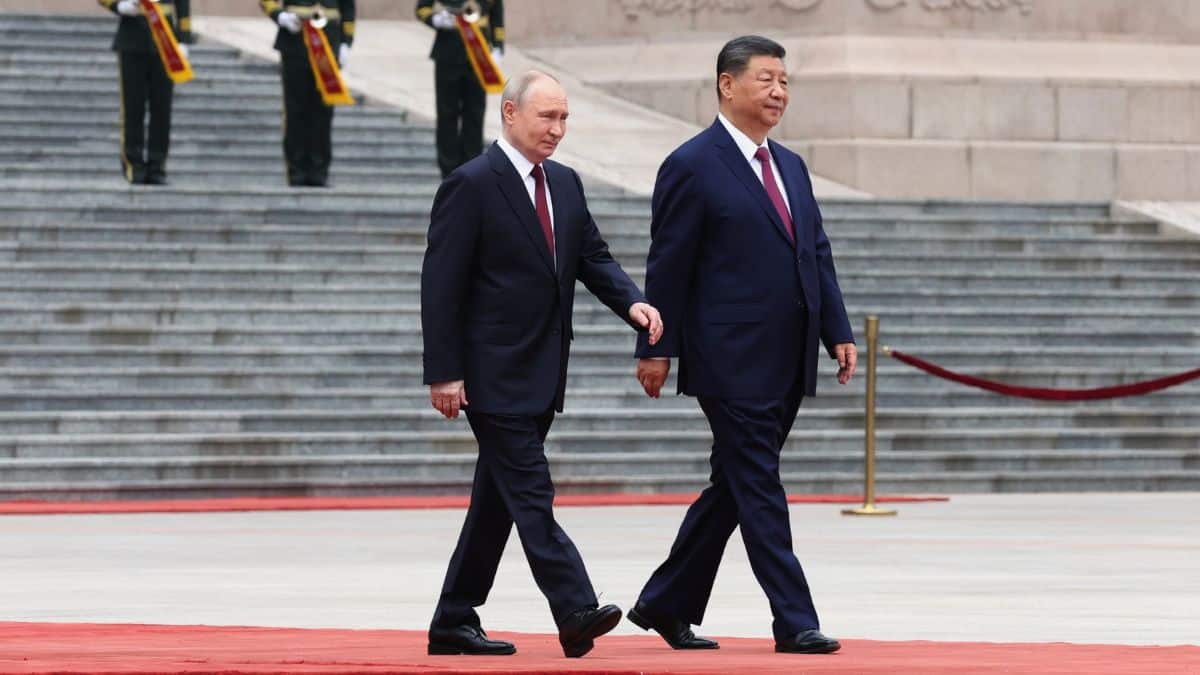
The veto leaves the panel’s mandate set to expire on September 26, while sanctions remain in force amid a wider dispute over the 2025 snapback mechanism
Russia and China on Thursday vetoed a UN Security Council resolution seeking to renew the mandate of the panel of experts monitoring sanctions on Iran, with 11 members voting in favour and Pakistan and Somalia abstaining, according to IntelliNews.
The panel, established under Resolution 1929 in 2010, investigates reported cases of non-compliance with the sanctions regime.
Its mandate is due to expire on September 26, meaning the sanctions will remain in force but the body tasked with reporting on their implementation will cease to operate, added the report.
The vote has brought a long-running dispute over the legal status of the sanctions regime back to the Security Council, with Russia and Western countries divided over whether the “snapback” mechanism triggered by European states in 2025 restored UN resolutions predating the 2015 Iran nuclear deal.
Russia’s permanent representative Vassily Nebenzia said Moscow considers the 1737 Committee and its panel of experts illegitimate and rejects Western claims that the snapback mechanism was successfully triggered.
Under Moscow’s interpretation, he said, Resolutions 1737 of 2006 and 1929 of 2010 were therefore never restored.
Nebenzia said the draft resolution consequently had no legal basis. He accused Western countries of using the nuclear issue to pressure Tehran and said political and diplomatic efforts that respect Iran’s rights were the only way to address concerns over its nuclear programme.
The UK’s permanent representative Sarah MacIntosh, however, said the vetoes would not affect existing sanctions on Iranian proliferation, which remain binding on all UN member states.
She said Iran had expanded its nuclear programme, failed to cooperate with the International Atomic Energy Agency and prevented verification of its stockpile of enriched uranium. London, she added, would continue to pursue a negotiated settlement.
Denmark’s permanent representative Christina Markus Lassen described the proposed renewal as a technical rollover, saying the panel provides independent and impartial information to support implementation of the sanctions regime.
She said the panel’s role was particularly important given Iran’s failure to meet its safeguards obligations. Lassen cited Iran’s enrichment of uranium to 60% and said Iran must never acquire a nuclear weapon.
The Security Council vote came three days after the United States blocked Iranian nuclear chief Mohammad Eslami from attending the IAEA General Conference in Vienna, citing travel restrictions reinstated under the same snapback mechanism.
