 Scroll.in ·
Crime, law and justice
Graham Staines murder: SC gives convict two weeks to challenge Odisha denying him early release
Bajrang Dal member Dara Singh’s release could lead to communal disturbance, the state sentence review board had held.
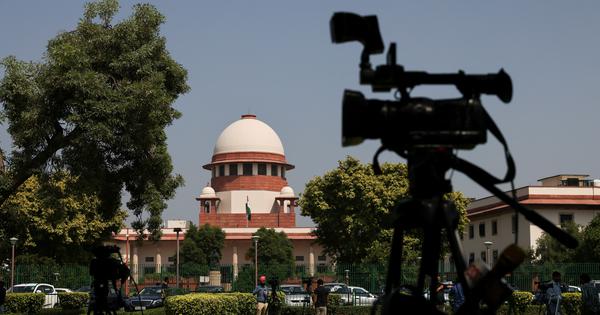
The Supreme Court on Thursday granted two weeks to Bajrang Dal member Dara Singh to challenge the Odisha government’s decision rejecting the petition for his early release, ANI reported. Singh is serving a life sentence for the 1999 murder of Australian missionary Graham Staines and his two sons.
The director general of prisons and correctional services and the authorities at Kendujhar Jail had earlier recommended his release on grounds of good behaviour. Singh has spent more than 26 years in prison.
At a meeting on August 31, the state sentence review board decided against Singh’s early release stating that it could lead to communal disturbance in the area.
The board also noted that on August 15, a group of 200 to 250 persons associated with Dara Sena had assembled outside the Kendujhar district jail in connection with the proposed release of the convict, during which “provocative slogans” were shouted.
Dara Sena – named after Singh – is an outfit that campaigns for his release.
On Thursday, a Supreme Court bench was informed of the state government’s decision. The court will hear the matter next after three weeks.
Staines and his minor sons were burnt to death by a mob led by Singh in Odisha in January 1999 when they were sleeping in a jeep. The attackers had accused the missionary of illegal religious conversion.
Singh was among the 14 persons convicted in 2003 by a special Central Bureau of Investigation court. He was sentenced to death by the CBI court, but the sentence was commuted to life imprisonment in 2005 by the Orissa High Court.
The Supreme Court had upheld Singh’s conviction in 2011.
In his remission plea, the Bajrang Dal member had argued that he should be considered for early release as he is above the age of 60 and has been in jail for more than 24 years. Singh told the court that he regretted his actions, which the petition described as having been in the context of “protecting the nation”.
He also told the court that he had never been granted parole.
In April 2025, Mahendra Hembram, another person convicted in the case, was released from a jail in Odisha on the grounds of “good behaviour”.
Edited by Tanya Shrivastava.