 India Today ·
Arts, culture, entertainment and media
Duniya Vijay the director vs the star: Can City Lights prove he can stand alone?
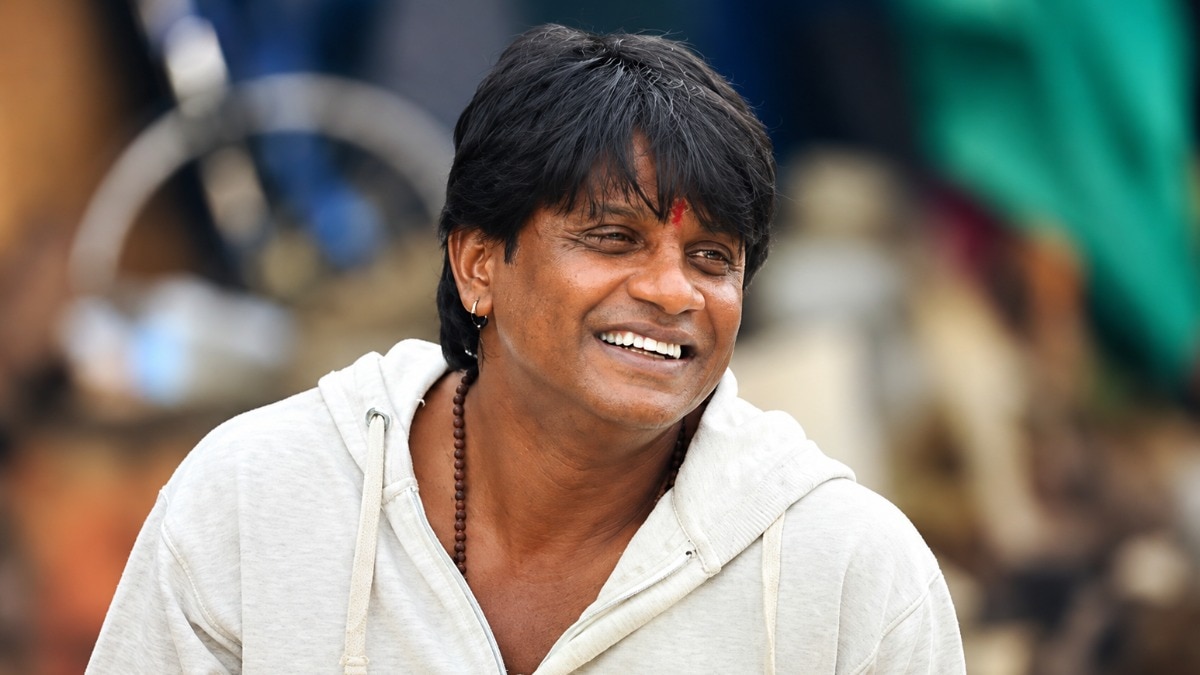
City Lights marks Duniya Vijay's third outing as director, with Vinay Raj Kumar and Monisha Vijay Kumar leading the cast. The film serves as a test of whether Vijay Kumar's directorial identity can draw audiences without his star presence on screen.
Actor-director Vijay Kumar, better known as Duniya Vijay, is back with his third directorial, City Lights, which is set to release on September 18. The film stars Vinay Raj Kumar and Vijay’s daughter, debutant Monisha Vijay Kumar, and comes with considerable anticipation. In fact, City Lights is among the more anticipated Kannada films of the year, and a large part of that interest comes from the man behind the camera.
Vijay is, of course, a star in his own right. Ever since his debut as a lead actor in Suri’s Duniya in 2007, which earned him the on-screen moniker Duniya Vijay, he has steadily carved a place for himself among Kannada cinema’s leading stars. But his transition from being in front of the camera to stepping behind it offered audiences a different perspective on his craft.
He made his directorial debut with Salaga in 2021, followed by Bheema in 2024. Across these two films, Vijay began to reveal a filmmaker with his own sensibilities, shaped by years of life experience, his exposure as an actor, and his understanding of the world that he so immersively creates on screen.
What makes Vijay Kumar stand out as a filmmaker is the way he approaches his characters and the worlds they inhabit. He pays close attention to the human reality of his characters — their traits, behaviour, circumstances and the worlds within their world — and uses these details to give his stories a sense of grounded-ness.
Even when his films deal with social problems, crime or the dangers lurking around his characters, they rarely feel weighed down by their subject matter. Instead, there is a certain dynamism and grit to the way Vijay presents these worlds, often choosing to look for a way forward rather than pushing the narrative towards devastation.
The other crucial aspect of his filmmaking is entertainment. Salaga was grittier and more grounded in the way it approached its action, while Bheema leaned further into the space of a mass commercial entertainer, particularly in its action sequences. But both films found room for sharp dialogues, quirky dark comedy and situations that could move between multiple emotions without disrupting the flow of the narrative.
This is perhaps where Vijay’s biggest strength as a filmmaker lies — in the way the writer in him understands rooted, grounded storytelling, while the director in him knows how to package it with commercial sensibilities.
Two things seem to have shaped writer-director Vijay Kumar’s filmmaking sensibilities more than anything else: his exposure to life and his experience in the film industry. His journey to becoming an actor was anything but straightforward. From being a bodybuilder to working as a stuntman, an extra and eventually a junior artist, Vijay spent more than a decade navigating the industry before getting his big break with Suri’s Duniya in 2007.
Interestingly, Duniya marked the debut of both Vijay and Suri as a lead actor and director, respectively, and became a major launch pad for both their careers. Vijay emerged from the film as Duniya Vijay, while the film itself became a blockbuster and earned him multiple awards.
What followed was a career of considerable highs and lows, with Vijay delivering hits such as Junglee, Kari Chirathe and Bheema Theeradalli, while also experiencing his share of box-office setbacks. Through it all, however, his stardom and fan following remained largely unwavering — years of experience that would eventually feed into the filmmaker he would become.
Being an actor-director is not new to Kannada cinema. From Ravichandran and Shankar Nag in the 1980s to Kichcha Sudeep between 2006 and 2014, and more recently the RRR of Kannada cinema — Rakshit Shetty, Rishab Shetty and Raj B Shetty — several actors have successfully made the transition to direction.
Perhaps the journey of actor Ramesh Aravind offers an apt comparison: an established actor with nearly two decades of experience who ventured into direction and delivered a blockbuster with Rama Shama Bhama in 2005.
However, Vijay’s case is slightly different. By the time he decided to turn director with Salaga, he had already spent well over a decade building an established career as a leading man. His last release before making his directorial debut in 2021 was 2018’s Johny Johny Yes Papa.
Being an actor comes with its own set of challenges, but taking on the responsibility of being the primary creative force behind a film is an entirely different ball game. For Vijay, stepping away from the relative comfort of being a star actor to write and direct his own film was a considerable risk — and a daring one at that.
Vijay's journey stands apart among all these actors-turned-directors simply because of the era in which he began to rule. The changing audience and, most importantly, his decision to write original stories rather than adapt or remake existing material worked strongly in his favour, further fuelling his rising stardom as a director.
His third directorial, City Lights, could be Vijay’s biggest test yet. Salaga and Bheema had one significant advantage — Vijay himself was the leading man. His star power and loyal fan base provided the initial theatrical pull, after which the content had to take over. City Lights removes that safety net.
Vijay stays behind the camera, with Vinay Raj Kumar leading the film and Vijay’s daughter, debutant Monisha Vijay Kumar, as the female lead. Vinay has a following of his own, but it is nowhere near the star power Vijay commands. For the first time, then, Vijay has to prove that his name alone as a director can bring audiences to theatres.
The trailer suggests that Vijay has once again ventured into the kind of raw, gritty world that has become a signature of his filmmaking. Criminal syndicates, prostitution, trafficking and abuse of power form the backdrop, while the underground world that ran through Salaga and Bheema appears to return in City Lights.
The difference this time is that women and their struggles seem to occupy a more central place in the story. Even from the trailer, the texture is unmistakably Vijay’s - grimy, grounded and packed with characters living on the fringes.
The pre-release buzz, however, has been relatively muted. Bheema had the advantage of following Salaga and marked Vijay’s return as a leading man after three years. City Lights does not have the same star-driven pull, and the response to some of its promotional material, including the music, has been underwhelming.
But if Vijay’s earlier films have taught us anything, it is that he does not necessarily need overwhelming hype. For his kind of cinema, a strong word of mouth can be enough to turn a quiet opening into a box-office spark.
Duniya Vijay, the actor, is important to Kannada cinema because his films come with a certain assurance of footfall. But Vijay Kumar, the director, could be just as important, if not more so. Behind the camera, he has shown a knack for telling stories that feel rooted in the lives of ordinary people, while still finding the scale and energy to connect with a mass audience.
His worlds may be gritty, and his characters may come from the fringes, but there is always an attempt to make their struggles recognisable and their journeys engaging.
That is what makes City Lights an interesting film in Vijay’s journey as a filmmaker. It is not merely another directorial outing for a star actor; it is an opportunity for Vijay Kumar to prove that the filmmaker he has built over the years can stand independently of Duniya Vijay, the star.
If Salaga and Bheema were about discovering what Vijay could do from behind the camera, City Lights could be about establishing why audiences should continue to trust the man sitting in the director’s chair. And if he can once again strike that balance between grounded storytelling, mass sensibilities and, above everything else, entertainment, Vijay Kumar may well have found a space in Kannada cinema that is uniquely his own.