 The Indian Express ·
Trump vs Kennedy Center: Why US court blocked his name as he vows to keep it shut
Kennedy Center closure follows a board vote on renovations, while Trump says reconstruction will await a court ruling on adding his name.
3 min readNew DelhiUpdated: Sep 16, 2026 08:01 PM IST
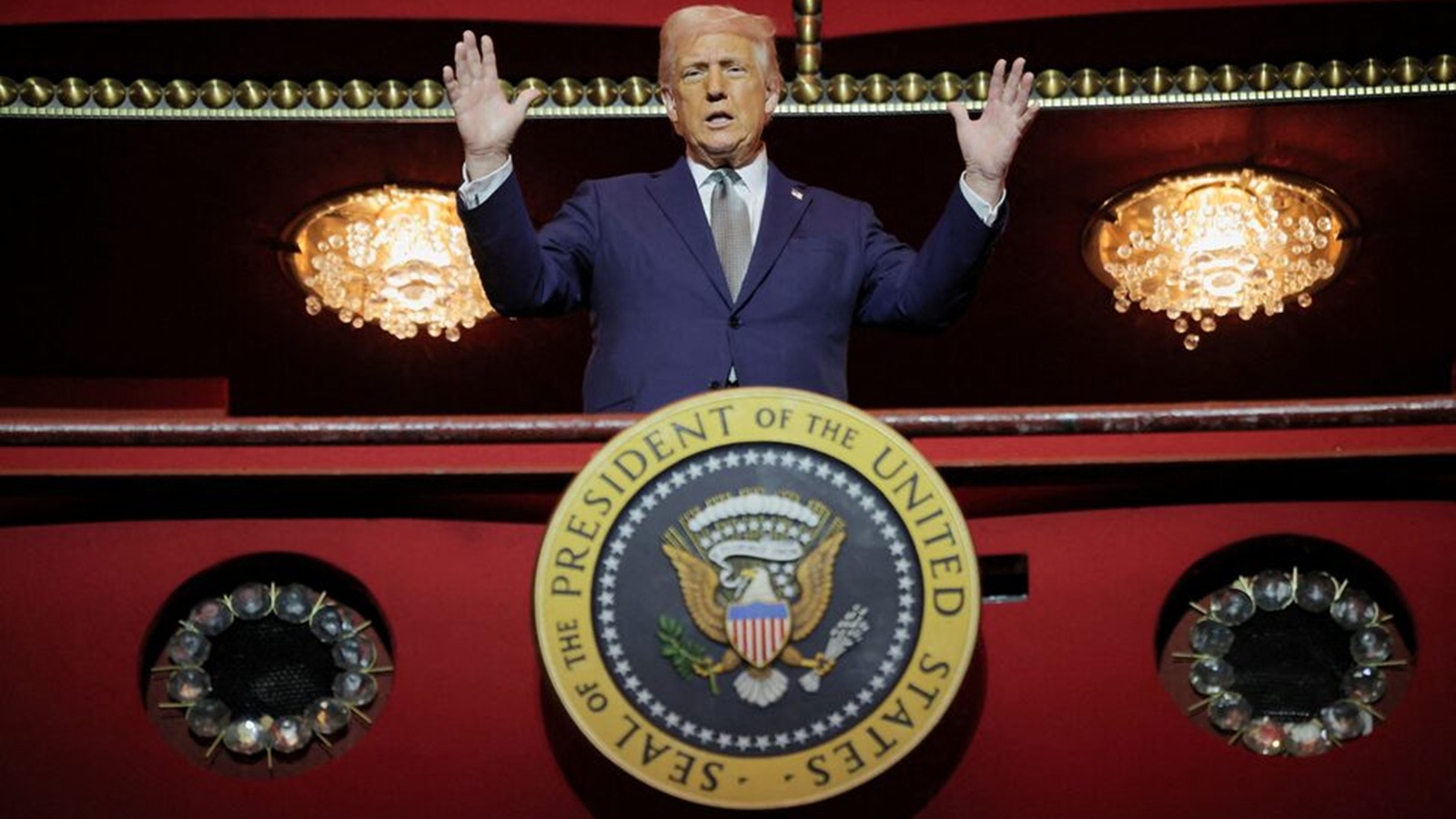
Trump’s allies have been pushing for months to close the Kenndy Center for renovations and honour the president by adding his name to the building. (Photo: Reuters)
The John F. Kennedy Centre for the Performing Arts, also known as the Kennedy Centre, based in Washington DC, has been at the hub of political debate, as the cultural centre’s board voted to shut it for two years for renovations. President Donald Trump has said the planned $257 million renovation will not proceed unless a court reverses a ruling blocking the addition of his name to the building.
The board’s decision came hours after US District Judge Christopher Cooper blocked its latest attempt to put Trump’s name on the Kennedy Center, ruling that such a move would require congressional approval. Cooper had ordered Trump’s name removed from the building in May.
Donald Trump said he has raised around million for the centre to “keep it afloat”. (Photo: Reuters)
Trump’s allies have been pushing for months to close the Kennedy Centre for renovations and honour the president by adding his name to the building; however, Judge Christopher Cooper has blocked both efforts, the New York Times reported.
Earlier in March, the board voted to close the Kennedy Center for renovations, but Judge Cooper had restricted the attempt to shutter the cultural facility except for emergency and necessary renovations. After the board again decided to shut the center, Trump said, “The closing will take place immediately.” In a post on Truth Social, Trump said the board voted “almost unanimously” to close the venue “for safety reasons”.
However, the Republican leader added that reconstruction of the cultural hub will not begin until a federal court or the Supreme Court rules in favour of the President’s name being added in front of the building. Trump added that the US Justice Department would ask for an expedited appeal and that he has raised around $17 million for the centre to “keep it afloat”.
Why Trump Wants His Name on the Kennedy Center
An analysis of presidential branding claims, public trust laws, and statutory barriers protecting America's sole living presidential memorial.
P.L. 88-260 enacted by Congress as JFK's official national memorial.
20 U.S.C.
Federal statute governing naming rights under public trust laws.
Executive precedents for unilaterally altering statutory memorial names.
Congressional authority over federal property naming designations.
● The Motivation Behind the Executive Push
Donald Trump's push to append his name to the John F. Kennedy Center for the Performing Arts reflects a broader strategy to establish an architectural legacy across Washington D.C.'s major cultural and federal assets.
Executive Governance: Asserts presidential appointment rights over the Kennedy Center Board of Trustees justify policy direction.
Renovation Funding Legacy: Points to presidential budget authorizations and capital updates secured during his administration as grounds for naming honors.
Civic Asset Rebranding: Views federal cultural institutions as appropriate venues to commemorate modern presidential achievements.
Bipartisan Public Trust: Argues Congress designated the facility specifically as a living memorial for a slain president, creating a protected sanctuary.
Overreach of Authority: Unilateral executive renaming bypasses congressional prerogative under Article I of the U.S. Constitution.
Public vs. Commercial Real Estate: National monuments differ fundamentally from private real estate properties carrying corporate sponsorship rights.
Core Conflict: A direct clash between real-estate executive naming philosophy and statutory public trust protections established by the U.S. Congress.
● The National Cultural Center Act of 1964
Originally created under President Eisenhower as the National Cultural Center, Congress renamed the institution in 1964 following the assassination of President John F. Kennedy, cementing it as his sole official national living memorial.
Congressional Bill (House + Senate)
Statutory Designation: Federal law explicitly defines the complex as the sole official presidential memorial to JFK. Changing this designation requires an express amendment passed by both houses of Congress.
Board Fiduciary Obligations: The Kennedy Center Board of Trustees acts as a federal fiduciary body. Board members who attempt to bypass statutory mandates face legal liability for breach of trust.
Appropriations Control: Annual operating funds and maintenance budgets are explicitly tied to congressional appropriations under Title 20 of the United States Code.
● Legal Obstacles & Ultra Vires Challenges
Any executive order or board resolution attempting to modify the Kennedy Center's name without congressional authorization would trigger immediate federal lawsuits under the doctrine of ultra vires (acting beyond legal authority).
Separation of Powers Enforcement: Strict ruling that executive orders cannot supersede federal statutes.
Statutory Preservation: Reaffirmation of congressional supremacy in naming public assets.
Legal Consensus: Constitutional scholars broadly agree that unilateral presidential renaming of a statutory national memorial would be swiftly invalidated by federal courts.
Every major presidential naming or renaming of major national landmarks in U.S. history has required formal congressional legislation rather than unilateral executive decree.
Historical Precedent: No U.S. President has ever successfully renamed a statutory national memorial without an express Act of Congress.
Trump allies seek Kennedy Center rebranding
The John F. Kennedy Center’s board, which is chaired by Trump and includes his administration’s cabinet members and allies, approved a resolution last month to add an inscription on the building stating, “Renovated and Restored by President Donald J. Trump.” President had announced adding his name to the building last year among other rebranding measures, BBC reported.
The Express Global Desk at indianexpress.com which delivers authoritative, verified, and context-driven coverage of key international developments shaping global politics, policy, and migration trends. The desk focuses on stories with direct relevance for Indian and global audiences, combining breaking news with in-depth explainers and analysis.
A major focus area of the desk is US immigration and visa policy, including developments related to student visas, work permits, permanent residency pathways, executive actions, and court rulings. The Global Desk also closely tracks Canada’s immigration, visa, and study policies, covering changes to study permits, post-study work options, permanent residence programmes, and regulatory updates affecting migrants and international students.
All reporting from the Global Desk adheres to The Indian Express’ editorial standards, relying on official data, government notifications, court documents, and on-record sources. The desk prioritises clarity, accuracy, and accountability, ensuring readers can navigate complex global systems with confidence.
The Express Global Desk is led by a team of experienced journalists and editors with deep expertise in international affairs and migration policy:
Aniruddha Dhar – Senior Assistant Editor with extensive experience in global affairs, international politics, and editorial leadership.
Nischai Vats – Deputy Copy Editor specialising in US politics, US visa and immigration policy, and policy-driven international coverage.
Mashkoora Khan – Sub-editor focusing on global developments, with a strong emphasis on Canada visa, immigration, and study-related policy coverage. ... Read More