 Firstpost ·
Economy, business and finance
How America’s sanctions bill on Russia could impact India and its oil markets
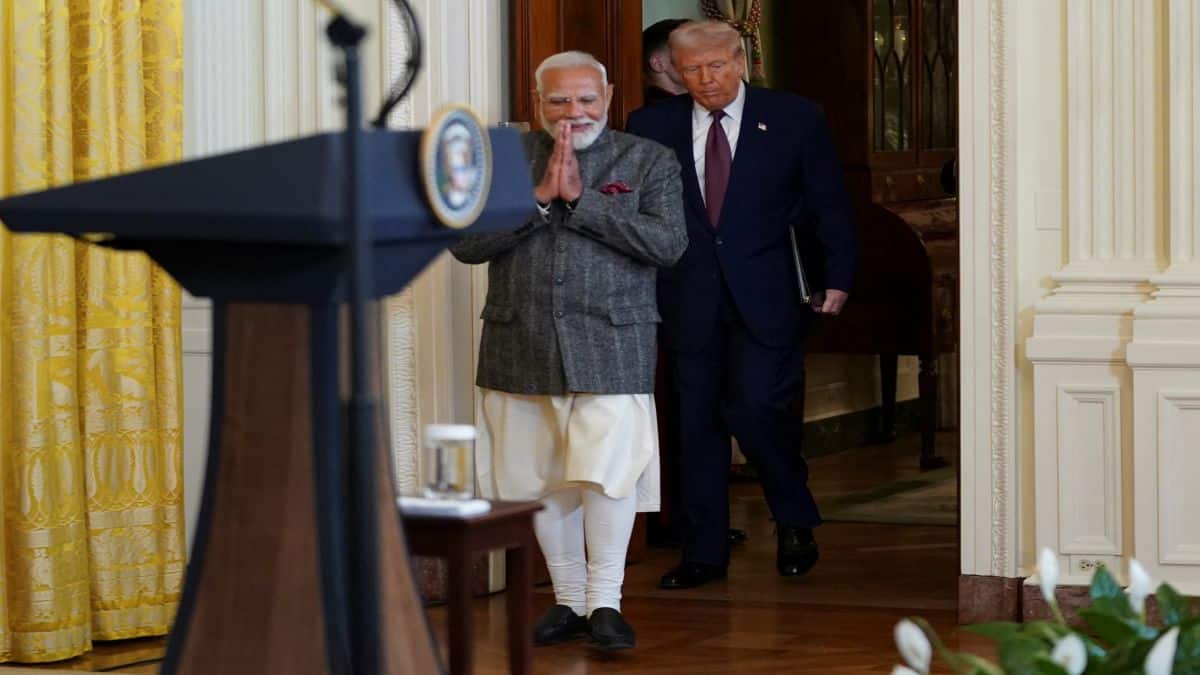
The US House of Representatives has passed a Russia sanctions bill, which empowers Donald Trump to impose tariffs of up to 100 per cent on buyers of Russian oil. This move could impact India’s oil markets, as Moscow remains a major supplier of crude to New Delhi. It could also have implications for the US-India trade ties if the American leader decides to impose further levies
Tariffs have become a thorn when it comes to India-US ties. And the US House of Representatives have just made the situation worse by passing legislation that gives President Donald Trump the authority to impose tariffs of up to 100 per cent on countries, including India and China, over their purchases of Russian oil and gas.
On Wednesday (September 16), the US House passed ‘The Lindsey O Graham Sanctioning Russia and Iran Act of 2026’ by a 262-159 margin. The legislation now heads to the White House, where the US president will sign the legislation into law.
The bill is designed to squeeze Russia’s revenue from oil and gas exports amid the war in Ukraine. However, this legislation could also have implications for India, which buys Russian crude.
Let’s understand how.
What is the bill that the US House has passed?
The US House of Representatives on Wednesday passed the Lindsey O Graham Sanctioning Russia and Iran Act of 2026 by a 262-159 margin. The legislation now goes to the White House, where Donald Trump has said he will sign it.
The legislation targets Russia’s energy and defence sectors, President Vladimir Putin and other senior officials, as well as Moscow’s so-called shadow fleet of tankers used to circumvent Western sanctions.
Apart from this, it also gives Trump the authority to impose tariffs of up to 100 per cent on major buyers of Russian oil and gas in an effort to choke off revenue financing Moscow’s war. An amendment by Democratic Congressman Steny Hoyer called out 10 nations specifically: China, India, the UAE, Turkey, Singapore, Azerbaijan, Kazakhstan, Hungary, Kyrgyzstan, and Slovakia.
The bill has faced significant pushback but finally passed, as supporters argued that tougher economic pressure is needed, with Russia’s full-scale invasion grinding through its fifth year and no peace settlement in sight.
Following the passage of this legislation, Democratic Senator Richard Blumenthal of Connecticut, who wrote the bill with Graham, said he hopes the sanctions will help force Putin to the negotiating table and end the war. “To Vladimir Putin — we have your number,” Blumenthal said. “And to Ukraine — you are not alone.”
What does the bill mean for India?
The passage of the bill is of significance to India. That’s because it gives US President Trump the authority to impose tariffs of up to 100 per cent on the five largest importers of Russian oil or natural gas.
India currently imports 88 per cent of its crude requirements, with Russia being one of its major suppliers. In fact, when Moscow began its full-scale invasion of Ukraine in 2022, Russian crude became a significant part of India’s crude import basket.
According to data provided by Global Trade Research Initiative (GTRI), India imported $40.8 billion worth of Russian crude in FY2026 — nearly a third of its total crude imports. Additionally, Kpler data showed India imported 2.08 million barrels per day (bpd) of Russian oil in August, around 45 per cent of its total oil imports.
It’s, however, important to note that the bill does not automatically impose a 100 per cent tariff on India. It empowers Trump to decide on the level of duties to impose and at what level.
But if the American leader does go ahead with the 100 per cent tariff, it would be the highest level. It would be in addition to the 10 per cent tariff that the US currently imposes on imports from India as a penalty for not doing enough to stop the import of goods made using forced labour.
Experts noted that such a move would hurt the country’s economy. As Aditi Nayar, Chief Economist, ICRA Ltd, told Fortune India, “Any imposition of higher tariffs by the US, and the associated uncertainty, would cast a downside on Indian growth prospects.”
GTRI founder Ajay Srivastava also noted that the bill has significant implications for India. “The bill is a blunt and dangerous attempt to pressurise India to sign a bilateral trade agreement (BTA) on one-sided terms. India buys Russian oil to secure affordable energy for 1.4 billion people, not to finance war, and these purchases have helped stabilise global supplies and prices,” he was quoted as telling the Times of India.
He further added that if Trump imposed 100 per cent tariffs on Indian goods, it wouldn’t just hurt Indian exporters, but also affect the trade relationship. “The actual impact of new tariffs on Indian exports can be assessed only after the US announces the tariff rates,” he said.
Will petrol prices increase in India?
The answer to this remains unclear as of now. We will have to wait and watch to see if India reduces its dependency on Russian crude for its energy requirements to avert the tariff threat from the US.
Indian refiners can seek oil from other producers, including countries in West Asia, Africa and the Americas. In fact, India’s crude imports from Venezuela reached their highest level since 2020 in August, surging 64 per cent from July to 358,000 barrels per day. According to Kpler data, while Russia remained the largest crude supplier, oil imports from the country fell to a four-month low of 2.06 million barrels per day (bpd) in August, marking a sharp 27 per cent drop from July. Meanwhile, the UAE was the second-largest supplier at 542,000 bpd, up 15 per cent from 470,000 bpd in July.
Sumit Ritolia, senior manager for oil markets at Kpler, earlier told The Print that the impact on Indian crude imports would not be immediate. Based on how sanctions have worked in the past, he expects a wind-down period of 45-60 days during which already-contracted and in-transit cargoes can still be delivered. “The initial impact would be on new bookings rather than near-term arrivals,” Ritolia said.
This means India can replace Russian oil supplies, but the question remains – at what price.
How has India reacted to passage of the US bill?
The Ministry of External Affairs has taken note of the passage of the US bill, adding it is monitoring the situation.
“As stated on several earlier occasions, India remains firmly committed to ensuring energy security for its 1.4 billion people. It will continue to do so through diversified sourcing and on the basis of evolving market dynamics. This issue has been discussed at high levels in recent months with various US interlocutors. Its potential implications for not just the bilateral relationship but also the international energy market have been very clearly articulated by the Indian side,” said the MEA in a statement.
The MEA added that it has made its “determination to take all necessary measures to protect its trade and economic interests”.