 The Indian Express ·
‘Bangladeshi’ tag, 87 days in detention, then bail: A Bengal villager’s ordeal
Seventy-year-old Jalil Akhtar was sleeping outside his home when the police picked him up, saying he was from Bangladesh. For weeks, his family ran around with documents to prove otherwise.
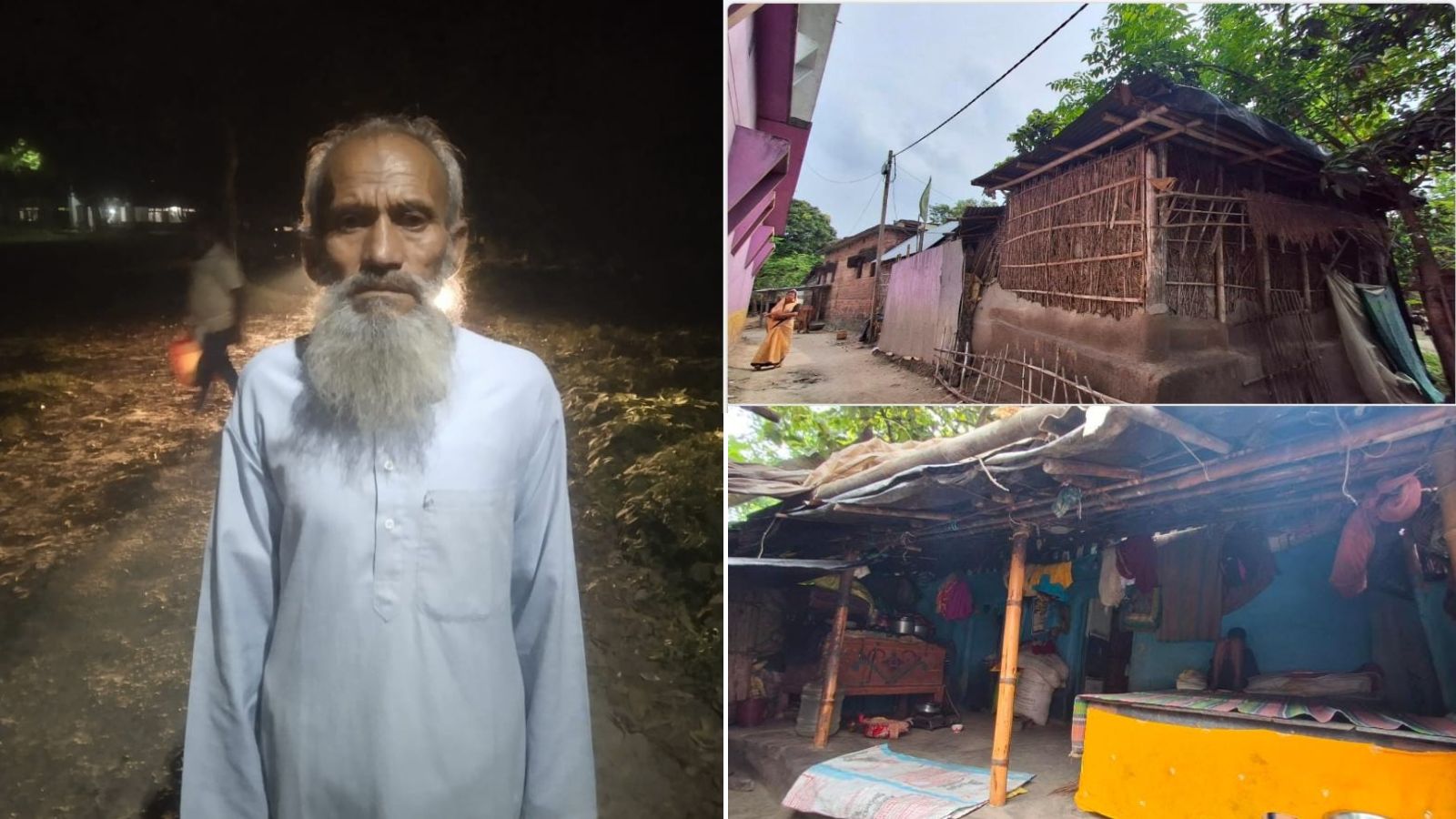
For 70 years, Jalil Akhtar led a quiet and predictable life in Bagroi village in West Bengal’s Uttar Dinajpur district. A landless villager, he survived on daily labour and the money sent home by his sons, who work as migrant labourers in distant states. Life as Akhtar knew it changed on the night of June 19. Picked up by the local police on suspicion of being a Bangladeshi national, he spent the next 87 days in detention, moving between a holding centre and jail, while his family sought to secure his release.
That night, around 11 pm, while the rest of the village slept, police officers from the nearby Dalkhola station arrived near Akhtar’s house. They parked their vehicle at a distance, walked up to the cot where the elderly man lay, and took him away, his family alleged.
“None of us knew; even his family had no idea. They picked him up at night and drove off. When we searched for him the next morning, he could not be found. When I informed the police station, they said he was allegedly from Bangladesh. I asked, ‘How could he be from Bangladesh? On what grounds did you bring this man?’ We didn’t get any response,” Akhtar’s cousin Motiur Rahman recalled.
Following his arrest, Akhtar was shifted between multiple locations, including a holding centre in Nizampur, 35 km away, and Islampur jail. “I was also kept near the Bangladesh border for four to five days. Since I am an Indian citizen, they could not send me. I stayed for more than a month at a detention centre and at the border….the rest of the days, I was in jail. Who will pay me for all the humiliation and harassment?” Akhtar told The Indian Express.
Rahman recalls how the family was not allowed to meet him in jail after a few initial meetings. “He was kept at the detention centre. I went once or twice, but after that, they didn’t allow meetings. He was not allowed to keep a mobile phone. They kept moving him around…for no reason,” he added.
Name in voters’ list: Family denies allegations
As per sources, the FIR claims Akhtar was an illegal immigrant from “AndhaRahamatpur village of Thakurgaon district of Bangladesh” who had entered India via the Hili-Malda border roughly 24 years ago. However, official records submitted by his family contradict these claims.
According to Akhtar’s family, his name appeared in the 1995 voters’ list and the 2002 and 2026 electoral rolls after the Special Intensive Revision exercise. Police case diaries revealed that Akhtar had voted in elections as far back as 1982, his family added, saying that his entire family holds valid electoral documents and cast their votes in 2026.
“In his family, no one’s name has been deleted. In 2026, he cast his vote. There is a voter slip…there is a voter list. He has two sons and two daughters. The sons’ names are also on the voter list, and they also voted,” Rahman insisted.
Akhtar’s defence counsel pointed out that under the Indian Citizenship Act, individuals born before 1987 are not required to produce their parents’ birth records to establish citizenship. Despite these protections, the police postponed Akhtar’s bail hearings four times, citing verification delays.
‘Detention does not serve any useful purpose’
During hearings at the Islampur court, Akhtar’s legal team—local Legal Aid advocate Firoz Ahamad, high court advocate Syed Nafirul Islam, and the Association for Protection of Civil Rights’ fact-finding team—urged the police to verify the documents on record.
Following directives from the magistrate, the investigating officer eventually submitted a report confirming that Akhtar’s voter ID, PAN card, 1995 electoral list record, and 2002 SIR records were all authentic Indian documents.
During a tense hearing before the additional chief judicial magistrate on September 2, the judge directly confronted the investigating officer, asking point-blank whether the government documents provided by the family were genuine. The officer stood in silence.
“….it is also noteworthy that repeated attempts at deportation have already been made, but the same could not be completed. The accused has consistently asserted his claim of Indian citizenship. In such circumstances, continued detention would not, at this stage, appear to serve any useful purpose,” the magistrate said, granting Akhtar bail.
“Considering the totality of the circumstances, particularly the age of the accused, absence of criminal antecedent, the verified existence of certain Government records relied upon by him, his name being reflected in consecutive electoral rolls, absence of any material showing that the said documents are fabricated, absence of any prayer for custodial interrogation, absence of any reasonable apprehension of absconding or tampering with the Investigation, and the fact that the question of citizenship is yet to be finally determined by the competent authority, I am of the view that no useful purpose would be served by keeping the accused in further detention,” the court added.
Akhtar was officially released from custody on September 15, after 87 days of detention.
Addressing the outcome of the final hearing on September 14, advocate Islam said, “The court granted bail, saying all documentation submitted by the investigating agency is genuine and that Jalil Akhtar, as per the reports submitted, is an Indian national.”
Akhtar’s family is still looking for answers. “The court order stated that his documents show he is a completely valid citizen. There is more than enough proof. Why did the police pick him? The police couldn’t even answer that,” Rahman said.