 Firstpost ·
‘We respect Indian military capabilities’: Pakistan’s Lt Gen Sharif on India’s growing firepower
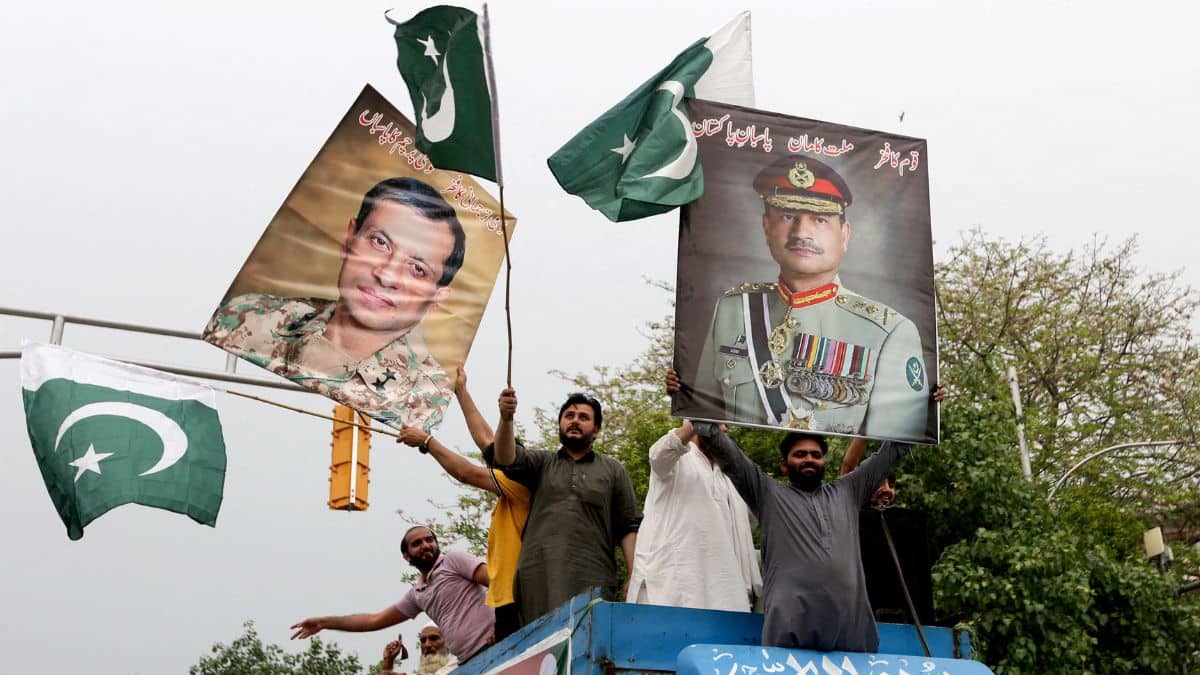
Pakistan’s top military spokesman has acknowledged India’s growing military capabilities while insisting that Islamabad is not engaged in an arms race with New Delhi
Lt General Ahmed Sharif Chaudhury was asked, in an interview with Al Arabiya English, how concerned Pakistan was about developments in India’s air defence, missile and conventional strike capabilities. In response, he said Pakistan “respects” Indian military capabilities and understands New Delhi’s efforts to invest in its defence arsenal.
However, he maintained that Pakistan was focused on defensive capabilities and had “no aggressive design” against any country.
“We respect the Indian military capabilities. We understand their desire to spend lots of money and resources in building up their military arsenal and capabilities,” Chaudhury said. “However, that doesn't mean that we are into any sort of arms race with Indians.”
The remarks come as India continues to expand its indigenous defence manufacturing base while also working with established partners on advanced military platforms.
India steps up missile, air defence capabilities
India’s push has gained further momentum since Operation Sindoor, with greater emphasis on strengthening capabilities that could be relevant in a potential two-front security scenario.
In May 2025, India laid the foundation stone for the Rs 1,460-crore Navdurga defence testing range. In July 2026, under Project Kusha, India conducted the first flight test of an indigenous long-range surface-to-air missile programme, which is planned to have a maximum range of up to 400 km.
Last month, the government also approved the transfer of DRDO technologies for conventional missile systems to Indian companies, giving the private sector a larger role in the development and production of such systems.
India’s air defence network includes systems such as Akash, Akash-NG, QRSAM and VSHORADS. BrahMos, meanwhile, is an Indo-Russian programme, while MRSAM is being developed through India-Israel cooperation.
The Agni series and K-series submarine-launched ballistic missiles are strategic systems forming part of India’s nuclear deterrent and are separate from the conventional missile technologies being opened up for wider industrial participation.
Alongside its indigenous programmes, India is also expanding defence cooperation with key partners, including Russia.
During Russian President Vladimir Putin’s visit to India for the 18th Brics Summit, reports said Moscow offered an advanced engine to support the modernisation of India’s Su-30MKI fleet.
India and Russia are discussing an estimated $11-billion “Super Sukhoi” upgrade programme covering nearly 260 Su-30MKIs, with the initial phase expected to involve 84 aircraft.
Russia has also proposed joint production of Su-57 fifth-generation fighter jets in India, along with additional S-400 air defence systems and the newer S-500 system. Moscow has further offered to establish an S-400 maintenance, repair and overhaul facility in India.
At the same time, India is pursuing its own fifth-generation fighter programme through the indigenous Advanced Medium Combat Aircraft.
The contrast is significant: while Pakistan continues to rely heavily on external military partnerships, particularly with China and Türkiye, India is attempting to combine foreign cooperation with a steadily expanding domestic defence-industrial base.