 The Indian Express ·
Education
NEET debate: Tamil Nadu education body urges Centre panel to abolish NTA
The NTA is now under a broader examination-reform exercise. The Centre constituted an HPTF headed by Nandan Nilekani to examine the conduct, security, design and governance of public examinations, including those conducted by the NTA.
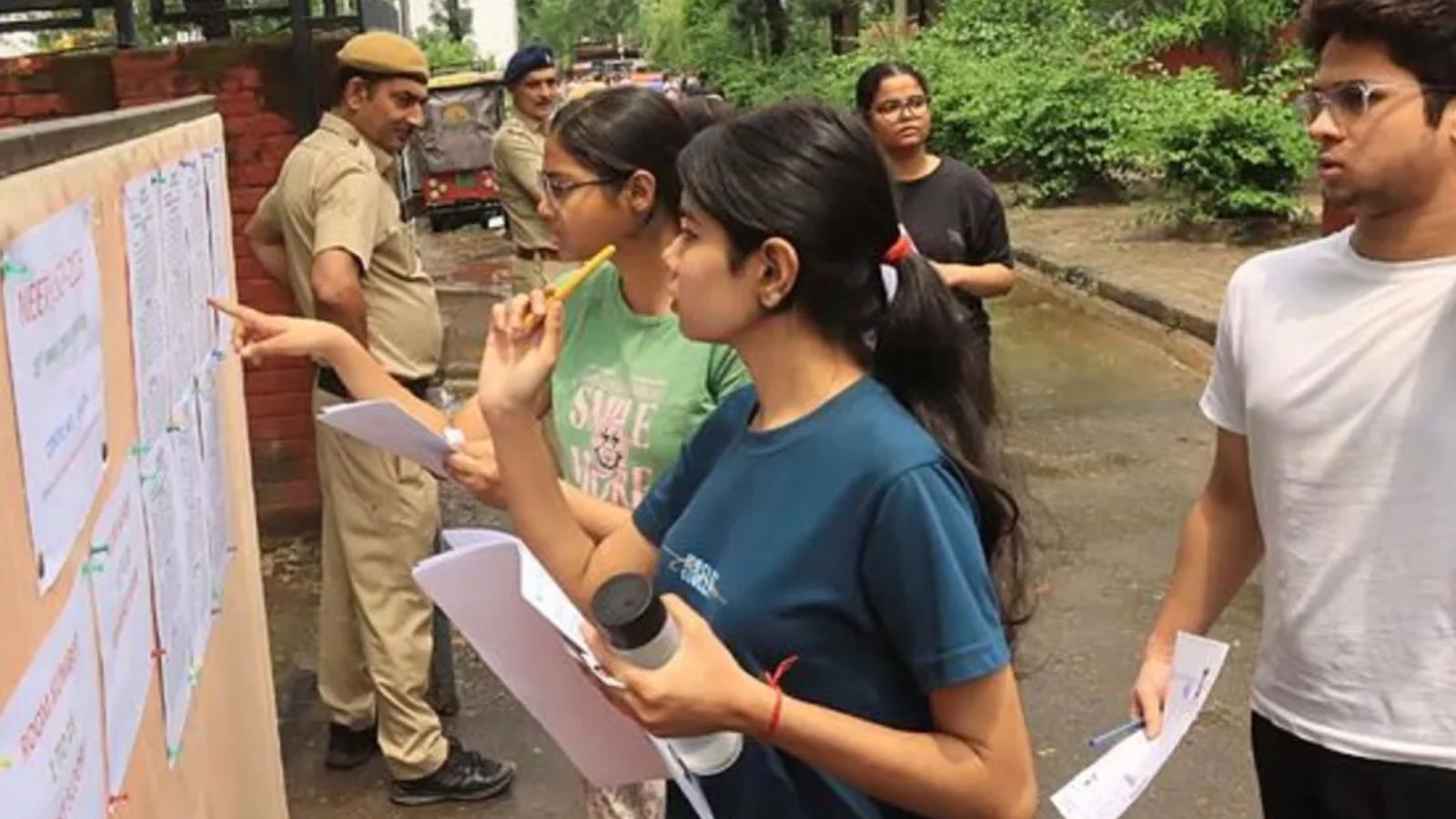
Amid the long-running debate over NEET as a pan-India entrance test for medical education, a Tamil Nadu-based education rights body has raised fresh objections to the centralised examination system. The State Platform for Common School System–Tamil Nadu (SPCSS-TN) has urged the Centre’s High-Powered Task Force (HPTF) on examinations to abolish the National Testing Agency (NTA) and all centralised undergraduate entrance tests.
In its memorandum to the HPTF, SPCSS-TN argued that undergraduate admissions should be based on students’ board examination marks. It also proposed using Tamil Nadu’s normalisation process for filling all-India quota seats. The organisation questioned whether a central agency should control evaluation and admission and said the present system raises concerns about decentralising of the test and access. These are the organisation’s submissions to the HPTF, not recommendations already accepted by the Centre.
The opposition to the National Eligibility-cum-Entrance Test (NEET), however, did not begin with the recent NTA controversies. It goes back to the very process through which a common medical entrance test was conceived.
One of the earliest mentions of a national eligibility test by the Medical Council of India (MCI), now replaced by the National Medical Commission (NMC), dates back to December 2010. Put simply, the proposed change introduced a national entrance test as an eligibility requirement for admission to undergraduate medical courses. The NMC’s records list the 2010 notification, followed by another notification in 2012.
At that point, India did not have one common medical entrance test. The All India Pre-Medical Test (AIPMT), conducted by the Central Board of Secondary Education (CBSE), was the national-level examination, while states also had their own entrance processes running simultaneously.
The proposal for NEET sought to bring admissions under one common test. One of its key aims was to alleviate academic pressure on students.
The first NEET was held in 2013 by CBSE. However, the examination did not immediately become the permanent system. The Supreme Court set aside the NEET framework in 2013. After much back and forth, in 2016, the court revived the common examination process. The AIPMT that year effectively became the first phase of NEET, followed by a second examination. From 2017, NEET became the common entrance route for undergraduate medical admissions.
The NTA came even later. Established in 2018, it began conducting NEET-UG from 2019. Therefore, the opposition to the common medical entrance test predates the agency that currently conducts it.
Tamil Nadu has been the most sustained opponent, with the debate centred on school-board differences, access to coaching, rural students and the state’s existing admission system.
Before NEET, Tamil Nadu used Class 12 marks for professional-course admissions. State leaders argued that introducing a national examination would disadvantage students from the state board compared with students prepared for the national-level syllabus and coaching system.
The state also linked the issue to its social-justice and reservation policies.
The opposition has not been limited to Tamil Nadu. During the legal and policy disputes around NEET in 2016, states including Andhra Pradesh, Telangana and Karnataka also raised objections or sought to retain their own examination arrangements. The arguments varied, but included concerns over state control, language, syllabus differences and existing admission systems.
Tamil Nadu’s opposition became particularly visible in 2017, when the state Assembly passed Bills seeking exemption from NEET. The state continued to press the Centre for an exemption even after NEET became mandatory.
The current debate has, therefore, brought together two separate questions: whether medical admissions should be based on a common national test, and how such a test should be conducted, given the NTA’s repeated gaffes.
The NTA is now under a broader examination-reform exercise. The Centre constituted an HPTF headed by Nandan Nilekani to examine the conduct, security, design and governance of public examinations, including those conducted by the NTA. It also recently switched its office premises from earlier in Okhla to the Government of India Press building on Minto Road in central Delhi.
The SPCSS-TN memorandum has now added the larger question of centralisation to that exercise. The HPTF’s recommendations and the Centre’s response will indicate whether the current reforms focus mainly on examination security and administration, or also address the longer-running debate over centralised undergraduate admissions.