 Firstpost ·
Economy, business and finance
Who is Richard Blumenthal, one of the key US figures behind the Russia sanctions bill?
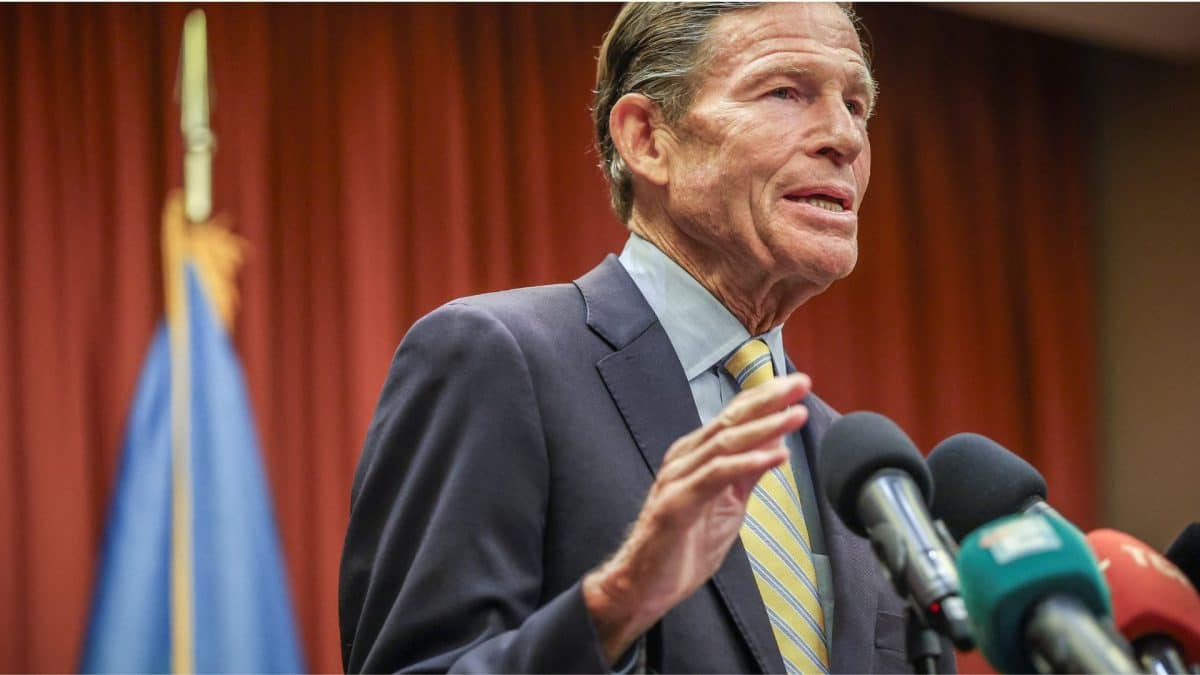
Richard Blumenthal, the Democrat from Connecticut, co-led efforts with Republican Senator Lindsey Graham to develop the bipartisan sanctions framework targeting Russia and countries purchasing oil from it. After the sanctions bill passed in the House, he warned India and China to 'clean up' their act
Richard Blumenthal of the Democratic Party has yet again warned India and China after the House of Representatives passed the sanctions bill targeting Russia and nations purchasing its oil and gas.
Blumenthal has emerged as one of the key Democratic figures behind the bipartisan legislation. It is pertinent to note that this law permits US President Donald Trump to levy a 100 per cent tariff on major buyers of Moscow oil and gas, including India.
Blumenthal and the late Republican Senator Lindsey Graham jointly led the effort to push a bipartisan sanctions framework aimed at targeting Moscow and nations that continue to purchase its energy exports.
The duo first introduced the bill seeking primary and secondary sanctions against Russia in its war against Ukraine in April 2025.
Who is Richard Blumenthal?
Since 2011, Blumenthal, 80, has been a US senator from Connecticut. In 2010, he was elected and re-elected in 2016 and 2022. Blumenthal is currently a member of the Senate Judiciary, Homeland Security and Governmental Affairs, Armed Services, and Veterans’ Affairs committees.
Born in Brooklyn, New York, on February 13, 1946, Blumenthal studied at Harvard College before attending Cambridge University and later Yale Law School, where he served as editor-in-chief of the Yale Law Journal.
Blumenthal was born in Brooklyn, New York, on February 13, 1946. He studied at Harvard College and Cambridge University. Subsequently, at Yale Law School, he held the position of editor-in-chief of the Yale Law Journal.
According to reports, from 1970 to 1976, Blumenthal also served in the US Marine Corps Reserves. He was also a law clerk for then-Supreme Court Justice Harry Blackmun.
From 1977 to 1981, Blumenthal was the US Attorney for Connecticut. He served as US Attorney before entering the Senate.
His political career started at the state level, where he served in the Connecticut House of Representatives and State Senate before serving as Attorney General in 1991. He served for five terms in the role until 2011.
'Clean up your act'
On Wednesday (September 17), Blumenthal was quick to warn India and China with "clean up your act," a remark after the House passed the bill.
"To China and India: You better clean up your act. Buy your oil and gas somewhere else. Appeasement is not a strategy," he said.
India, however, has made it clear by confirming that it is "firmly committed to ensuring energy security for its people" and will continue to diversify its sourcing strategy based on developing market conditions.
The Ministry of External Affairs said, "India remains firmly committed to ensuring energy security for its 1.4 billion people." "We are monitoring further developments on this matter," it added.
What does the bill mean for India?
Neither legislation nor Blumenthal can impose a 100 per cent tariff on India. It rather gives Trump the power to levy sweeping tariffs under the condition mentioned in the bill.
In July, over 60 senators, led by Blumenthal and Republican Senator Darline Graham — Lindsey Graham’s sister — announced revised sanctions measures, targeting Russian officials, financial institutions and energy interests.
The legislation's key objective is to pressure nations that continue to purchase Russian oil and gas.