 Firstpost ·
Lifestyle and human interest
Lost for 180 years, a rare Assam plant turns up on a single hillside
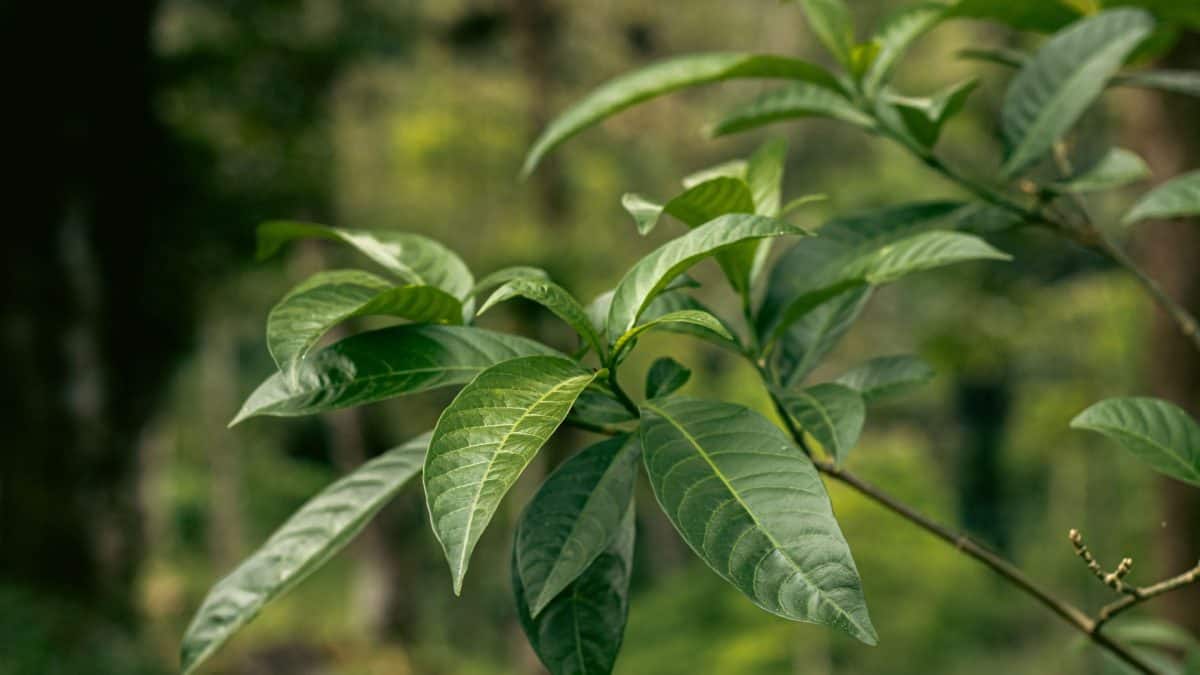
A doctoral student's field trip through the Jatinga Hills has ended nearly two centuries of silence around Rungia mastersii, an endemic shrub last seen by science in 1845. The find has thrilled botanists and worried them in equal measure.
In 1845, the British botanist J.W. Masters collected a small flowering shrub along Assam's Sundari river. The plant was later described as a new species and named in his honour. After that, it vanished from the record entirely. For 180 years, the only evidence it had ever existed was one dried specimen kept at the Central National Herbarium in Howrah.
According to a Mongabay India report, that changed this year, when Kangkan Kumar Das, a PhD scholar at Assam University, Silchar, was surveying the Acanthaceae family across the region for his doctoral work. While trekking through the Jatinga Hills in Dima Hasao district, he came across an unfamiliar shrub growing in a damp, rocky crevice beside a stream. Das consulted Yunfei Deng, a botanist at the South China Botanical Garden, who confirmed the identification.
Working with his supervisor, Professor Debjyoti Bhattacharyya, Das compared the specimens against the original material held at the Central National Herbarium, Kolkata, and confirmed the plant was indeed Rungia mastersii. Their findings were published in July in the journal Feddes Repertorium.
The species is a shrubby herb standing 60 to 110 centimetres tall, with pale green to whitish flowers streaked with purple, and it favours shaded, moist forest between 900 and 1,250 metres above sea level. It belongs to Rungia, a genus of some 88 species spread across tropical Africa, Asia and the southern Arabian Peninsula. Assam alone now hosts four known species in the genus, alongside R. pectinata, R. repens and R. tinsukiaensis.
The joy of rediscovery has come with an unwelcome discovery of its own — the species appears to be desperately rare. Das counted only 40 to 42 individual plants during his survey, and all of them were growing in exactly the same patch of forest, a concentration he has described as a source of concern for the plant's long-term survival.
The site itself is remote, reaching it requires a five-hour trek, as there is no vehicle access, and it sits close to Barail Wildlife Sanctuary, an area rich in wildlife including deer, leopards and black bears. Some cultivation is carried out nearby by local Khasi farmers, but there is little permanent settlement.
The has likely helped the plant survive undetected, but it also leaves the entire population exposed to a single disaster. Bhattacharyya has warned that a landslide, a forest fire or even a shift in the stream's flow could wipe out the species in one event, since there is no second population to fall back on.
Despite the risk, Rungia mastersii remains officially classified as "Not Evaluated" under International Union for Conservation of Nature Red List criteria, simply because so little has been known about it until now. Researchers are calling for that to change, along with immediate surveys to check whether other populations survive elsewhere in Assam's forests.
Das plans to return to the site after the monsoon, when the plant's flowering season begins around September and October, to study its fruit structure and how its seeds disperse, work that could inform decisions about propagating the species in additional, safer locations.
The rediscovery stands as a reminder of how much remains unrecorded in India's north-east. A region long assumed to be well studied has just given up a species that spent 180 years hiding in plain sight, on a hillside a handful of people ever visit.