 Firstpost ·
Lifestyle and human interest
Japan now has more than 100,000 people of the age of 100 and above
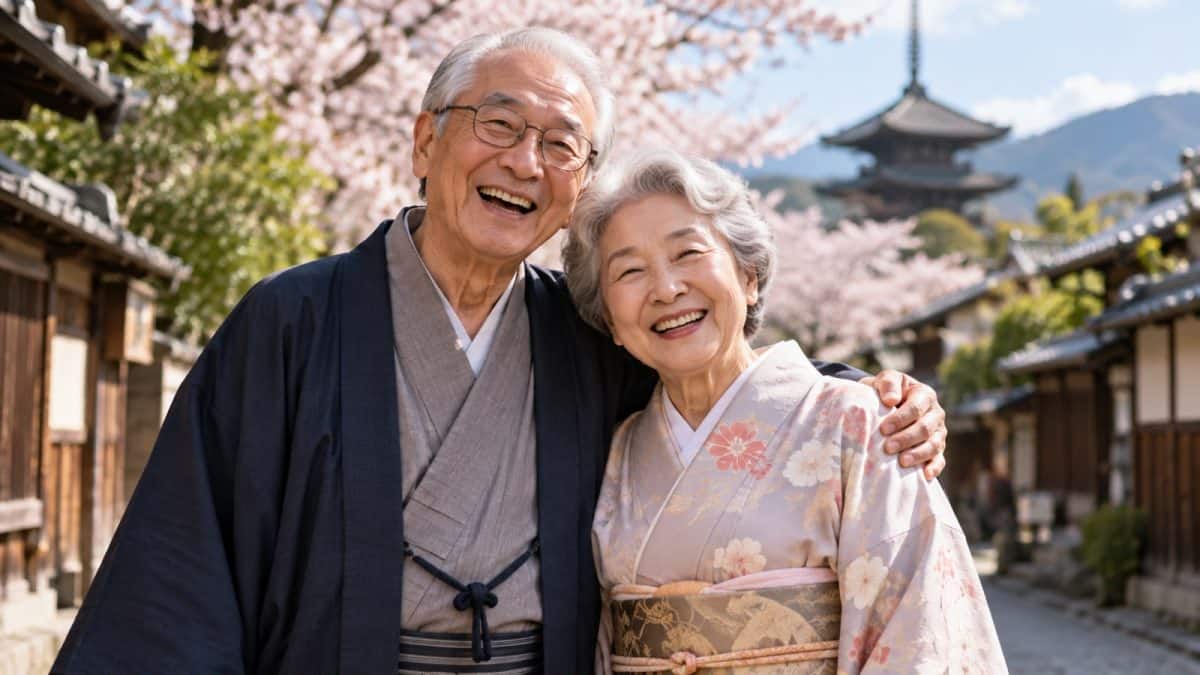
Japan's centenarian population exceeds 100,000 for the first time, reaching 107,677. Women comprise nearly 90% of centenarians. Researchers highlight diet, active lifestyle, and small daily habits as major contributors
Beyond its towering skyscrapers and all things touristy, Japan also grabs the spotlight for being home to some of the longest living people on this planet. Not just once but time and again.
Recently, the country has reached a striking demographic milestone with the number of people aged 100 and above surpassing 100,000 for the first time.
As per the latest data from the Japan Government, the country now has 107,677 centenarians, marking an unprecedented high.
Centenarian count and year-on-year highs
According to Japan’s Ministry of Health, the latest data reveals that the number of centenarians has been rising for 56 consecutive years.
Year-on-year increase: Around 7,900 more people
Share of women: About 88 to 90 per cent of all centenarians
First recorded data (1963): Just 153 centenarians
The longest living people in Japan are women
As researchers zeroed in on the data, it was found out that women dominated Japan's centenarian landscape.
Nearly nine in 10 centenarians are female, reflecting longer average life expectancy among women compared to men.
Japan consistently ranks among the global leaders in longevity, with women living to around 87 years on average and men to around 81 years, according to health ministry estimates.
Regional differences across the country: Shimane, Osaka, Kochi, and more
The proportion of people aged 100 and above stood at 87.51 per 100,000 residents nationwide.
Shimane recorded the highest concentration -186.65 centenarians per 100,000 people, maintaining its position at the top for the 14th consecutive year.
It was followed by Kochi, which reported 169.52 centenarians per 100,000 people, and Tottori, with 152.48 per 100,000 people.
On the lower end of the spectrum, Saitama had the lowest proportion, at 51.27 centenarians per 100,000 people. Aichi and Osaka also reported relatively low figures, at 57.79 and 60.06 per 100,000 people, respectively.
Overall, the data highlights significant regional variation in the distribution of centenarians across Japan, even as the national total continues its upward trajectory.
Why Japan has so many centenarians?
Several studies over the years have put focus on how the Japanese have managed to outshine as the longest living people on Earth.
The traditional Japanese diet heavily focuses on fish, vegetables, fermented foods, and low sugar consumption.
Scientifically, this is widely associated with better heart health and reduced chronic disease risk.
The Japanese are known for their simplicity, which also reflects in their daily activity which is replete with walks and staying socially engaged within their community.
Walking 10,000 steps a day or more has been scientifically proven to help reduce weight, strengthen metabolism, improve heart health, and more, while staying socially active is the key to better mental health.
Japan's healthcare system amasses attention for preventive care and timely treatment, which is a major contributor to the overall life expectancy of the citizens.
This is, by far, one of the most important factors. The Japanese follow various daily habits that play a major role in their longevity. From portion sizes in meals to ikigai, there's an array of small and simple daily routines that shape up their life.
Anuj is a senior sub-editor (lifestyle desk) at Firstpost who covers food, travel, health, and fitness, mostly because they’re all excellent excuses to leave the house. Powered by coffee, he spends his downtime airplane-spotting and exploring spirituality, hoping one day to understand both turbulence and the universe.