 Firstpost ·
Europe rearms: Is the war economy back?
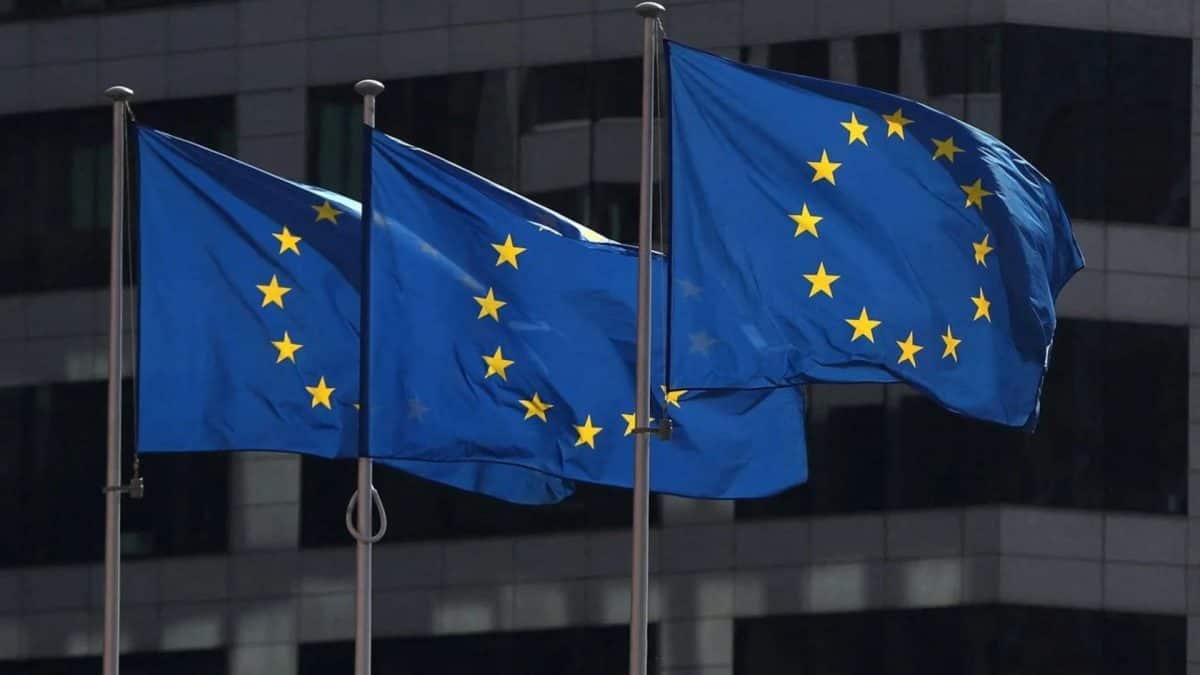
The return of Europe’s war economy is a warning about what peace was worth — and how much it costs to buy it back
On the first day of September 2026, amid the manicured calm of the Druids Glen resort in County Wicklow, Ireland, the defence ministers of the European Union met to solve a problem that money alone could not fix. Ukraine’s cities were burning under Russian missile and drone salvoes — July’s strikes had killed some 400 civilians — and Kyiv needed Patriot air-defence missiles now, not in a procurement cycle two years hence. The interceptors existed. Greece and Spain held stocks of them. And yet, by the end of the day, none was on its way east. Athens, through its defence minister, Nikos Dendias, pleaded its own exposure to ‘revisionism in the Eastern Mediterranean’ — a coded reference to Turkey. Madrid demurred.
The EU’s foreign-policy chief, Kaja Kallas, summed up the meeting with rare bluntness: there had been, ‘unfortunately, no concrete success today’.
It was a small failure, and a revealing one. After all, the Wicklow stalemate sits atop the largest peacetime military build-up the Western world has seen in a generation. According to the Stockholm International Peace Research Institute (SIPRI), global military expenditure reached a record $2.89 trillion in 2025 — a real-terms rise of 2.9 per cent and the 11th consecutive year of increase. The engine of that surge was not Washington or Beijing. It was Europe, whose spending jumped 14 per cent in a single year to $864 billion, the steepest climb since the Cold War. A continent that spent three post-war generations cashing its peace dividend has begun to spend it back. The war economy is making a return to Europe.
Germany, the pacifist giant of the post-1945 order, raised its military spending by 24 per cent in 2025 to $114 billion, becoming the largest military spender in Western Europe. Russia, for comparison, spent $190 billion — but with a military burden of 7.5 per cent of its GDP, an economy visibly straining under the effort. The United States, still the world’s largest spender at $954 billion, actually cut its outlay by 7.5 per cent, a signal Europe read with alarm rather than relief.
At the Nato summit in The Hague in June 2025, allies committed to spend 5 per cent of GDP on defence by 2035 — 3.5 per cent on core military needs and a further 1.5 per cent on broader security and infrastructure, with a review pencilled in for 2029. In Brussels, the European Commission’s ‘ReArm Europe’ plan, since rebranded Readiness 2030, aims to mobilise up to €800 billion — roughly €650 billion of it by loosening the EU’s fiscal rules so that member states can spend more on defence over four years without breaching deficit limits, and a further €150 billion through a new joint-borrowing instrument called SAFE, Security Action for Europe, whose loans come wrapped in ‘Made in Europe’ conditions.
Nineteen-member states have already queued up to tap SAFE, and demand has run so strong that the Commission is weighing a second tranche. When she unveiled the plan in March 2025, Commission President Ursula von der Leyen told Europeans they had entered ‘an era of rearmament’. The European Defence Agency’s latest data show EU defence spending hitting €418 billion in 2025, a fifth higher than the year before, and projected to reach €454 billion, or 2.4 per cent of the bloc’s GDP, in 2026. On present trends, it could touch €547 billion by 2029.
What forces a continent to rearm when no enemy stands at its own gates? The answer is a marriage of two anxieties, one to its east and one across the Atlantic.
The eastern fear is Russia, and it is concrete. More than four years into the invasion of Ukraine, European intelligence services increasingly warn of the possibility of a Russian probe of Nato’s readiness — most likely against the Baltic states — within the coming years, with 2030 frequently cited as a critical horizon. That fear has been sharpened by a summer of what Brussels calls hybrid attacks: drones over airports, severed undersea cables and sabotage on European soil.
As EU ministers gathered in Ireland, Berlin was preparing to formally blame Moscow for a suspected drone strike on a cargo aircraft at Leipzig-Halle airport. Sweden’s foreign minister, Maria Malmer Stenergard, captured the prevailing mood when she called it ‘the most serious security situation since the Second World War’. A threat that European elites once debated, their publics now increasingly feel.
The transatlantic fear is subtler but more transformative. Since returning to the White House, Donald Trump has made explicit what his predecessors only implied: that American protection is increasingly conditional and transactional, rather than something Europeans can simply assume. His demand that Europe carry more of its own defence burden helped drive the 5 per cent target; his approach towards Kyiv and overtures to Moscow have reinforced European doubts over whether American support can always be taken for granted. Rearmament, in this reading, is less about deterring Russia next year than about buying insurance against the possibility of diminished American engagement over the next decade.
Building a sovereign European arsenal — long-range missiles, drones and the industrial base to make them — takes years. Defending against a Russia that Europe fears could strike within a few years requires ready-made equipment now, and much of the fastest available equipment is American. Brussels wants at least 40 per cent of acquisition jointly procured and, under SAFE’s ‘Made in Europe’ rules, spent on European suppliers; yet collaborative purchasing was barely a quarter of equipment spending in 2025, and by widely cited estimates roughly two-thirds of Europe’s new defence orders in 2022-23 went to American firms. Europe can pursue autonomy and readiness, the Hudson Institute’s Tsiporah Fried argues, but ‘not on the same timeline’ — and, for now, its security still relies heavily on American capabilities.
Germany embodies the tension. Having amended its constitution in March 2025 to exempt defence spending above 1 per cent of GDP from its cherished debt brake — and to create a €500 billion fund for infrastructure — Berlin now channels a defence budget of roughly €83 billion for 2026 and, according to Politico, plans procurement worth up to €377 billion as it seeks to build Europe’s strongest conventional army. But it prefers to route much of that through its own national giant, Rheinmetall, rather than pan-European consortia, straining the very solidarity the EU is trying to manufacture. Around Munich, a defence-technology boom is remaking a city once known for BMW and beer into a hub of drones and battlefield software. The private capital chasing that boom is real; so is the risk that twenty-seven national industrial policies pull in twenty-seven directions.
Then there is the unresolved question of who backs the collective debt. A proposed Defence, Security and Resilience Bank — a ‘World Bank for defence’, backed by nine founding states led by Canada and including Belgium, Greece and Ukraine — hopes to borrow cheaply against a triple-A rating and lend the proceeds to rearming governments. But Europe’s three largest military powers, Britain, France and Germany, have so far held back; Berlin sits in as an observer only. With barely a few billion euros committed against an €800 billion ambition, the financing architecture of Europe’s rearmament remains, for now, a promissory note.
The return of the war economy is already reshaping European life in ways that reach well beyond the barracks. Nowhere is it more visible than in capital markets. Rheinmetall’s shares, which traded near €100 before Russia’s 2022 invasion, have since multiplied more than tenfold, trading above €1,150 in 2026; European aerospace and defence companies have been among the continent’s best-performing stocks, though the rally has lately cooled as investors weigh delivery against expectation.
A generation of European fund managers who once shunned ‘sin stocks’ now court them.
Germany’s suspension of its debt brake, the EU’s loosening of deficit rules for defence, the scramble for jointly guaranteed borrowing — all of it means that the money for tanks and interceptors will, sooner or later, compete with the money for pensions, health and the green transition that Europe’s ageing, welfare-heavy societies have come to expect.
It is telling that the same fiscal constraints are being loosened to accommodate rearmament as were once loosened to accommodate the pandemic. Every euro borrowed for deterrence is a euro that must eventually be repaid, financed through taxation or offset elsewhere.
Even the spending runs into hard limits. Europe’s problem is no longer only cash but capacity: shell and missile production lines that atrophied during the peace years cannot be rebuilt overnight, and skilled labour is scarce. The starkest bottleneck is human. As a Euronews investigation into the continent’s ‘hollowed-out armies’ laid bare, Europe is desperately short of soldiers — the EU’s defence commissioner, Andrius Kubilius, frames the need in terms of being able to move forces on the scale of 100,000 troops by 2030 — even as recruitment and retention are rated ‘problematic’ or ‘critical’ across much of the continent.
You can buy a Leopard tank with a supplementary budget; you cannot conjure up a trained crew for it by decree without political consequences. When Germany introduced compulsory registration for military service, thousands of young people took to the streets. An arsenal without soldiers is a museum.
What India should read in Europe’s rearming
For India, watching from a distance, Europe’s convulsion is not a spectator sport. It is a mirror and a market.
The mirror first: the single most important lesson is that strategic autonomy has a price tag, and that a nation which depends on a single foreign patron for its most sensitive weapons is a nation whose foreign policy can become vulnerable to external pressure. Europe is paying, late and dearly, to reduce that dependence. India — for decades one of the world’s largest arms importers, now pursuing “aatmanirbharta” in defence — has been learning a similar lesson, and its recent record offers evidence of the shift.
According to government figures, India’s defence exports have leapt from Rs 686 crore in 2013-14 to a record Rs 38,424 crore in 2025-26 — a rise of more than 5,500 per cent in 12 years — while nearly 65 per cent of military equipment is now produced domestically, compared with an import dependence of 65 to 70 per cent earlier. Europe’s ‘Made in Europe’ clauses are, in this sense, the continental cousin of Make in India.
The market matters too. A Europe determined to reduce its dependence on American suppliers, yet unable to build fast enough on its own, may increasingly look for trusted partners with industrial capacity and competitive costs. India, with its widening defence-manufacturing base and tradition of strategic autonomy, could be one — if its industry can move at the speed the moment demands.
But the deepest lesson is the one Europe is now relearning the hard way, and which every rising power should heed: the guns-versus-butter trade-off is not an abstraction. A continent that pours hundreds of billions of euros into deterrence over the coming decade will discover that armies are staffed by the same young citizens its welfare states were built to serve, and that no amount of borrowing repeals the arithmetic of scarcity. Rearmament may be judged necessary. It is never free. The return of Europe’s war economy is, above all, a warning about what peace was worth — and how much it costs to buy it back.
(The author is a multidisciplinary thought leader and a keen watcher of the changing national and international scenario. Views expressed in the above piece are personal and solely those of the author. They do not necessarily reflect Firstpost’s views.)