 ThePrint ·
The price to breathe: Why Goa’s women are paying with their lungs
Goa has seen a surge in lung cancer cases reported among women.
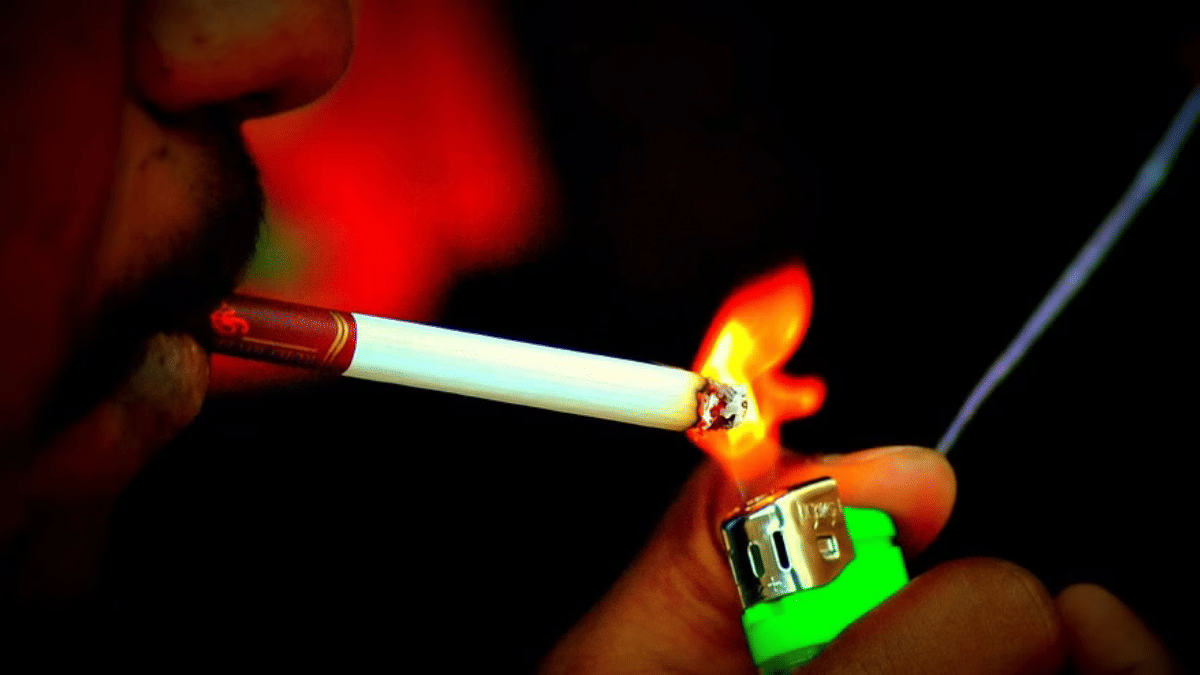
Where one person’s rights end, another person’s rights begin. Looks like this is certainly not true for India’s holiday capital, Goa.
What does one imagine when they think of Goa? Is it the standard scenery and the solemnity of beaches? The answer to a rapid fire question, beaches or mountains? But, sadly, Goa suffers from a crisis.
Everyone pays a price, beyond necessities and luxuries—the price to breathe, and this price is increasingly paid by women. According to the latest report by National Organisation for Tobacco Eradication (NOTE) India, there has been a surge in lung cancer cases reported among women. Earlier, the male-to-female ratio was 90:10, and has since then surged to 60:40. What is notable is that there are comparatively fewer women chain smokers than men.
Medical professionals attribute this trend to the ever increasing air pollution and passive smoking. The smoke inhaled from a burning cigarette, when all one does is the meek act of passing by, may prove to be deadly.
NOTE India’s president, Dr Shekhar Salkar, has requested the government of Goa to conduct a detailed study to analyse the paradoxical trends. Not long ago, Maharashtra’s FDA, under IAS Tukaram Mundhe, had sent a notice to Bollywood actors for endorsing tobacco-based pan masala products, earning appreciation from many medical professionals across the country.
In addition to Goa, Srinagar leads the country in the highest incidence rate of lung cancer per population. In Mumbai, the state health data highlights a severe crisis where pollution is linked to a massive share of diagnosed cases. The capital city of Delhi tops overall metro cancer rates and faces an escalating crisis among non-smokers due to chronically hazardous PM2.5 levels.
Silicon Valley, Bengaluru, and Keralam are projected to see sharp rises in lung cancer incidence by 2030, particularly among non-smoking women. Hyderabad & Lucknow are experiencing significant diagnostic surges linked to toxic air, heavy traffic, and construction dust. Such particularly developed states, may be developed in many senses but in the sense of a safe life, they surely, lack behind.
But, the bigger question remains. “Smoking kills”, “Tobacco is dangerous for your life”, “Say no to smoking”—are these labels merely to be decorated on the packets for people to tear it off? Are warnings meant only to be ignored and never to be followed?
It is quite easy to blame the state for not generating awareness amongst the people. It’s not that hard of a task to paste posters, create social media posts, campaigns. In fact, many of these are already a daily sight to the eyes. This time, the state has done enough. Citizens have not.
Critics argue that there should be an absolute ban on the sale of tobacco-based products. If it isn’t sold, it will never be treated as a disease. But tobacco is not a mandate, it’s a choice. Choice to choose between responsibilities and desires.
There have been many products like trans fats, artificial dyes, sodium nitrate etc that have been banned, with their sale in the market deemed illegal. However, counterfeit replicas of such products continue to circulate in the mainstream market. So, banning a commodity in no way ensures absolute guarantee of protection from its harms.
This is not just a tale of Goa. Smoking is a choice, but it should come with a duty to care towards the society at large. Once again, the rights of one should not harm the rights of another. It costs nothing to breathe. Even water comes at a price, but air does not.In a world increasingly driven by rapid commercialisation of everything, why does the boon of breathing become a privilege to dream? By not mending our ways, we commercialise not just commodities, but also life itself.
We talk at lavish summits about conserving the environment, sitting in carbon-emitting lights. We talk of preserving wildlife and biodiversity, yet serve meat in meals. We talk of saving water, yet leave the tap open while brushing.
But all these actions are conscious choices, and choices are so personal that they can never be questioned. How ironic the world is, we do it all, yet never do it. Perhaps we are all right somewhere, yet always wrong.
Let us think of the generations that will come. Sustainable development sounds too fancy to be true. Currently, the heart of every declaration or agenda of every summit, this term is a distant dream, far from reality. For those who shall succeed us, let them know their Earth before they know the price to survive here
Yashi Pandey is a student of Sir Padampat Singhania Education Centre, Kanpur. Views are personal.