 Firstpost ·
Arts, culture, entertainment and media
Who is Macklemore? A look at his career, activism and Palestine stance amid Ed Sheeran’s Loop Tour controversy
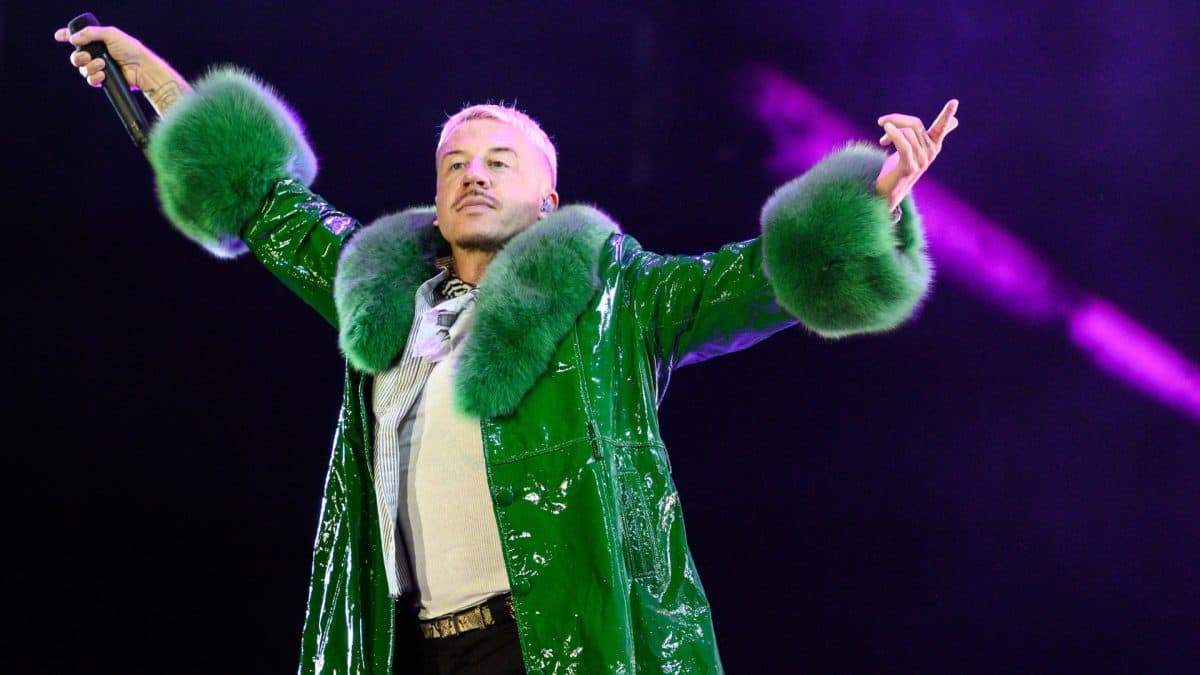
Who is Macklemore? From Thrift Shop and Same Love to Hind's Hall, here's how his activism led to the Free Palestine controversy on Ed Sheeran's Loop Tour.
Macklemore has spent much of his career speaking about issues that extend beyond music. The Seattle rapper has addressed same-sex marriage, racism, white privilege, addiction, US politics and, more recently, the war in Gaza. His latest intervention has now put him at the centre of a growing controversy surrounding Ed Sheeran’s Loop Tour, after his pro-Palestinian remarks at a concert led to calls for him to be removed from the tour.
But who exactly is Macklemore, and why does his name carry so much weight in conversations around social issues?
Who is Macklemore?
Born Ben Haggerty in Seattle, Washington, in 1983, Macklemore developed an interest in hip-hop as a child. He released his first album, The Language of My World, independently in 2005, but it was his partnership with producer Ryan Lewis that transformed his career.
The pair released The Heist in 2012, an independently released album that became a major commercial success. Its singles Thrift Shop, Can't Hold Us and Same Love turned Macklemore and Lewis into global stars. Thrift Shop and Can't Hold Us both topped the Billboard Hot 100, while Same Love, featuring Mary Lambert, became closely associated with the campaign for marriage equality in Washington state.
At the 2014 Grammy Awards, Macklemore and Ryan Lewis won four awards, including Best New Artist and Best Rap Album. Their success was unusual in an industry where the duo had largely operated outside the traditional major-label system.
Macklemore has spoken about social issues before
His willingness to address politics and social issues is not new. In Same Love, released in 2012, Macklemore spoke openly in support of same-sex marriage and criticised homophobia within hip-hop and wider society. Four years later, White Privilege II, featuring Jamila Woods, examined his position as a white rapper working within a predominantly Black musical culture and his relationship with the Black Lives Matter movement.
He has also been outspoken about US politics, including his opposition to Donald Trump. His political engagement has occasionally brought its own controversies, but activism has remained a recurring part of his public persona.
When did Macklemore start speaking about Palestine?
Macklemore's current position on Palestine also predates the Loop Tour controversy by several years.
In October 2023, he expressed support for calls for a ceasefire following the Hamas attack on Israel and the ensuing war in Gaza. He subsequently spoke at a pro-Palestinian rally in Washington, DC, in November that year.
In May 2024, he released Hind's Hall, a protest song supporting pro-Palestinian student demonstrations at US universities. The song was named after the building at Columbia University that protesters had renamed in honour of Hind Rajab, a five-year-old Palestinian girl who was killed in Gaza. Macklemore said proceeds from the song would go to UNRWA.
The song made his position considerably more prominent. He criticised US support for Israel and described Israel's actions in Gaza using terms including “genocide” and “apartheid”, positions that have been strongly contested in the wider political debate. He also argued that criticism of Israel should not be conflated with antisemitism.
His advocacy continued on stage. In 2024, he performed Hind's Hall during concerts and led audiences in chants supporting Palestine.
What happened at Ed Sheeran's Loop Tour?
The latest controversy began after Macklemore joined Ed Sheeran as an opening act on the US leg of the Loop Tour.
During his September 4 performance at New Jersey's MetLife Stadium, Macklemore spoke about Gaza and the occupied West Bank before performing Hind's Hall. He called for a “Free Palestine” and said he wanted Palestinians to know they had not been forgotten.
He also addressed Jewish members of the audience, saying that criticism of Israel was not intended as criticism of Jewish people and describing his message as one of “peace”, dignity, respect and equality.
The performance quickly spread online and drew criticism from some Jewish and pro-Israel organisations. The Israeli American Council launched a petition calling on Sheeran to remove Macklemore from the tour, arguing that the stage should not be used for political messaging. The Anti-Defamation League also criticised the performance.
Macklemore, meanwhile, defended his remarks and continued to argue that his criticism was directed at Israeli government policy and the treatment of Palestinians, rather than Jewish people.
How did the controversy snowball?
What began as criticism of Macklemore's comments soon became a question of whether he would remain on the tour.
According to Messina Touring Group, the promoter of Sheeran's US tour, several venues subsequently told the company that they would not allow concerts to take place with Macklemore on the lineup. The promoter said keeping him on the remaining dates could have resulted in cancellations affecting hundreds of thousands of fans. Macklemore was therefore removed from the remaining US support dates.
Macklemore's account differed slightly. In his own statement, he said that he understood the decision but did not agree with it, while also stressing that he did not consider himself the victim of the situation.
Ed Sheeran subsequently clarified that the decision was made by the tour promoter and venues rather than by him personally. Sheeran said he had spent the week attempting to find a solution and had spoken with venue owners and other stakeholders. He also said that, while he was deeply affected by the suffering caused by the Israel-Palestine conflict, he wanted his shows to remain politically neutral and focused on bringing audiences together.
The dispute did not end with Macklemore's departure. Opening acts Finneas, Lukas Graham and Aaron Rowe subsequently withdrew from the tour, while Irish band Beoga, Sheeran's own backing band, also announced that it would not continue with the remaining dates. Their decisions were framed around concerns over freedom of expression and support for Palestinians.
Why Macklemore's activism has become part of his public identity
Macklemore's career has always existed somewhere between mainstream pop success and social commentary. The rapper who became a global star through Thrift Shop and Can't Hold Us has repeatedly used his visibility to talk about issues outside the traditional subjects of commercial hip-hop.
That has also made him a polarising figure. His discussions of race and white privilege have been debated within hip-hop, while his political statements have periodically drawn criticism from opposing sides.
For Macklemore, Palestine has been a subject of public advocacy since 2023. For Sheeran's Loop Tour, the issue became a question of whether that advocacy could continue from its stages. The fallout has now expanded well beyond the rapper himself, pulling in promoters, stadium owners, other performers and one of the world's biggest pop tours.