 Firstpost ·
Economy, business and finance
Bank of England holds rates at 3.75% as inflation and energy costs rise
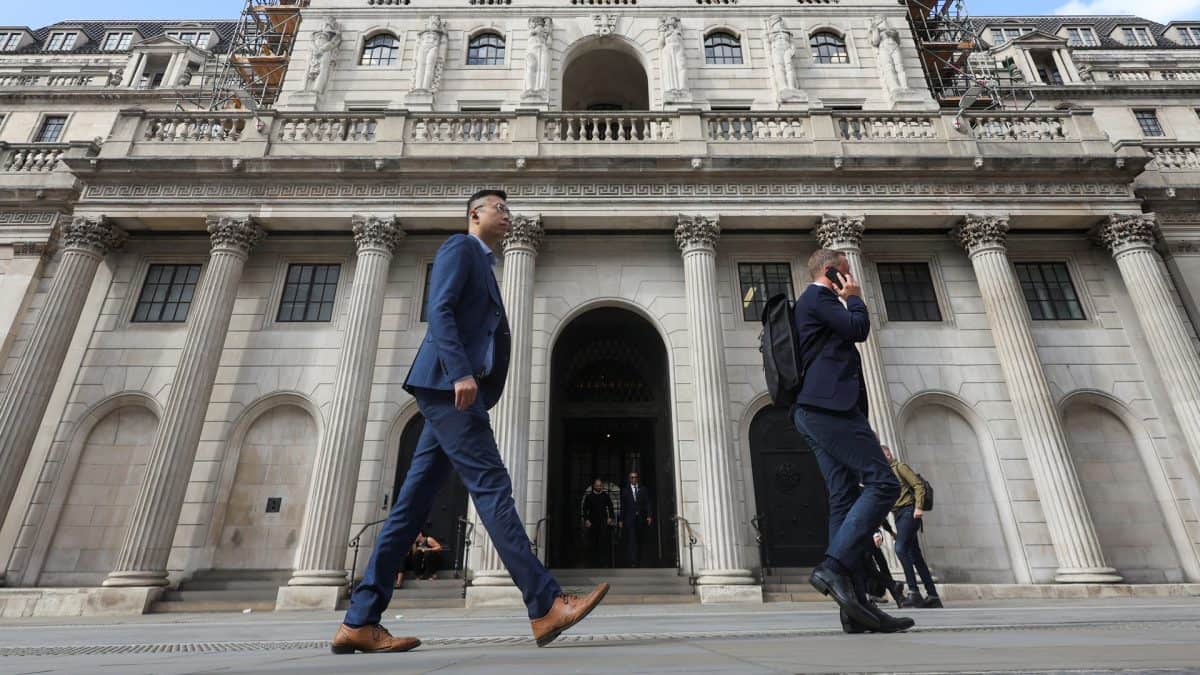
Policymakers keep borrowing costs unchanged as the Iran war fuels a fresh energy shock, while weakness in the UK jobs market adds to the policy dilemma
The Bank of England has kept its benchmark interest rate unchanged at 3.75 per cent, as policymakers balance renewed inflationary pressures against signs of weakening in the UK labour market.
The Bank’s Monetary Policy Committee (MPC) voted to leave the key rate unchanged at its latest meeting, in line with financial market expectations.
The decision comes against a volatile global backdrop, with the Iran war pushing up energy costs and raising concerns about another squeeze on household finances. Higher energy prices risk feeding into broader inflation at a time when the UK economy is already facing pressure.
Policymakers are also contending with signs of strain in the domestic jobs market. A weaker labour market complicates the Bank’s task as it seeks to prevent inflation from becoming entrenched without placing additional pressure on economic activity and employment.
The latest decision highlights the challenge facing central banks as geopolitical tensions create an energy-driven inflation shock. Higher oil and energy prices can increase costs for households and businesses, potentially slowing the pace at which inflation returns to the Bank’s target.
Financial markets had largely priced in a decision to keep borrowing costs steady, with investors closely watching the Bank’s assessment of the inflation outlook, energy prices and labour-market conditions.
The rate decision comes as global markets remain unsettled by intensifying fighting in the Middle East. The resulting energy-price shock has added a fresh complication for policymakers across major economies, particularly those already dealing with persistent inflationary pressures.
For UK households, sustained increases in energy costs could revive cost-of-living pressures, while higher borrowing costs continue to affect mortgages, consumer credit and business financing.
The Bank’s decision therefore leaves monetary policy at a delicate juncture: inflation risks are rising because of external energy pressures, even as domestic economic conditions show signs of weakening.