 The Guardian ·
France gives guillotine the chop – archive, 1981
Deputies vote to end capital punishment despite opinion polls showing that two-thirds of French people favour the death penalty
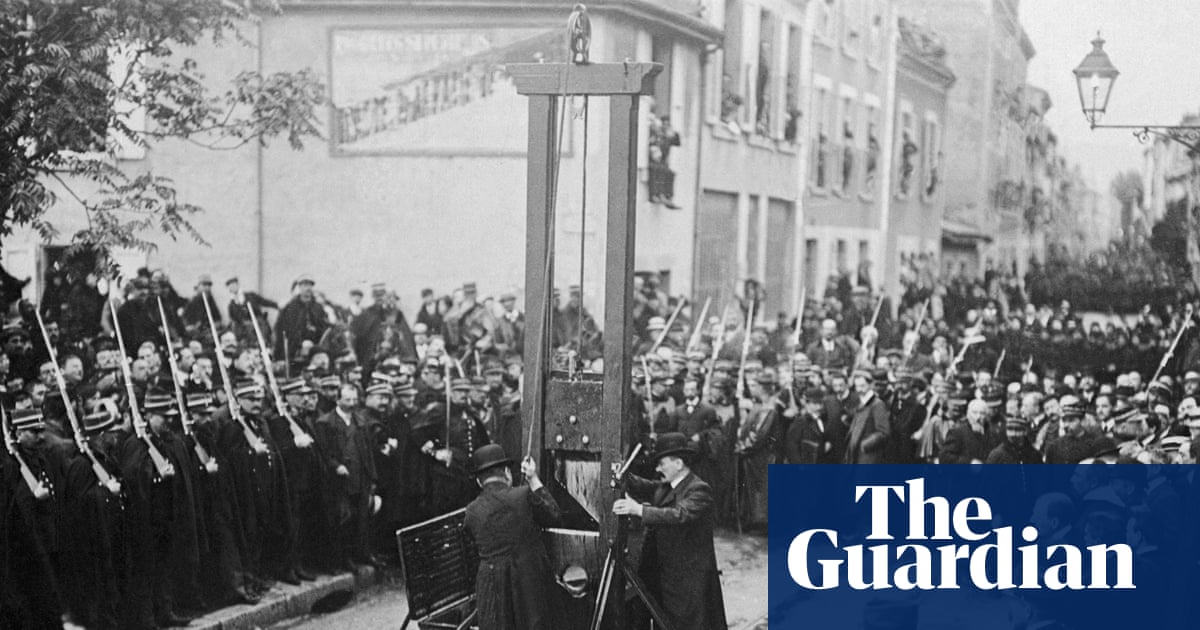
The French cabinet yesterday agreed to end the death penalty as the first of a series of sweeping reforms over the next four months. President Mitterrand also called on the government to “amplify” what he called the positive actions of his first three months in office by ordering nearly 20 major projects to be carried out before Christmas. They range from the nationalisation programme to a reflationary, anti-unemployment budget for 1982.
The programme outlined by Mr Mitterrand, who obviously feels the need to reassure a public worried by rising unemployment, increasing inflation and a threat to the franc, will be a crucial test of the government’s capabilities, and the decision to put the abolition of the death penalty at the top of the list of urgent reform should set a decisive tone – particularly as two-thirds of the French people favour the guillotine.
The previous regime dithered over a decision on the death penalty for seven years, rejecting at least 10 attempts to raise the question in parliament where it has not been fully debated since 1911. Until yesterday, France was the only country in Europe which had not abolished the death penalty.
(This is an edited extract).
French deputies last night voted to condemn the guillotine and end capital punishment in the first parliamentary vote on the issue for 70 years.
The vote was overwhelming – 363 to 117 – even though opinion polls showed that more than two-thirds of French people wanted to retain the death penalty.
The guillotine was introduced 190 years ago as a humane instrument to replace torture and hanging for commoners. It was responsible for thousands of deaths, including more than 2,500 during the two years of terror in revolutionary Paris when Louis XVI and Marie Antoinette were executed. The last public execution was in 1939, and during the war the Vichy Government executed a woman for adultery.
The 17 executions for murder in the last 20 years have been national controversies. The abolitionist lawyer, Mr Robert Badinter, who is now Minister of Justice, proposed the measure, enabling President Mitterrand to fulfil an election promise.
No decision has been made about the fate of the two working guillotines in Fresnes prison, near Paris, one of which was last used in 1977. It will, however, mean the end of the executioner’s job held by a printer who received a retainer of £600 a month.
The abolition means an automatic reprieve for six men awaiting death in French gaols, four of them condemned since May by juries who seemed to be showing their disapproval of Mr Mitterand’s abolitionist promise.